

Pakistan and 10 nations condemn Israel's interception of Global Sumud Flotilla
Pakistan and 10 other countries condemned Israel's interception of the Global Sumud Flotilla, calling it a violation of international law and demanding activists' release

News Desk
The News Desk provides timely and factual coverage of national and international events, with an emphasis on accuracy and clarity.
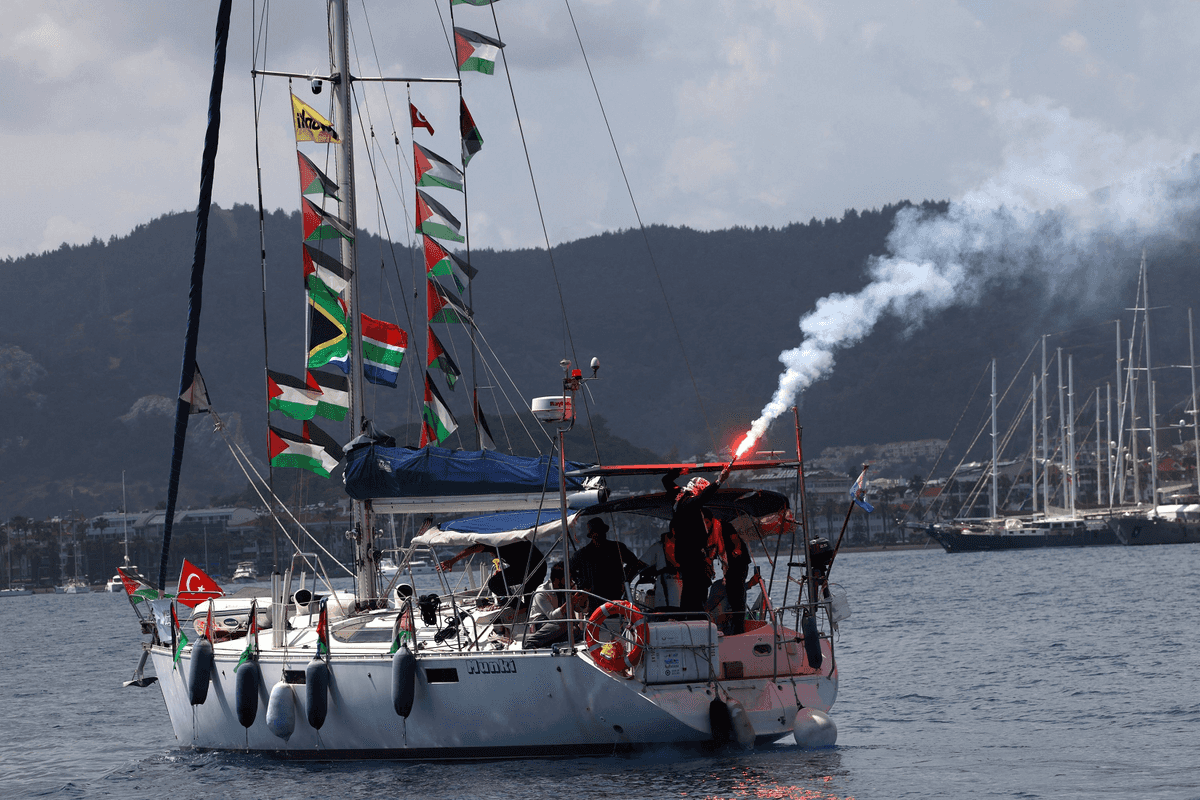
The ten signatory nations described the interception as a continuation of a broader pattern of Israeli actions against civilian maritime missions.
Reuters
Pakistan and ten other countries condemned Israel's interception of the Global Sumud Flotilla on Tuesday, calling for the immediate release of detained activists and accountability for alleged violations of international law.
Foreign ministers from Pakistan, Turkey, Bangladesh, Brazil, Colombia, Indonesia, Jordan, Libya, the Maldives and Spain signed the joint statement, which was issued by Pakistan's Ministry of Foreign Affairs in Islamabad.
The condemnation came in response to reported Israeli assaults on civilian vessels associated with the flotilla, a humanitarian initiative focused on the Palestinian territories.
What is the Global Sumud Flotilla and why did Israel intercept it?
The Global Sumud Flotilla is a civilian-led humanitarian initiative aimed at drawing attention to conditions in Gaza. Israel intercepted vessels associated with the flotilla in international waters, detaining activists on board.
The ten signatory nations described the interception as a continuation of a broader pattern of Israeli actions against civilian maritime missions.
What did the joint statement say about the flotilla interception?
The foreign ministers expressed "grave concern" over the reported assaults on flotilla vessels, describing the incidents as "blatant violations of international law and international humanitarian law."
The statement recalled earlier Israeli interceptions of similar flotillas in international waters, saying the repeated actions reflected a disregard for international legal norms. The ministers also raised specific concerns about the safety, rights and dignity of activists held in custody.
The signatories demanded the immediate and unconditional release of all detained activists. They stressed the importance of freedom of navigation and the protection of humanitarian missions at sea. The statement warned that continued targeting of civilian-led initiatives undermined core international humanitarian principles.
What action did the countries call for against Israel?
The ten nations urged the international community to take "concrete measures" to ensure accountability and prevent impunity for the alleged violations.
They called for stronger protections for humanitarian operations broadly, framing the flotilla interception as part of a wider failure to uphold international law. The statement stopped short of naming specific mechanisms or institutions through which accountability should be pursued.




Comments
See what people are discussing