

Pakistan considers cutting cotton seed approval time from seven years to 12-18 months
Pakistan is weighing a fast-track cotton seed approval process that could cut the wait for imported varieties from seven years to 12–18 months

Business Desk
The Business Desk tracks economic trends, market movements, and business developments, offering analysis of both local and global financial news.
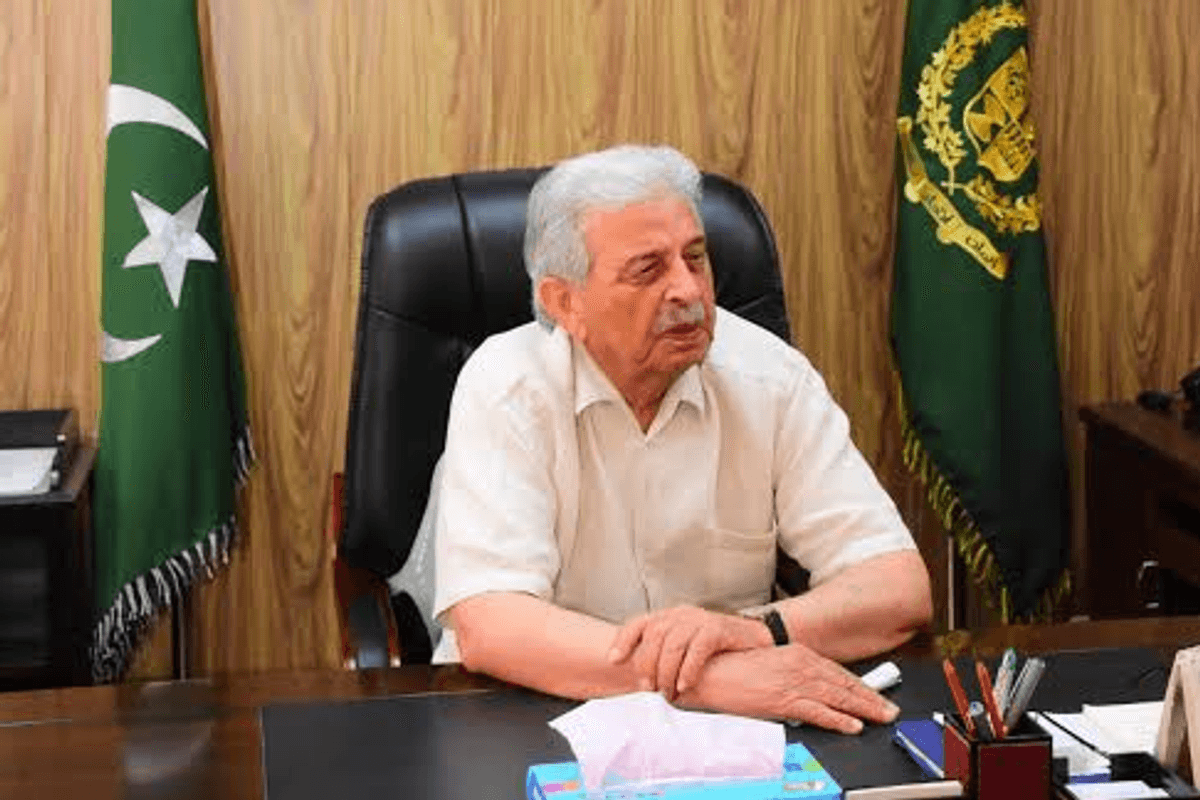
File photo of Federal Minister for National Food Security and Research Rana Tanveer Hussain.
Source: Mnfsr/FB
Pakistan is considering a fast-track process that could cut cotton seed approval for imported varieties from about seven years to 12–18 months.
Federal Minister for National Food Security and Research Rana Tanveer Hussain chaired a Cotton Revival Strategy meeting on Thursday, as the government seeks to reverse falling production and restore farmers’ profitability.
Why is Pakistan considering faster cotton seed approval?
The government wants to reverse falling cotton production and improve yields. Its revival strategy rests on three areas: strengthening locally developed seed, facilitating imports of improved seed and introducing a faster approval mechanism for imported varieties. Faster approval would cut the current wait of about seven years.
Participants reviewed the continued decline in cotton cultivation and production, particularly in Punjab, where falling yields, rising input costs and lower profitability have encouraged farmers to switch to sugarcane, maize and other crops. Cotton Leaf Curl Virus, pest infestations, climate variability, poor-quality seed and limited mechanization were identified as major obstacles to recovery.
Hussain said reviving cotton was important for Pakistan’s agricultural economy and textile industry, as well as for reducing dependence on imported raw materials. He stressed that cotton farming must become more profitable through higher yields, better-quality seed and lower production costs.
The minister directed relevant institutions to accelerate reforms in seed development, regulatory approvals, research and mechanisation. The meeting brought together representatives of the Ministry of National Food Security and Research, National Seed Development and Regulatory Authority (NSDRA), Pakistan Agricultural Research Council (PARC), Pakistan Central Cotton Committee (PCCC), Department of Plant Protection (DPP), provincial agriculture departments, private seed companies, All Pakistan Textile Mills Association (APTMA), ginners, seed associations, Cotton Connect and other stakeholders.
How will cotton seed approval be fast-tracked?
The proposed fast-track process would significantly shorten the current timeline, but its implementation will be examined within the existing legal and regulatory framework. Participants stressed that faster approvals must not compromise mandatory scientific testing, biosecurity or biosafety standards.
On imported seed, the minister directed the DPP to expedite pending Pest Risk Analyses (PRAs) and Controlled Import Permits (CIPs). The measures are intended to facilitate access to international seed technologies while maintaining phytosanitary safeguards.
The meeting reviewed engagement with China, Turkey, Syria, Kenya, the United States, Mexico, Kyrgyzstan and Australia. The DPP said China had submitted its technical dossier, but additional information had been requested. Progress involving several other countries remained dependent on their responses.
The meeting also considered regulatory requirements for genetically modified and Bt cotton varieties. It was emphasized that the necessary biosafety clearances must be obtained from the relevant authorities under the Ministry of Climate Change and Environmental Coordination. Issues requiring higher-level policy decisions may be referred to the prime minister.
How will Pakistan strengthen local cotton seed research?
To strengthen domestic research, the meeting decided to establish a three-member committee comprising PARC, NSDRA and PCCC, led by PARC. The committee will facilitate the acquisition of foreign cotton germplasm, or genetic material used in crop breeding, and will identify technical requirements, funding needs and acquisition arrangements.
The meeting also discussed ways to give private seed companies access to suitable germplasm held by public-sector research institutions. The aim is to accelerate the development of commercially viable cotton varieties.
Participants called for stronger accountability in public-sector cotton research, including performance-based assessments, clearly defined key performance indicators and appropriate incentives for breeders developing high-yielding and climate-resilient varieties.
On crop zoning, the minister directed NSDRA and relevant institutions to expedite the processing of promising varieties identified through trials and facilitate the availability of basic seed. Participants stressed that varieties should be assessed according to their performance in specific agro-climatic regions rather than exclusively against uniform national criteria.
What other measures were discussed to revive cotton?
Mechanization was another priority, with participants discussing single-pick cotton varieties and mechanical harvesting technology to reduce labor requirements and production costs. Relevant institutions were asked to examine dedicated testing parameters for varieties suitable for mechanical harvesting. The taxation of agricultural machinery was also identified as an issue requiring review.
The meeting further explored opportunities in sustainable and traceable cotton production, including organic cotton and potential carbon-credit mechanisms, to strengthen Pakistan’s competitiveness in international markets.
Concluding the meeting, Hussain directed the relevant institutions to prioritize implementation of the agreed measures and submit actionable proposals and recommendations to the ministry.





Comments
See what people are discussing