

Pakistan targets Q1 2027 bids for three DISCOs
The Privatisation Commission is pursuing 17 transactions, including nine power distributors and three airports, as Islamabad seeks more private investment

Business Desk
The Business Desk tracks economic trends, market movements, and business developments, offering analysis of both local and global financial news.
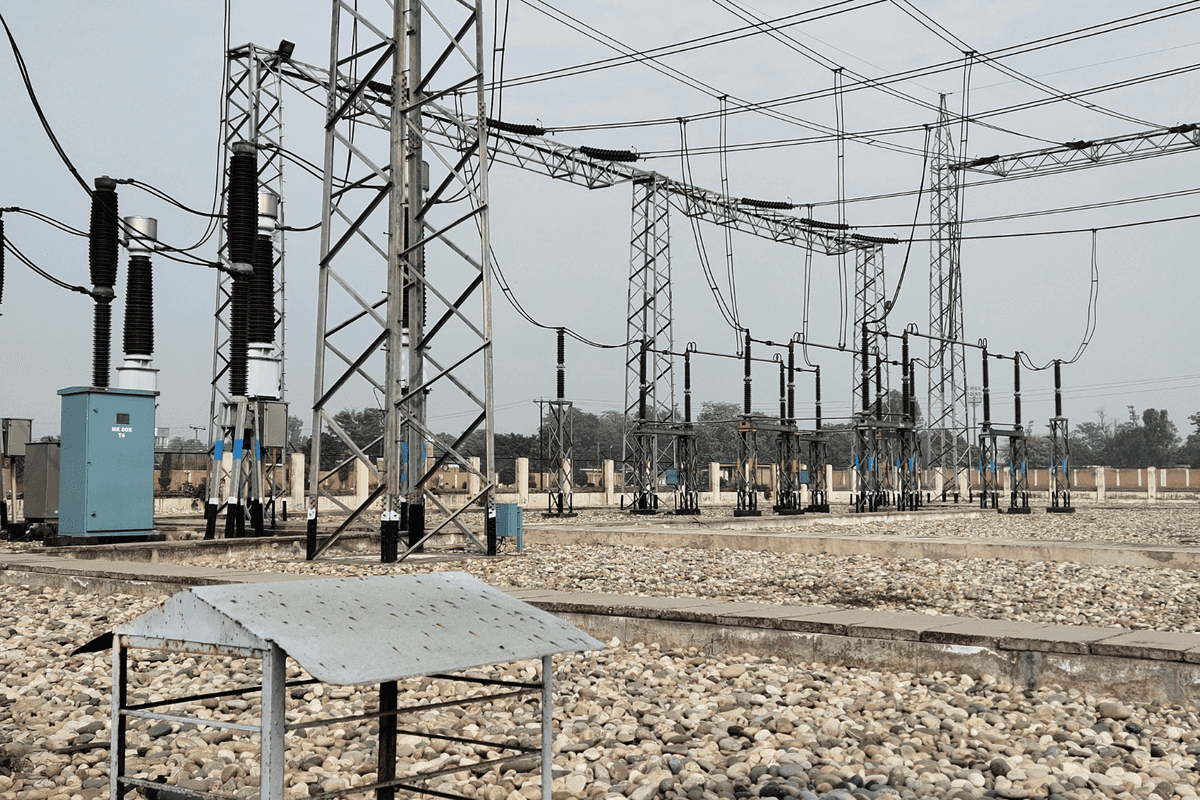
A grid station in Pakistan's Punjab province.
Pakistan is pursuing 17 privatization and outsourcing transactions, including nine power distribution companies and three airports, with bidding for FESCO, GEPCO and IESCO expected in the first quarter of 2027, Privatisation Commission Chairman Muhammad Ali said at an investment forum in Karachi on Thursday.
When are the first DISCO privatization bids expected?
The government expects bidding for Faisalabad Electric Supply Company (FESCO), Gujranwala Electric Power Company (GEPCO) and Islamabad Electric Supply Company (IESCO) in January-March 2027, Ali said. It also plans to issue a request for proposals to outsource Islamabad International Airport during the same quarter. Both are targets rather than confirmed bidding or proposal dates.
Ali, who also serves as adviser to the prime minister on privatization, outlined the government's plans at the CFA Society Pakistan Investment Forum on November 26.
The three distribution companies form the first batch of nine power distributors included in the government's privatization program.
The government has already invited expressions of interest from investors in FESCO, GEPCO and IESCO, with the three companies undergoing different stages of the transaction process.
Alongside Islamabad International Airport, the government is pursuing outsourcing arrangements for Jinnah International Airport in Karachi and Allama Iqbal International Airport in Lahore.
Unlike the proposed privatization of power distribution companies, the airport transactions are intended to bring private-sector expertise into the operation, management and commercial development of the facilities through concession or management arrangements.
The Privatisation Commission signed a financial advisory agreement with an EY Middle East-led consortium on November 19 for the Karachi and Lahore airport transactions.
The Asian Development Bank is advising on the Islamabad airport outsourcing process.
What progress has Pakistan made on privatization?
Ali cited the privatization of Pakistan International Airlines (PIA) and First Women Bank as significant milestones in the government's efforts to complete complex transactions.
PIA achieved its first financial closing and transfer of management control in June 2026, while the government signed the First Women Bank privatization agreement in October 2025.
Ali said increasing private investment was essential to Pakistan's economic growth and prosperity.
"The government's role is not to run businesses but to create an enabling environment for the private sector," Ali said.
He stressed the need to define the state's role in commercial activities, expand investment opportunities and improve the competitiveness of Pakistani businesses.
Ali said transparent procedures, stable regulations and respect for contractual obligations were essential to building investor confidence and attracting long-term private investment.
He also warned that Pakistani businesses would struggle to compete internationally without reforms to the energy and taxation systems.
The government is seeking to strengthen the investment climate by encouraging private-sector participation, improving competition and ensuring that state involvement in commercial activities does not discourage private enterprise.
How much private investment is expected in the Hyderabad-Sukkur Motorway?
Ali said the government expects approximately USD 700 million in investment for two sections of the Hyderabad-Sukkur Motorway (M-6), which are planned under a public-private partnership arrangement.
The two sections will be offered to private investors under separate 25-year concession agreements.
The Public Private Partnership Authority approved the development of Sections I and II, covering approximately 121 kilometers, on November 18.
Under the proposed arrangement, private investors will finance, develop and operate the motorway sections, recovering their investment through toll revenues during the concession period.
The motorway projects form part of the government's broader effort to attract private capital into infrastructure development without relying entirely on direct public-sector investment.
Ali said improving the business environment, ensuring regulatory stability and creating opportunities for private investors would be essential to sustaining economic growth.



Comments
See what people are discussing