

Pakistan seeks settled ODI combination as England and Sri Lanka join tri-series test
The 2027 World Cup remains a year away, but the decisions made during this tri-series could help determine whether Pakistan enter the tournament with a coherent, well-tested squad or continue searching for answers when the stakes are considerably higher

Zaid Hassan
Producer
Zaid Hassan, a seasoned sports journalist, led Cricket Pakistan as editor for four years, shaping its coverage with insightful analysis. Now a producer at Nukta, he expands into broader storytelling while remaining a key voice in Pakistan’s sports media.
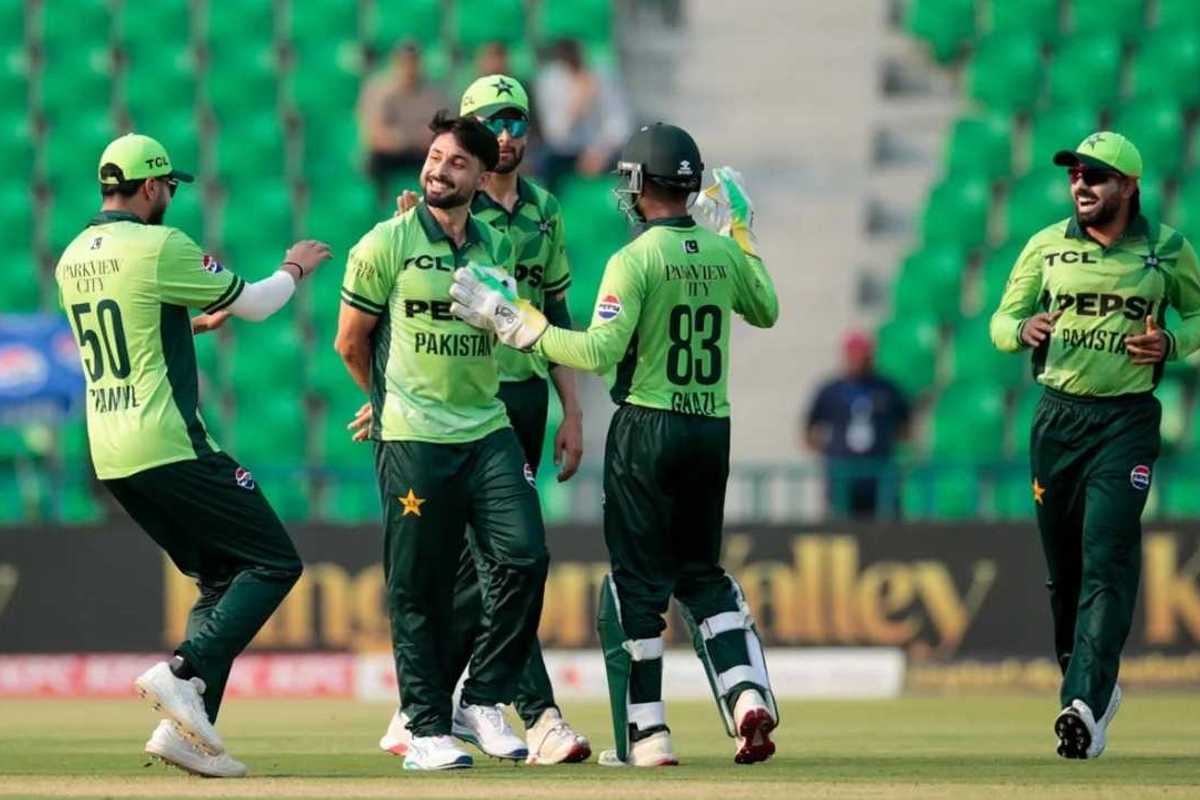
Pakistan's Abrar Ahmed celebrates a wicket with his teammates during the second ODI against Australia in Lahore on June 2, 2026.
PCB
Pakistan will have more than a trophy in mind when they begin their ODI tri-series against England and Sri Lanka on October 18. With the 2027 ICC Men’s Cricket World Cup approaching, the tournament offers head coach Mike Hesson an important opportunity to identify a settled group of players capable of carrying Pakistan through the next phase of their preparations.
The series will be played in Lahore and Rawalpindi until October 31, with the top two teams advancing to the final. Pakistan will open their campaign against Sri Lanka in Rawalpindi on Sunday before facing England on October 20.
For Pakistan, the priority will be to build continuity in the playing XI, assess the depth of their squad and give their preferred combinations enough time together before the World Cup in South Africa, Zimbabwe and Namibia next year.
Can Pakistan settle on a core group of 15 players?
Pakistan have experimented with their opening combination in their two ODI series this year, giving Sahibzada Farhan and Maaz Sadaqat opportunities against Bangladesh and Australia.
The results were mixed. Pakistan lost 2-1 to Bangladesh away from home in March before recovering to win their home series against Australia by the same margin in June.
Hesson has now returned to the more experienced Fakhar Zaman and Saim Ayub as his preferred opening pair. The decision suggests Pakistan want greater familiarity at the top of the order while retaining the flexibility to assess younger options during the wider preparation period.
Babar Azam is expected to occupy his customary number three position, providing stability in the middle of the innings. Wicketkeeper-batter Muhammad Ghazi Ghori is also likely to retain the number four role after emerging as Pakistan's second-highest run-scorer in the series against Australia, collecting 110 runs across three innings.
The tri-series will provide a more substantial test of whether Ghori can establish himself in the middle order. With the World Cup a year away, Pakistan needs to distinguish between players who can fill a position temporarily and those capable of making it their own.
Who will complete Pakistan's middle order?
Salman Ali Agha remains an important component of Pakistan's ODI plans despite losing his place in the T20I setup. His ability to contribute with the bat and offer additional bowling options makes him a valuable number five.
His recent first-class performances, including a triple century and a score of 145 after being left out of the third Test against England, have also demonstrated his capacity to produce substantial innings.
The next decision concerns the number six position. Hassan Nawaz has returned to the ODI squad after almost a year away and could provide the finishing power Pakistan need in the closing overs.
That would leave Arafat Minhas and Shadab Khan competing for the number seven position. Both offer spin-bowling options alongside their batting, although their selection will depend on the balance Hesson wants to achieve.
Pakistan could also choose to field both spin-bowling all-rounders, sacrificing a specialist finisher in favour of greater flexibility. The tri-series should help clarify which combination offers the best balance between batting depth and bowling resources.
For a team targeting the 2027 World Cup, these decisions matter beyond individual performances. Pakistan needs a middle order that can rebuild after early wickets, accelerate when required and remain competitive against quality attacks on different surfaces.
Will Pakistan stick with two specialist fast bowlers?
Hesson has generally favoured a combination built around two specialist fast bowlers and a pace-bowling all-rounder in white-ball cricket.
Captain Shaheen Shah Afridi is expected to lead the attack, with Haris Rauf and Naseem Shah competing for another specialist pace position. The all-rounder's role could go to either the experienced Faheem Ashraf or the emerging Razaullah.
Abrar Ahmed is expected to lead the spin attack, but Sufiyan Muqeem could challenge for a place if Hesson wants to test a different wrist-spin option.
Pakistan squad: Shaheen Shah Afridi (c), Abrar Ahmed, Salman Ali Agha, Arafat Minhas, Babar Azam, Faheem Ashraf, Fakhar Zaman, Muhammad Ghazi Ghori (wk), Haris Rauf, Hasan Nawaz, Naseem Shah, Razaullah, Saad Baig (wk), Saim Ayub, Shadab Khan and Sufiyan Muqeem
Can England challenge Pakistan with a reshaped squad?
England arrive with a 16-player squad led by Harry Brook, following their 2-1 ODI series victory over Sri Lanka on home soil last month.
The return of leg-spinner Adil Rashid, who missed that series with a hand injury, strengthens their bowling options. All-rounder Sam Curran has also recovered from a groin injury and returns to the squad.
However, England will be without Jos Buttler, who is sidelined by a hamstring injury. Jordan Cox has shown that he can contribute in the wicketkeeper's role, scoring an impressive 76 off 52 balls in the series decider at The Oval.
Jofra Archer has been rested, opening the door for Mason Crane to pursue an ODI debut. The leg-spinner, now 29, has received his first call-up in the format after previously appearing in one Test during the 2018 Ashes and two T20Is.
England have also included promising youngsters James Coles, a 22-year-old all-rounder, and 21-year-old fast bowler Henry Crocombe. Their inclusion gives the coaching staff an opportunity to evaluate emerging talent against two established international sides.
England squad: Harry Brook (c), Gus Atkinson, Sonny Baker, Tom Banton, James Coles, Jordan Cox (wk), Mason Crane, Henry Crocombe, Sam Curran, Liam Dawson, Ben Duckett, Will Jacks, Jamie Overton, Adil Rashid, Joe Root, Josh Tongue.
What can Sri Lanka learn ahead of the 2027 World Cup?
Sri Lanka will also be with a 16-member squad captained by Kusal Mendis, combining established internationals with younger players seeking regular opportunities in the ODI setup.
Pathum Nissanka, who was initially named in the squad, has been ruled out of the series as he continues to recover from a hamstring injury. Lahiru Udara has been called up as his replacement.
Avishka Fernando and Kamil Mishara offer further opening options, while Pavan Rathnayake provides another batting alternative. In the middle order, Sahan Arachchige, Kamindu Mendis and Janith Liyanage will be expected to contribute to a more dependable batting structure.
Former captain Dasun Shanaka adds experience and all-round depth, while Dunith Wellalage strengthens the team's spin-bowling options.
Sri Lanka's attack features Maheesh Theekshana and Sachindu Colombage as spin options, supported by a pace group comprising Dushmantha Chameera, Asitha Fernando, Dilshan Madushanka and Eshan Malinga.
Sri Lanka squad: Kusal Mendis (c), Sahan Arachchige, Dushmantha Chameera, Sachindu Colombage, Avishka Fernando, Asitha Fernando, Janith Liyanage, Dilshan Madushanka, Eshan Malinga, Kamindu Mendis, Kamil Mishara, Lahiru Udara, Pavan Rathnayake, Dasun Shanaka, Maheesh Theekshana, Dunith Wellalage





Comments
See what people are discussing