

Pakistan's external debt nearly doubles to USD 135.1 billion over decade
World Bank data show China remains Pakistan's largest bilateral creditor, while new borrowing from private lenders carries significantly higher interest rates

Business Desk
The Business Desk tracks economic trends, market movements, and business developments, offering analysis of both local and global financial news.
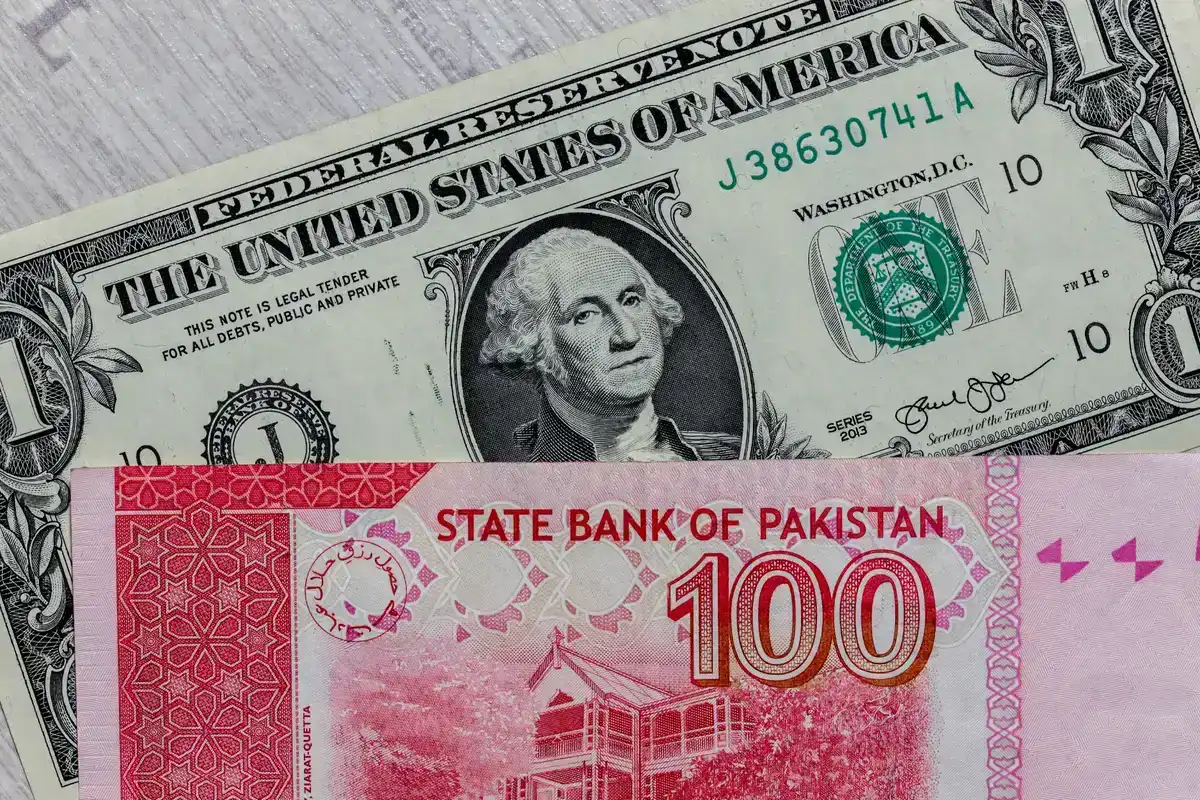
Pakistan's total external debt nearly doubled to USD 135.107 billion at the end of 2025 from USD 68.673 billion in 2015, marking a 96.7% increase over the decade, according to the World Bank's International Debt Report 2026.
The country's external debt stock increased 4% from USD 129.921 billion in 2024, although its debt burden relative to gross national income (GNI) declined during the latest year, the report showed.
How is Pakistan's external debt divided?
Of the USD 135.107 billion total, USD 107.076 billion was classified as public and publicly guaranteed debt in the report's broader presentation, including International Monetary Fund (IMF) credit and Special Drawing Rights (SDR) allocations. Private non-guaranteed long-term debt stood at USD 17.58 billion, while short-term external debt amounted to USD 10.45 billion.
The World Bank's detailed country table separately recorded USD 92.899 billion in long-term public and publicly guaranteed debt and USD 14.177 billion in IMF credit and SDR allocations.
Under the broader classification, multilateral creditors accounted for USD 56.832 billion, bilateral lenders for USD 42.439 billion and private creditors for USD 7.805 billion.
China was Pakistan's largest bilateral creditor, with outstanding debt of USD 22.419 billion. Debt owed to the World Bank Group totaled USD 22.186 billion, including USD 19.214 billion owed to its International Development Association (IDA), while the Asian Development Bank accounted for USD 16.83 billion.
How do borrowing costs differ between creditors?
The report highlighted a significant difference in the terms of new external debt commitments from official and private creditors during 2025.
Loans newly committed by official creditors carried an average interest rate of 3.6%, with an average maturity of 16 years and a four-year grace period.
In comparison, new commitments from private creditors carried an average interest rate of 8.6%, with an average maturity of three years and a one-year grace period.
The figures illustrate the higher borrowing costs and shorter repayment periods associated with private financing compared with official lending.
How has Pakistan's external debt burden changed?
Despite the increase in outstanding debt, Pakistan's external debt-to-GNI ratio declined to 33.9% in 2025 from 35.8% in 2024. However, the ratio remained above the 23.3% recorded in 2015.
The country's debt-service-to-exports ratio also fell to 32.8% in 2025 from 39.1% a year earlier, according to the World Bank data.
The broader Middle East, North Africa, Afghanistan and Pakistan region recorded a contrasting trend, with its external debt-to-GNI ratio increasing to 29.4% in 2025 from 26.7% a year earlier.
The 2.7-percentage-point increase was the largest annual rise among the regions covered by the World Bank, despite improvements in the region's debt-service and interest-payment ratios.
What support did Pakistan receive from China and the IMF?
The World Bank reported that China extended the maturities of loan agreements under which approximately USD 2 billion was due in 2025, providing relief on scheduled repayment obligations.
The IMF also disbursed USD 2.3 billion to Pakistan during 2025 under its Extended Fund Facility and Resilience and Sustainability Facility arrangements.
The World Bank said the IMF funding supported Pakistan's efforts to achieve sustainable long-term growth.




Comments
See what people are discussing