

Pakistan’s fuel shock drives SUV buyers toward plug-in hybrids
High-octane costs near PKR 535 per liter push consumers to cheaper electric-powered alternatives

Business Desk
The Business Desk tracks economic trends, market movements, and business developments, offering analysis of both local and global financial news.
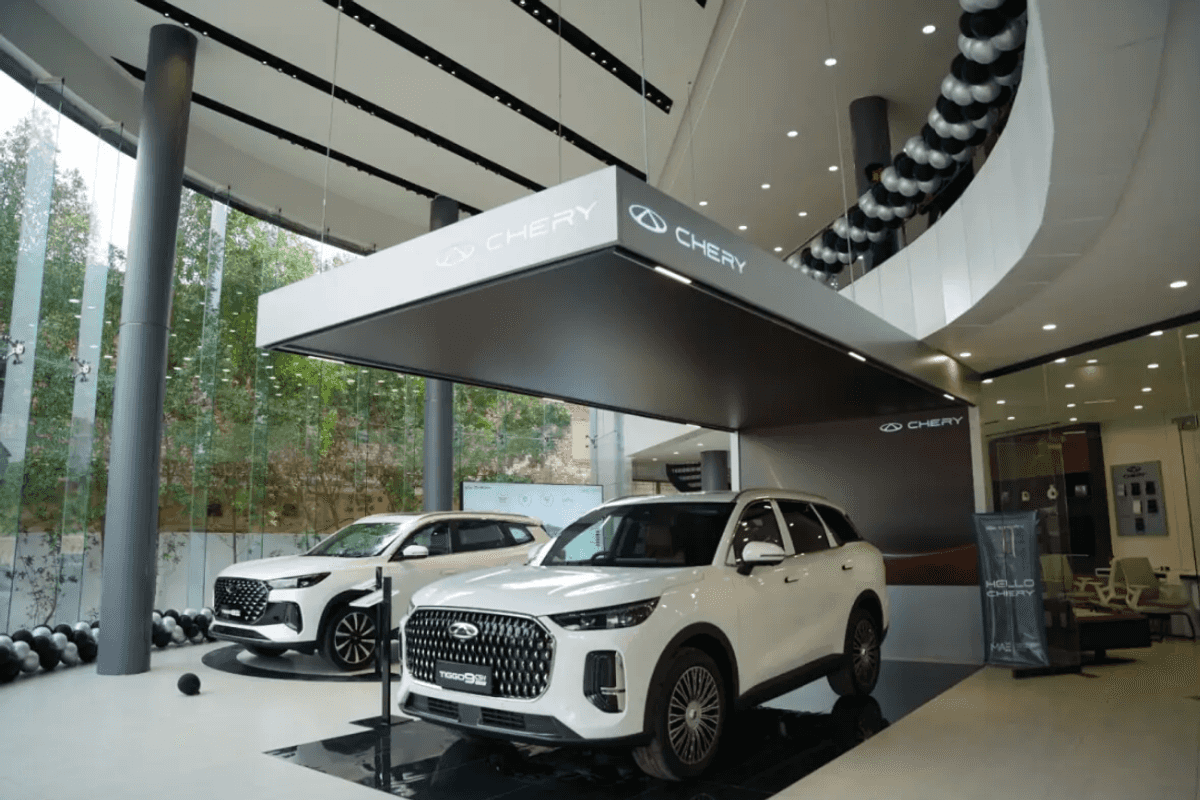
Chery Master Pakistan
Surging fuel prices and higher levies on high-octane petrol are reshaping the economics of sport utility vehicle (SUV) ownership in Pakistan, pushing consumers toward plug-in hybrid electric vehicles (PHEVs) and range-extended electric vehicles (REEVs) as more practical alternatives.
Petrol prices in the country remain above PKR 320 per liter, while high-octane fuel has climbed to about PKR 535 per liter following a government levy increase. The widening gap is placing growing financial pressure on drivers of premium SUVs, many of which are designed to run on high-octane fuel.
Industry analysts say the shift is accelerating a change in consumer behavior, particularly among urban buyers.
“For Pakistani consumers, especially SUV users, this is now a straightforward economic decision,” said Syed Asif Ahmed, director of sales and marketing at Chery Master Pakistan. “At these price levels, running a conventional petrol SUV is becoming a serious burden on household budgets.”
Official data shows ex-depot petrol prices at roughly PKR 321 per liter, underscoring the country’s continued exposure to global oil price volatility and its reliance on imported fuel.
The cost difference
A typical petrol-powered C-segment SUV delivering around 10 kilometers per liter now costs about PKR 32 per kilometer to operate on regular petrol.
For luxury SUVs using high-octane fuel, the cost rises sharply to roughly PKR 53 to PKR 54 per kilometer, making daily use increasingly expensive.
Even conventional hybrid vehicles, which offer improved fuel efficiency of about 18 kilometers per liter, cost around PKR 18 per kilometer on regular petrol. That figure can climb to nearly PKR 30 per kilometer when using high-octane fuel.
“A hybrid improves efficiency, but it still remains exposed to petrol price shocks,” Ahmed said. “The vulnerability is reduced, not removed.”
In contrast, PHEVs and REEVs significantly reduce reliance on petrol by allowing most daily driving — particularly in cities — to be powered by electricity.
Using the Chery Tiggo 9 PHEV as an example, Ahmed said the vehicle features a 34.46-kilowatt-hour battery with a claimed electric-only range of 170 kilometers under standard testing conditions.
At a household electricity rate of about PKR 50 per unit, a full charge costs approximately PKR 1,723, translating to a running cost of around PKR 10 per kilometer. This is substantially lower than both conventional petrol and hybrid SUVs.
Compared with a standard petrol SUV, the savings amount to roughly PKR 22 per kilometer. Against high-octane luxury SUVs, the savings expand to more than PKR 40 per kilometer. Even compared with hybrids, PHEVs offer a cost advantage of between PKR 8 and PKR 20 per kilometer, depending on fuel type.
The rooftop solar advantage
The financial case becomes even stronger for households using rooftop solar power, a segment that has grown rapidly in Pakistan in recent years. Net-metered solar capacity has risen into several gigawatts, reflecting a broader shift toward self-generated energy.
“This is where Pakistan’s energy transition and mobility transition begin to converge,” Ahmed said. “A household generating its own electricity is not just reducing its power bill — it is also significantly lowering the cost of mobility.”
PHEVs and REEVs are seen as particularly suited to Pakistan’s SUV market, where buyers often prioritize space, long-distance capability and flexibility. Unlike fully electric vehicles, these technologies do not rely entirely on a still-developing charging infrastructure, making them more adaptable to current conditions.
The trend also carries broader economic implications. Pakistan’s heavy reliance on imported petroleum continues to strain foreign exchange reserves and fiscal stability, especially during periods of global oil price volatility.
According to the country’s Fiscal Risk Statement, a 20% increase in global oil prices could widen the fiscal deficit by about PKR 487 billion ($1.75 billion) in the 2026 fiscal year. The impact would be driven by lower petroleum levy revenues and increased subsidy requirements.
Ahmed said the shift toward PHEVs and REEVs reflects a broader need for sustainable and cost-effective mobility solutions.
“The case for these technologies is not about one brand or one product,” he said. “It is about providing Pakistani consumers with a realistic SUV option that reduces running costs, lowers exposure to oil shocks and aligns with local driving conditions.”
As fuel prices remain elevated — particularly for high-octane users — analysts say the market is moving toward a clear conclusion: for consumers seeking to retain SUV mobility without absorbing the full impact of fuel inflation, plug-in hybrids and range-extended electric vehicles are emerging as the most practical and economically viable solution.


Comments
See what people are discussing