

Pakistan approves gas tariff hike for industry, new support scheme for small farmers
The move is part of broader efforts to meet IMF structural benchmarks and recover rising sectoral costs

Business Desk
The Business Desk tracks economic trends, market movements, and business developments, offering analysis of both local and global financial news.
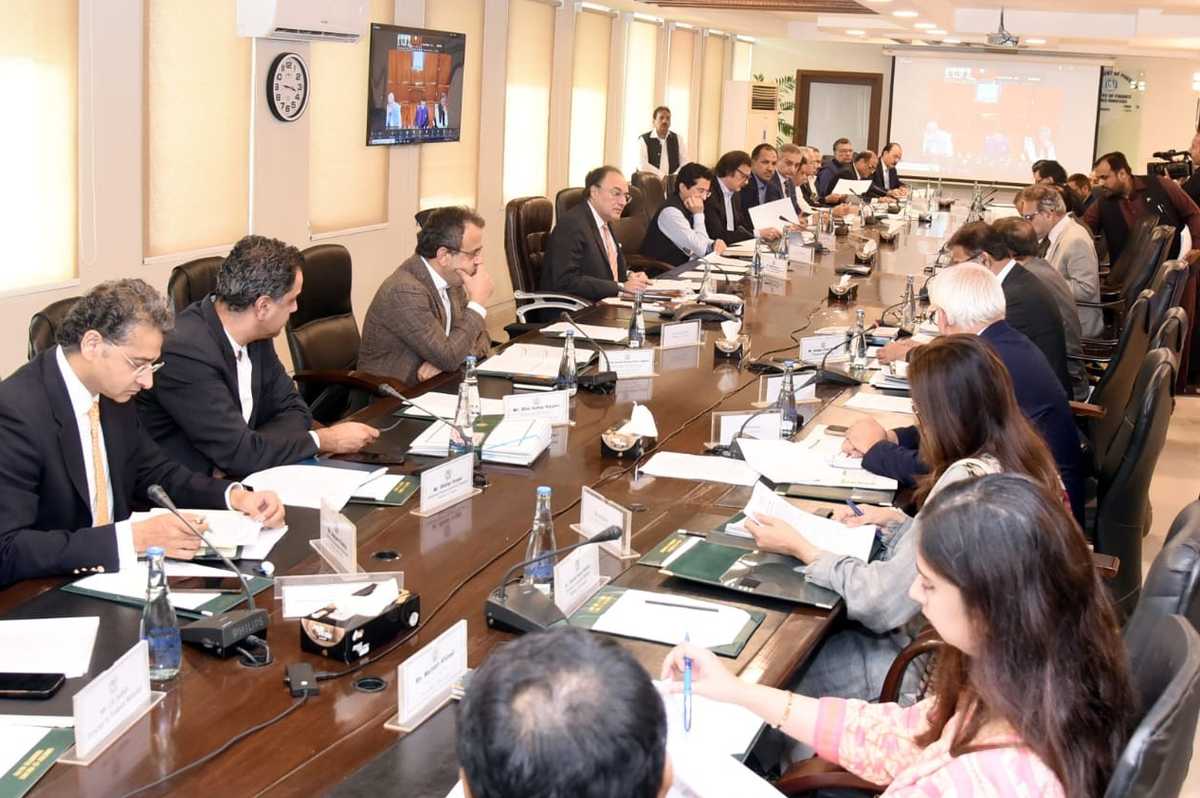
The ECC directed that the proposal be further refined to include necessary safeguards before implementation.
Finance Ministry
Pakistan’s top economic decision-making body, the Economic Coordination Committee (ECC), has approved key energy tariff reforms, raising gas prices for industrial and bulk consumers by an average of 10% while keeping household rates unchanged.
The move is part of broader efforts to meet IMF structural benchmarks and recover rising sectoral costs.
According to a statement from the Ministry of Finance, the new pricing structure will take effect on July 1, 2025. It will apply to bulk consumers, natural gas power plants, and the industrial sector.
The decision comes in response to revenue projections from the Oil & Gas Regulatory Authority (OGRA), which estimates a total requirement of PKR 888.638 billion for SNGPL and SSGCL in fiscal year 2025–26. Based on current prices, revenues fall short by PKR 40.9 billion—necessitating upward adjustments to bridge the gap.
While residential slab rates remain unchanged, the ECC approved increases in fixed monthly charges—now PKR 150 for protected domestic consumers and PKR 400 for non-protected users. This approach aims to shield low-income households from immediate price shocks while ensuring cost recovery.
Under the revised rates:
- Bulk supply prices will rise from PKR 2,900 to PKR 3,075 per mmBtu.
- Power sector rates will increase from PKR 1,050 to PKR 1,313 per mmBtu.
- Industrial process use will go from PKR 2,150 to PKR 2,350 per mmBtu.
Meanwhile, gas prices for commercial entities, CNG stations, and the cement and fertilizer sectors will remain unchanged, likely to contain inflationary pressures.
The pricing revisions follow a summary from the Petroleum Division and fulfill a requirement under the OGRA Ordinance mandating the government to notify updated gas tariffs within 40 days of OGRA’s determination.
These adjustments are also in line with IMF-agreed reforms to phase out cross-subsidies and rationalize captive power tariffs, while ensuring targeted support for vulnerable segments.
Sugar import and price stability
The ECC also reviewed a proposal from the Ministry of National Food Security and Research (MNFSR) to import sugar to help stabilize domestic prices. It approved the formation of a 10-member steering committee, chaired by the Federal Minister for MNFSR, with representation from the Ministers for Commerce and Foreign Affairs, Secretary Finance, FBR Chairman, and others. The committee will submit detailed recommendations to the ECC.
Remittances incentive schemes
Separately, the ECC considered a summary from the Finance Division on modifying home remittance incentive schemes. It directed the State Bank of Pakistan and the Finance Division to prepare a detailed plan, including an impact analysis and implementation roadmap, by July 31.
Risk coverage for small farmers
The ECC granted in-principle approval to a proposal by the Finance Division to launch a risk coverage scheme aimed at supporting small farmers and underserved regions. The scheme is scheduled to launch on August 14, 2025, with the goal of bringing 750,000 new agricultural borrowers into the formal financial system and generating an estimated Rs 300 billion in credit between FY26 and FY28.
The plan includes budgetary support of PKR 37.5 billion for risk coverage and banking operations, to be disbursed between FY27 and FY31. The ECC directed that the proposal be further refined to include necessary safeguards before implementation.



Comments
See what people are discussing