

Pakistan GDP growth expected to improve in FY27: SBP governor
Jameel Ahmad expects inflation to ease toward the central bank's 5–7% target range and the current account deficit to remain within 1% of GDP

Business Desk
The Business Desk tracks economic trends, market movements, and business developments, offering analysis of both local and global financial news.
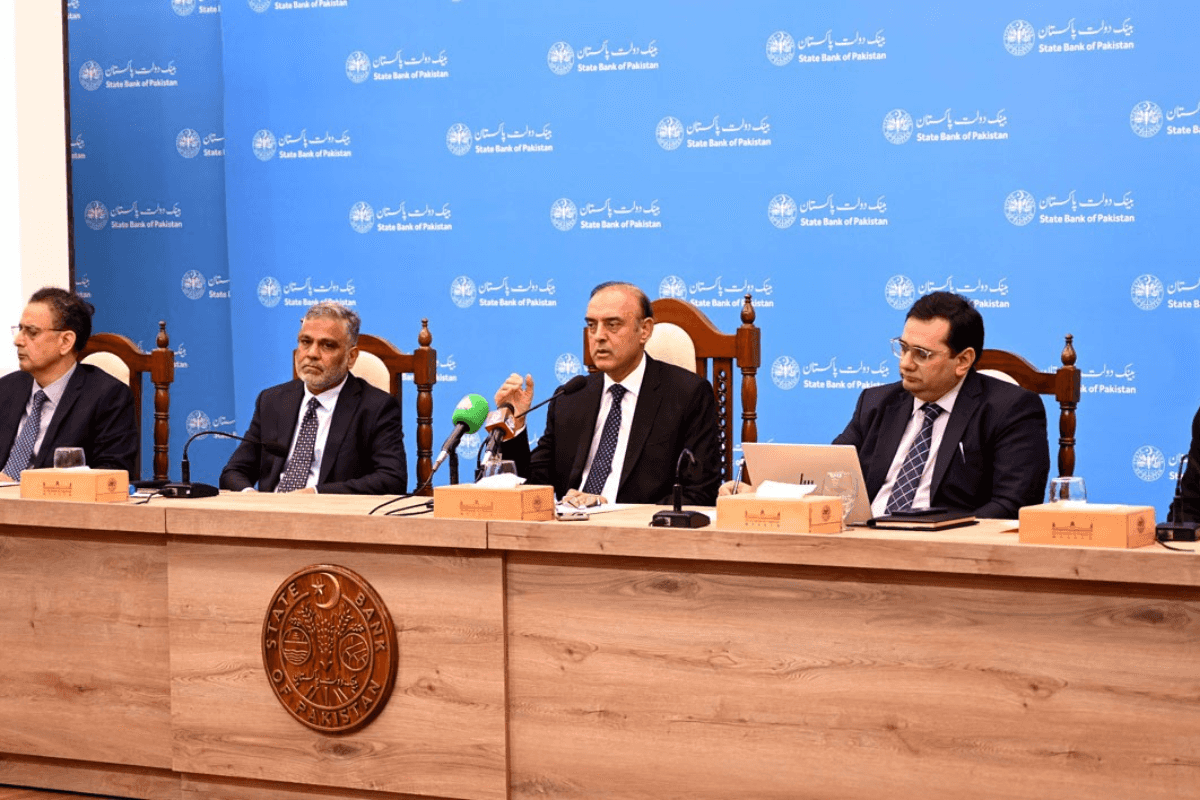
State Bank of Pakistan Governor Jameel Ahmad addresses a press conference following the Monetary Policy Committee's interest rate announcement.
APP
Pakistan's economic growth is expected to accelerate in the current fiscal year, while inflation is projected to gradually ease, State Bank of Pakistan (SBP) Governor Jameel Ahmad said Wednesday.
Addressing the annual convocation of the Institute of Cost and Management Accountants of Pakistan (ICMA Pakistan) in Lahore, Ahmad said the country's economic fundamentals had significantly improved since 2022 despite severe global and regional shocks.
He attributed the recovery to timely policy decisions, fiscal discipline and evidence-based policymaking, which he said had helped restore economic stability and strengthen the country's resilience.
Pakistan's economy contracted in FY23 before returning to growth, with real gross domestic product (GDP) expanding 3.7% in FY26. Ahmad expects growth to improve further in FY27.
The SBP's latest monetary policy assessment maintains an FY27 growth forecast of 3.5–4.5%.
Inflation remained close to the central bank's target range of 5–7% in FY26 but has increased since then. Ahmad said it was expected to gradually ease toward the target range, supported by prudent monetary tightening.
The country's external account also remains stable, with the current account deficit expected to stay between zero and 1% of GDP, he added.
How did Pakistan restore economic stability?
Ahmad said raising the policy interest rate and maintaining it at an elevated level for almost a year, alongside temporary measures to manage foreign exchange outflows unrelated to debt repayments, had been necessary to restore stability and avert a deeper external financing and debt crisis.
Maintaining a positive forward-looking real policy rate, which keeps interest rates above expected inflation, helped bring inflation down from more than 30% to within the central bank's medium-term target range, he said.
The governor stressed that lasting economic progress could not be achieved through short-term measures that undermined long-term stability.
He added that risk-based supervision had improved the identification of financial stability risks, while financial sector capital adequacy and performance indicators had strengthened despite a prolonged period of high interest rates.
Ahmad said improvements in Pakistan's economic fundamentals and resilience were being recognized by international credit rating agencies, multilateral partners and foreign investors.
Addressing graduating students, he highlighted the role of accounting and finance professionals in strengthening institutions, improving accountability, supporting informed decision-making and ensuring the responsible use of public resources.
"Let evidence guide your judgment, let professional ethics define your conduct, and let a long-term commitment to Pakistan's sustainable and inclusive development inform your action," he said.
Congratulating the graduates, Ahmad expressed confidence that their knowledge, dedication and commitment to professional excellence would contribute to Pakistan's future economic development.





Comments
See what people are discussing