

Pakistan governance reform needed before expansion: ICMA
Graduate unemployment stands at 18.3%, while a federal PPP pipeline shows just one signed concession agreement among 47 projects, the report says

Business Desk
The Business Desk tracks economic trends, market movements, and business developments, offering analysis of both local and global financial news.
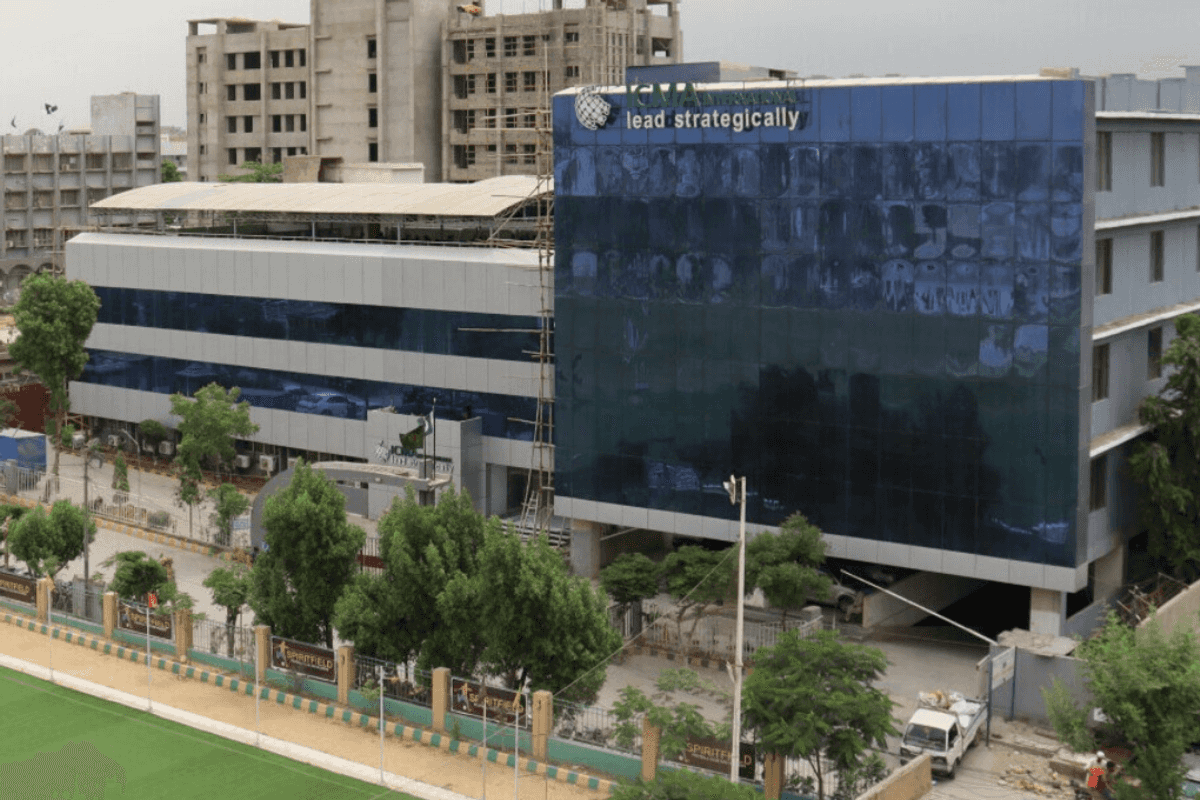
Pakistan must strengthen existing government institutions before expanding administrative structures, as high graduate unemployment, limited development funding and delayed infrastructure projects weigh on the economy, according to ICMA International. Its November 19 report calls for fiscal devolution, simpler regulations and better coordination to make public spending more effective.
Why does ICMA advocate Pakistan governance reform?
Creating additional administrative units will not automatically improve public services, employment or business access, ICMA International argues. Its report, "ICMA's Fiscal Vision for Pakistan: Aligning Administrative Structures with Economic Realities," recommends strengthening existing district and divisional institutions, clarifying responsibilities and using public resources more effectively before considering administrative expansion.
The report, published by the Institute of Cost and Management Accountants of Pakistan (ICMA International), examines how administrative arrangements affect fiscal capacity, employment, the business environment, inflation and investment potential.
Drawing on administrative and fiscal experiences from seven countries, the research argues that institutional reforms should be judged by their economic and public-service outcomes rather than the number of administrative units created.
It identifies rising employment pressures, limited development funding and weaknesses in investment facilitation as major challenges requiring stronger government institutions.
How serious is Pakistan's graduate unemployment problem?
Nearly 3.5 million people enter Pakistan's labor force annually, creating substantial demand for employment opportunities.
The ICMA report cites graduate unemployment of 18.3%, a figure also reported in Gallup Pakistan's July 2026 analysis of the Pakistan Bureau of Statistics' Labour Force Survey 2024-25.
Among graduates aged 20–24, unemployment stands at 32.8%, rising to 42.3% among women in the same age group, according to that analysis.
Competition for public-sector employment also highlights the pressure on job seekers.
In 2024, the Federal Public Service Commission received 274,566 applications for 1,722 advertised vacancies across federal government ministries and divisions, according to recruitment figures presented to the president.
ICMA argues that expanding government establishments cannot substitute for a broader economic strategy focused on productive employment through private investment, entrepreneurship and regional economic development.
The report calls for reforms that improve the business environment and allow existing institutions to support economic activity and employment creation more effectively.
How are government spending and delayed projects affecting development?
More than 80% of provincial expenditure went toward recurrent costs in FY23, according to a World Bank report released in July 2026.
The spending pattern illustrates the fiscal constraints facing provincial governments, with limited resources available for development projects, infrastructure and improvements in public services.
Local governments accounted for less than 5% of total government expenditure in 2024, highlighting the limited financial resources available to institutions closest to citizens and businesses.
ICMA cautions that creating additional administrative units without clearly defined responsibilities and financing arrangements could increase government costs without necessarily improving service delivery.
Businesses and citizens could also face additional administrative procedures if institutional expansion introduces more regulatory interfaces rather than simplifying existing processes.
Infrastructure investment presents another challenge.
The federal Public Private Partnership Authority's (P3A) published pipeline lists 47 projects, comprising 22 qualified and 25 non-qualified projects.
However, only one is listed at the signed concession-agreement stage.
ICMA identifies weaknesses in project preparation, financial and technical expertise, and coordination between different levels of government as obstacles to infrastructure development and private investment.
The report argues that improving institutional capacity and streamlining approval procedures could help projects progress without requiring additional administrative structures.
What governance reforms does ICMA recommend?
ICMA recommends prioritizing the effectiveness of existing government institutions before considering the creation of additional administrative units.
Its proposed reforms include strengthening divisional and district institutions, providing meaningful fiscal authority to local governments and clearly defining responsibilities across different tiers of government.
The report also calls for removing overlapping regulations, developing integrated digital approval systems and sharing specialized technical resources among government institutions.
These measures are intended to reduce compliance costs for businesses, simplify interactions with government departments and improve investment facilitation.
ICMA further recommends controlling the cost of government establishments and improving coordination between federal, provincial and local authorities.
Rather than focusing primarily on changes to territorial boundaries or the creation of new administrative divisions, the research argues that reform should concentrate on strengthening the functions of existing institutions.
It proposes evaluating progress through employment opportunities, lower business compliance costs, stronger local governments, more effective investment facilitation and productive use of public resources.
The report's central recommendation is to improve the government's capacity to deliver economic value and public services before expanding its administrative structure.





Comments
See what people are discussing