Pakistan on Thursday expressed serious concern over a recently concluded long-term uranium supply agreement between India and Canada, along with potential cooperation on small modular reactors and advanced nuclear technologies.
India and Canada announced a series of agreements on Monday, including a C$2.6 billion ($1.9 billion) uranium supply deal, and plans to collaborate on building small modular nuclear reactors and advanced reactors. Both sides also signaled intentions to finalize a broader trade agreement by the end of the year.
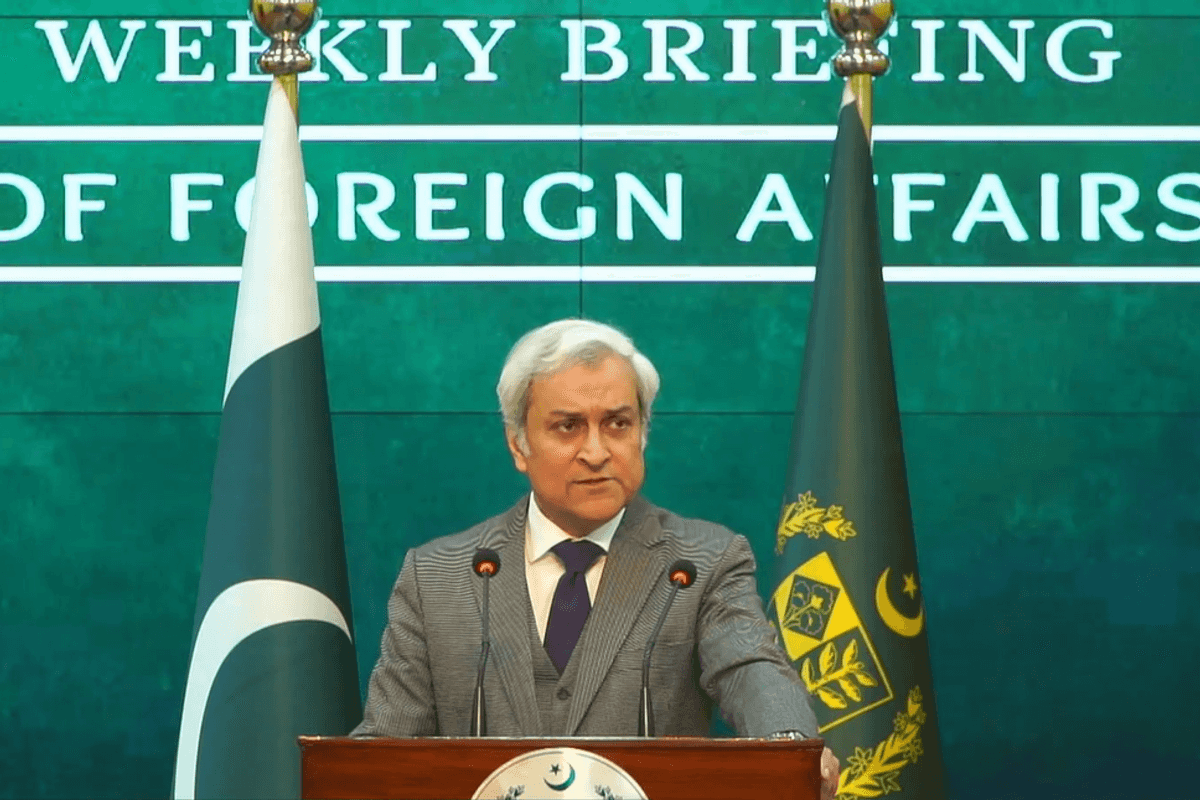
Responding to media queries, Foreign Office spokesperson Tahir Andrabi said Islamabad had taken note of the arrangement and described it as yet another country-specific exception in civil nuclear cooperation.
He highlighted that India’s 1974 nuclear test, conducted using plutonium produced in a Canadian-supplied reactor intended for peaceful purposes, directly led to the creation of the Nuclear Suppliers Group (NSG). Andrabi remarked that a state whose actions necessitated global export controls was now being granted preferential access under selective arrangements.
The spokesperson further noted that India has not placed all of its civilian nuclear facilities under International Atomic Energy Agency (IAEA) safeguards nor committed to doing so under the new agreement. Several facilities remain outside international inspection, and it remains unclear what non-proliferation assurances accompany the deal.
Andrabi warned that assured external uranium supplies could free up India’s domestic reserves for military purposes. This, he said, might enable expansion of fissile material stockpiles, accelerate growth of its nuclear arsenal, and deepen existing asymmetries in South Asia’s strategic balance.
Pakistan also expressed concern that the arrangement could undermine Canada’s stated commitment to the international non-proliferation regime and its obligations under that framework.
Reiterating its long-standing position, Pakistan emphasized that civil nuclear cooperation should follow a non-discriminatory, criteria-based approach, applicable equally to all states, including those not party to the Treaty on the Non-Proliferation of Nuclear Weapons (NPT). The spokesperson concluded that selective exceptions weaken the credibility of the global non-proliferation framework and risk destabilizing regional and international peace and security.







Comments
See what people are discussing