

Pakistan inflation seen easing to around 10% in September
Higher electricity and fuel costs are set to drive September price pressures even as Pakistan inflation forecasts point to a softer annual CPI reading

Haris Zamir
Business Editor
Experience of almost 33 years where started the journey of financial journalism from Business Recorder in 1992. From 2006 onwards attached with Television Media worked at Sun Tv, Dawn Tv, Geo Tv and Dunya Tv. During the period also worked as a stringer for Bloomberg for seven years and Dow Jones for five years. Also wrote articles for several highly acclaimed periodicals like the Newsline, Pakistan Gulf Economist and Money Matters (The News publications)
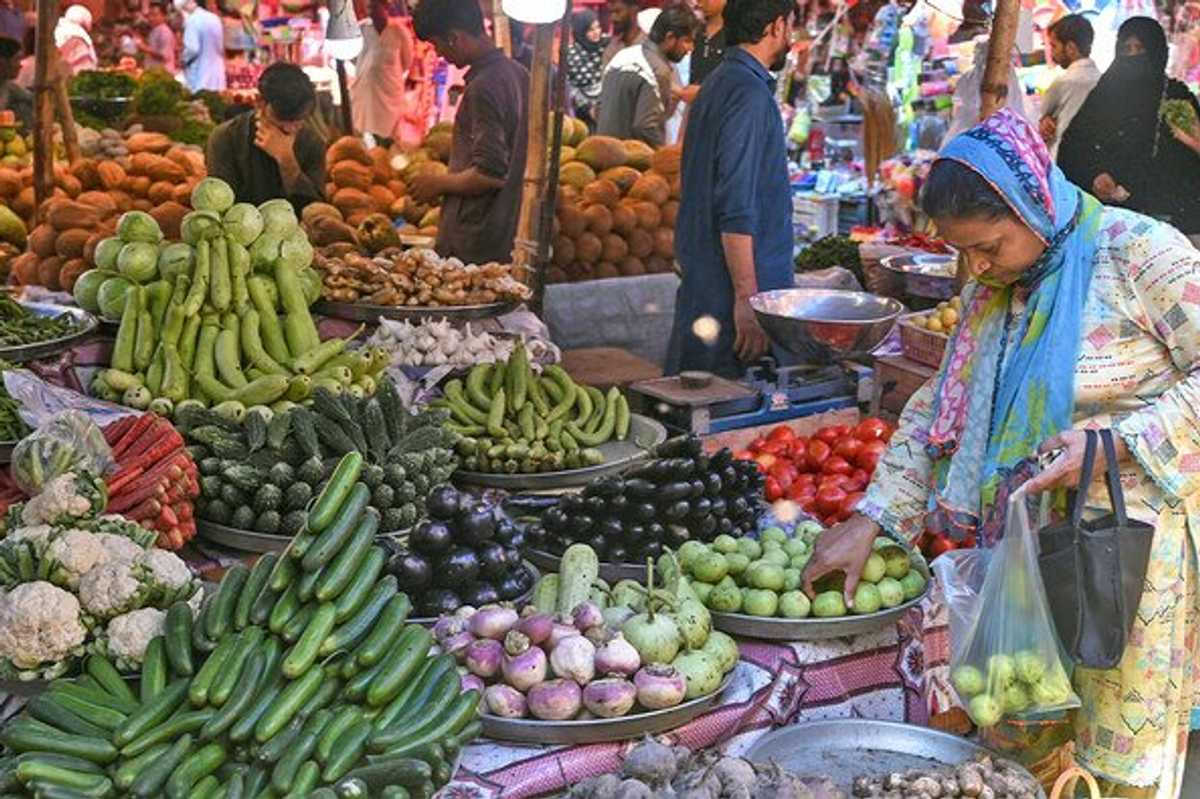
Major brokerages expect Pakistan’s headline inflation to remain around 10% year-on-year in September.
Pakistan’s consumer price inflation is expected to ease to around 10% in September from 11.15% in August, according to brokerage estimates, although sharply higher electricity and fuel costs are expected to keep price pressures elevated.
What is Pakistan’s inflation rate expected to be in September?
Major brokerages expect Pakistan’s headline inflation to remain around 10% year-on-year in September. Ismail Iqbal Securities projects 10.5%, Topline Securities forecasts 10.25%-10.75%, while JS Global expects around 10%, with higher electricity and fuel prices offsetting some relief from food inflation.
Ismail Iqbal Securities expects consumer prices to rise 1.4% month-on-month. It said annual inflation would remain in double digits despite a favorable base effect from September 2025, when CPI increased 2.0% from the previous month.
“Energy is doing the work rather than food,” Ismail Iqbal Securities said, estimating that housing could contribute about 55 basis points to the monthly increase.
Almost all of that contribution is expected to come from electricity, with the brokerage estimating a 12.6% monthly increase in electricity prices. It attributed the increase to the expiry of a negative quarterly tariff adjustment, a larger fuel charges adjustment and higher LPG prices.
Transport is projected to add another 35 basis points, driven by a 7.3% increase in motor fuel prices after petrol and diesel prices rose sharply during the first half of September.
Food prices are expected to contribute about 25 basis points. Onion prices rose around 32% during the month and fresh vegetables remained firm, while higher wheat and wheat flour prices added to pressure. Lower tomato and chicken prices partly offset those increases.
Why are electricity and fuel driving September inflation?
Ismail Iqbal Securities said the composition of inflation had shifted from food toward energy, potentially making the latest price pressures more persistent.
“The month’s mix is more important than the headline number,” the brokerage said, noting that food accounted for almost half of August’s inflation, while energy is expected to contribute more than a quarter of September’s monthly increase.
The brokerage said food-price increases can reverse as supplies normalize, while higher fuel and electricity costs can feed through to transportation, freight and eventually core inflation.
Core inflation, however, is expected to remain broadly stable in September. Ismail Iqbal Securities projects non-food, non-energy inflation at 8.7% year-on-year in urban areas and 8.4% in rural areas.
That compares with official August readings of 8.8% in urban areas and 8.5% in rural areas. Pakistan Bureau of Statistics
What do Topline Securities and JS Global expect?
Topline Securities expects September CPI inflation at 10.25%-10.75% year-on-year and about 1.3% month-on-month. It estimates fuel prices increased 6.5% during the month, while electricity prices rose 9.58% and LPG prices increased 2.61%.
Topline said higher electricity charges reflected a fuel charges adjustment of PKR 2.0581 per kilowatt-hour, compared with PKR 0.7503 in August.
The increase was accompanied by a positive quarterly tariff adjustment of PKR 0.5194 per kilowatt-hour after a negative PKR 1.9857 adjustment during June-August.
Food inflation is expected to increase 0.81% month-on-month, according to Topline, mainly because of higher onion and fresh vegetable prices. Lower tomato and egg prices are expected to partly offset those increases.
Topline estimates that real interest rates could fall to around 75-125 basis points in September, based on its inflation forecast. That would be below what the brokerage describes as Pakistan’s historical average of roughly 200-300 basis points.
It also expects average inflation for fiscal 2027 to exceed 8.5% if international oil prices remain around USD 90-100 a barrel, compared with its earlier forecast of 8.0%-8.5%.
JS Global expects September CPI inflation at around 10% year-on-year, down from 11.15% in August.
The brokerage estimates transport inflation could rise to 26.2% year-on-year and housing inflation to 12.3%, while softer food inflation of around 8% could partly offset those pressures.
An analyst at JS Global said renewed geopolitical tensions and disruptions to critical energy trade routes had increased uncertainty around Pakistan’s inflation outlook.
Under JS Global’s downside scenario of prolonged Middle East tensions, average inflation for fiscal 2027 could rise to about 9.8%, compared with its base-case estimate of 8.4%.
What could September inflation mean for interest rates?
Pakistan’s headline inflation accelerated to 11.15% year-on-year in August from 9.2% in July, according to the Pakistan Bureau of Statistics.
The State Bank of Pakistan kept its policy rate unchanged at 11.5% at its September 14 meeting.
The JS Global analyst said persistent energy pressures could increase pressure on the central bank to adopt a tighter monetary policy stance if geopolitical disruptions continue.
The September inflation reading will therefore be closely watched for signs that higher fuel and electricity prices are beginning to feed into broader consumer prices and core inflation.





Comments
See what people are discussing