

LHC hears Junaid Hafeez appeal, seeks answers on social media evidence
Lahore High Court admits Junaid Hafeez's blasphemy appeal and directs prosecutors to clarify the Facebook evidence behind his 2019 death sentence.

Laiba Zainab
Correspondent
Laiba Zainab is an award-winning journalist with nearly a decade of experience in digital media. She has received the DW & CEJ-IBA Data Journalism Award and the top digital media prize at the National Media Fellowship. At NUKTA, she covers underreported stories on health, crime, and social justice.
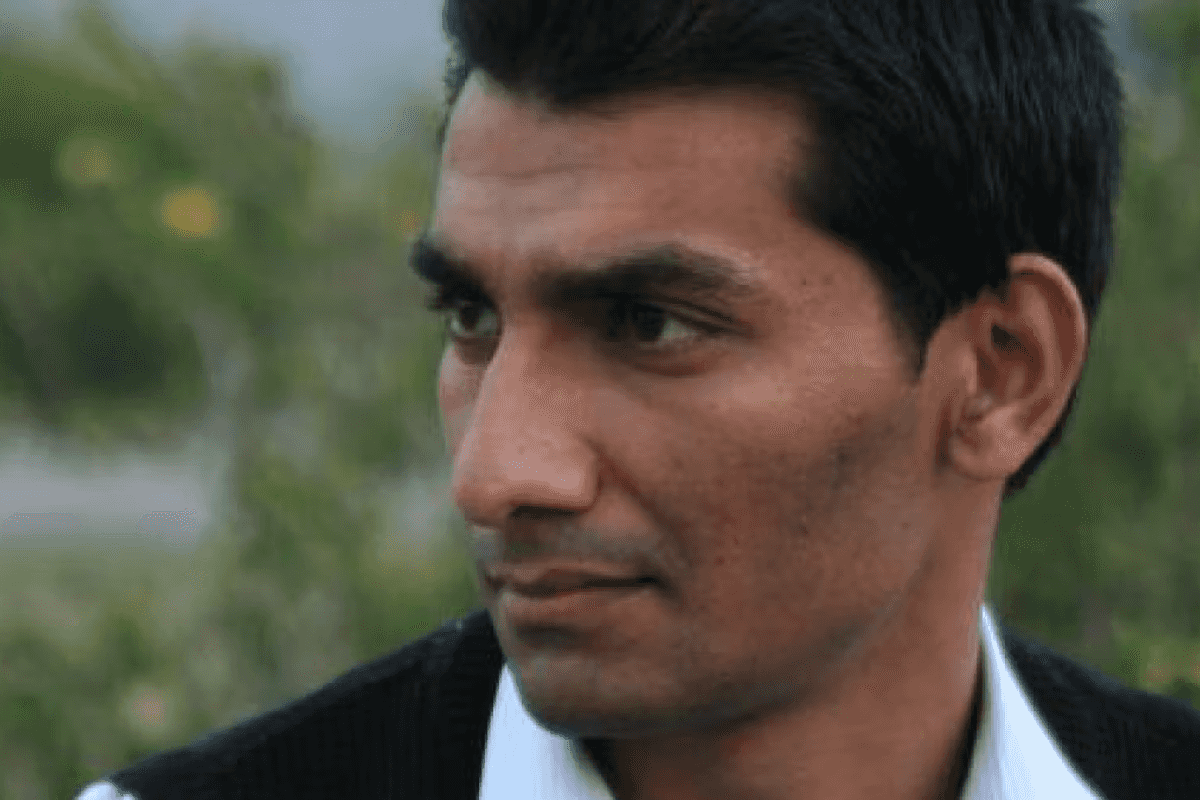
Blasphemy accused Junaid Hafeez.
The Lahore High Court held its first substantive hearing of death row prisoner Junaid Hafeez's blasphemy appeal on Tuesday, since the case was transferred from Multan. A two-member bench directed prosecutors to address questions about the social media evidence attributed to him before the next hearing.
What did the Lahore High Court decide on Tuesday?
Justices Sadiq Mahmood Khurram and Jawad Zafar admitted the Junaid Hafeez appeal for hearing and issued notices to the prosecution. They asked prosecutors to argue two points at the next hearing: the legal distinction between a Facebook page and a Facebook group, and the forensic basis for the posts attributed to Hafeez.
Justice Khurram questioned why the long-pending appeal had not been properly scheduled. "This is such an old case and you did not even have this appeal properly listed for hearing?" he remarked, adding that the case could have been decided the same day if notices had been issued earlier. The next hearing date will be announced once the case is relisted through the court office.
What did Hafeez's lawyer say after the hearing?
Hafeez's lawyer, Asad Jamal, told Nukta the court addressed two key issues on Tuesday. It noted that notices had not been issued to the respondents after the case moved to Lahore in late 2022, and it formally admitted the appeal while directing the prosecution to answer the court's questions.
"I think this case will now be decided, God willing," Jamal said, adding that he did not expect significant further delay. He did not say whether he would request an early hearing date or wait for the court office to schedule the next proceedings. Journalist Muneer Bajwa, who has followed the case, said relisted cases at the Lahore High Court typically come up for hearing within one to two weeks if an early date is requested.
Why was Junaid Hafeez sentenced to death?
Hafeez was arrested in March 2013 after students at Bahauddin Zakariya University in Multan accused him of posting derogatory content about the Prophet Muhammad (PBUH) on social media. He had been working as a lecturer there after returning from the United States, where he completed a Fulbright-funded master's degree in American literature, photography and theatre.
He was placed in solitary confinement in 2014 following repeated attacks by fellow prisoners. That year, his second lawyer, Rashid Rehman, was shot dead in his office after taking up the case, and Hafeez's first lawyer had already abandoned it under death threats. After a six-year trial, a Multan sessions court sentenced Hafeez to death in December 2019 under Section 295-C of the Pakistan Penal Code, along with a life term under Section 295-B and 10 years under Section 295-A. UN experts condemned the sentence at the time.
Hafeez appealed the death sentence in 2020, but it remained pending without a substantive hearing. Jamal had the case transferred from Multan to Lahore in 2022, though moving the court files took four to six months, and the case was listed two or three times afterward without being heard. Tuesday's proceedings marked the first substantive hearing since the transfer.
What evidence is at the center of the appeal?
The prosecution has alleged that Hafeez operated or controlled the social media accounts used to spread blasphemous material. Earlier reporting on the case has questioned whether the accounts remained active after his arrest and whether he was responsible for content posted through them.
The Lahore High Court's decision to seek arguments on the Facebook page versus group distinction, along with the forensic basis for the posts, puts the digital evidence at the center of the appeal. The questions also follow a separate July ruling in which the court held that merely creating or administering a WhatsApp group does not make a person criminally liable for every post made by other members.
How do Pakistan's blasphemy laws work?
Pakistan's blasphemy laws carry severe penalties, including life imprisonment and death, for alleged insults against Islam and Islamic figures. They originate in colonial-era legislation first codified in 1860 and expanded in 1927, and Pakistan retained them after independence in 1947.
Between 1980 and 1986, the government of Gen. Zia-ul-Haq added provisions as part of its Islamization program, covering derogatory remarks about Islamic figures, desecration of the Quran and blasphemy against the Prophet Muhammad (PBUH). About 40 people are currently on death row in Pakistan for blasphemy, though no execution for the offense has been carried out to date.
Hafeez's case sits within the broader context of Pakistan's blasphemy laws, alongside that of Asia Bibi, a Pakistani Christian woman who spent eight years on death row before the Supreme Court overturned her conviction in 2018. Her case drew sustained international attention to the legal process around blasphemy accusations. Amnesty International has described Hafeez's conviction as a gross miscarriage of justice, and international human rights organizations and UN experts have called for his release. His 2020 appeal is now formally before the Lahore High Court, with the next hearing date yet to be fixed.



Comments
See what people are discussing