

Pakistan pushes to formalize informal workforce and strengthen worker protections
ILO-convened forum gathers 300+ government, employer and worker representatives to review labor protections and plan formalization in high-informality sectors

Business Desk
The Business Desk tracks economic trends, market movements, and business developments, offering analysis of both local and global financial news.
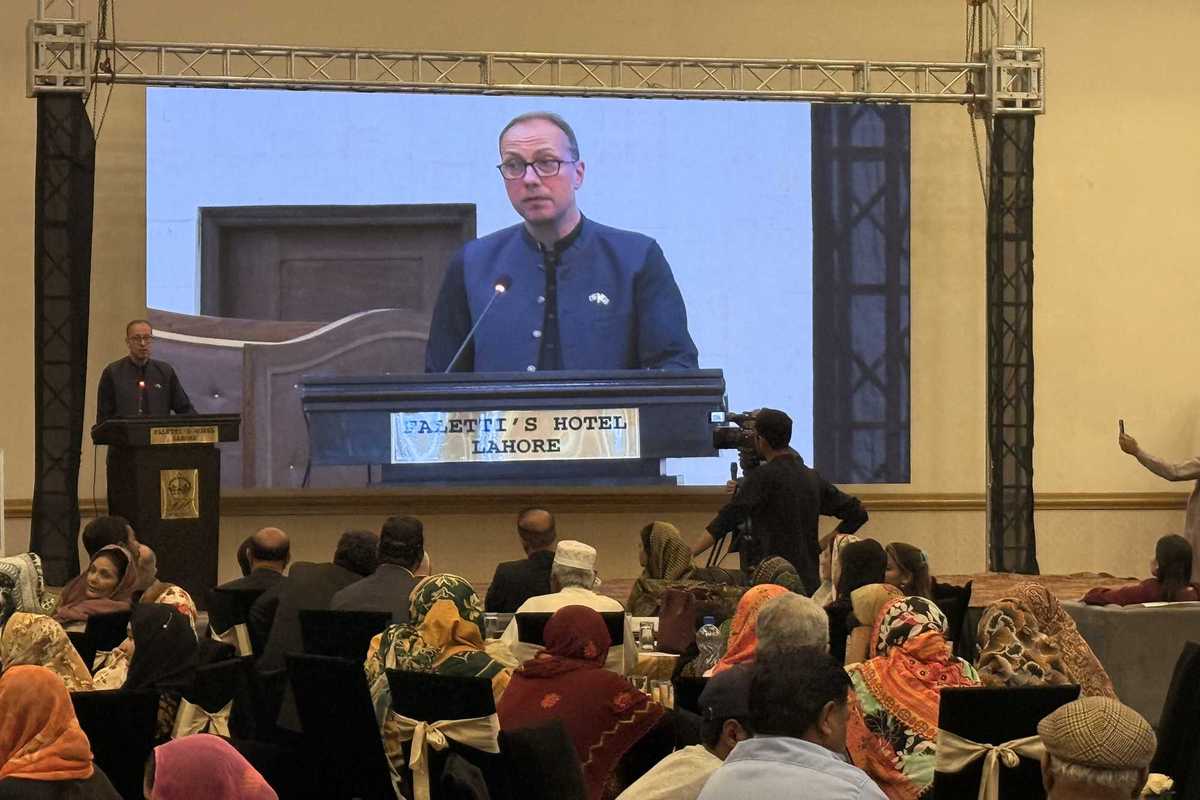
The forum focused on high-informality sectors including domestic work, sanitation and the plastic value chain.
ILO
More than 80% of Pakistan’s workforce is employed in the informal economy, often without basic rights, social security, or legal protections, officials and experts said at a national forum on Tuesday.
The forum, convened by the International Labour Organization (ILO) under its Promoting Rights and Social Inclusion through Organization and Formalization (PRS) Phase 2 Project, brought together over 300 representatives from government, employers’ organizations, and workers’ groups to assess progress in extending labor protections and chart a roadmap for formalizing work in sectors with high informality.
Geir Tonstol, Country Director of ILO Pakistan, told participants that “No single entity can tackle informality alone. Tripartite collaboration is key. When governments, employers and workers work together, awareness rises, practices improve, and institutions strengthen, ensuring that progress is sustainable.”
The forum focused on high-informality sectors including domestic work, sanitation, and the plastic value chain. Measures introduced under the project in Punjab included notification of a minimum wage for domestic workers and simplified registration for social security, supporting the implementation of the Punjab Domestic Workers’ Act and advancing formal recognition of workers.
The initiative also strengthened social dialogue by fostering collaboration between the Department of Labour, the Punjab Employees’ Social Security Institution, and employers’ and workers’ organizations. This led to the creation of new unions in sanitation and plastic sectors and the establishment of the first provincial Domestic Workers Federation in Punjab.
Over 10,000 domestic and sanitation workers have been mobilized and registered in unions, enhancing their representation. Union council committees at the community level were also set up to support dispute resolution for domestic workers. Meanwhile, the Lahore Waste Management Company extended social security coverage to more than 18,000 waste management workers and introduced improved occupational health and safety measures, including personal protective equipment, paid maternity leave, and workplace health services.
Tauseef Dilshad Khattana, Additional Secretary of the Punjab Department of Labour, emphasized the government’s commitment to facilitating workers’ transition to formal employment. He highlighted initiatives such as digital wallet accounts for low-income households to boost financial inclusion and strengthen accountability in employment relationships.
Heejin Ahn, Regional Project Coordinator of the PRS Project, said: “While informality is complex and multifaceted, our collective achievements through the project demonstrate that when policies, institutions, and systems work together, we can unlock pathways to formalization for workers, enhancing their visibility, dignity, and livelihoods.”


Comments
See what people are discussing