

Pakistan manufacturing gains momentum with 9.26% monthly jump
Manufacturing momentum builds as autos surge 67% in first half of fiscal year

Business Desk
The Business Desk tracks economic trends, market movements, and business developments, offering analysis of both local and global financial news.
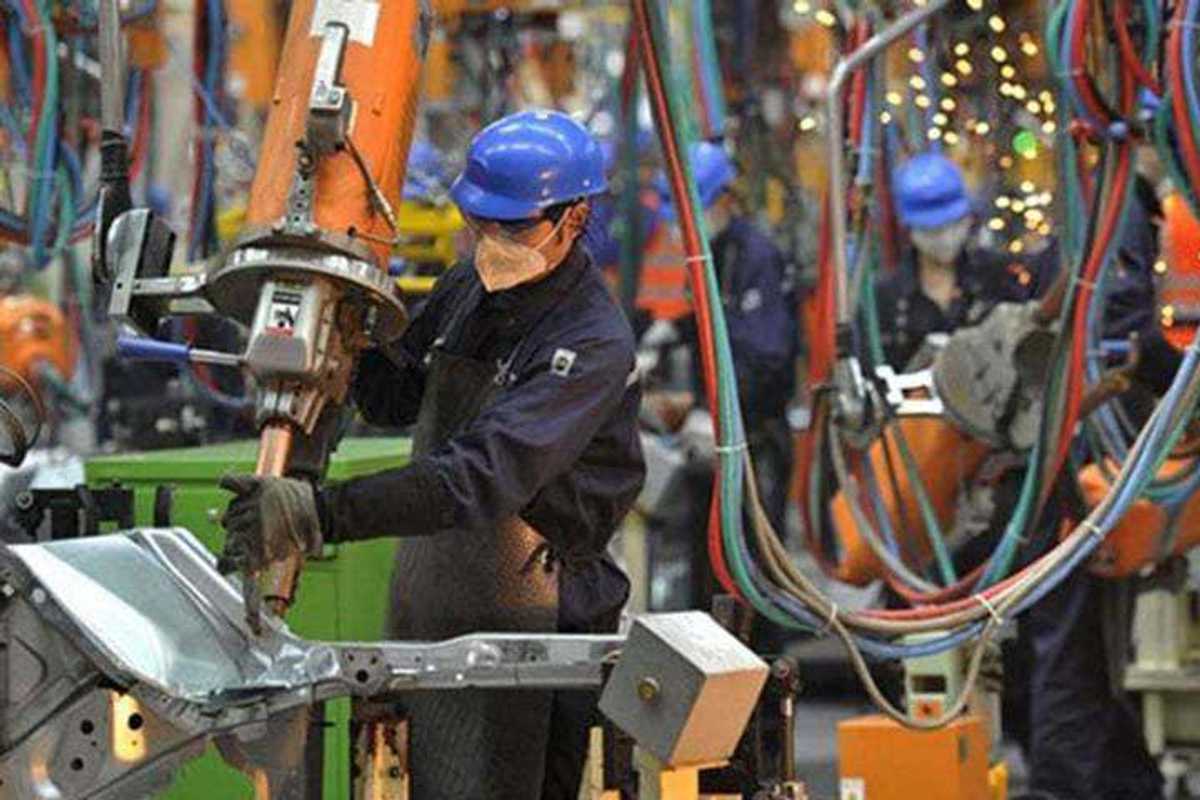
FILE: Pakistan manufacturing gains momentum with 9.26% monthly jump.
AFP
Pakistan’s large-scale manufacturing (LSM) sector expanded 4.82% in the first half of fiscal year 2025-26, driven by strong performances in automobiles, petroleum products, garments, and cement, according to official data released Tuesday.
The Pakistan Bureau of Statistics (PBS) said LSM output rose 4.82% during July-December compared with the same period a year earlier.
On a year-on-year basis, LSM grew 0.44% in December, while posting a sharp 9.26% increase compared with November, indicating strong sequential momentum at the end of the calendar year.
After recording a 10.4% annual increase in November, December’s expansion helped lift cumulative growth for the first half of FY26, the PBS data showed.
Key drivers
According to PBS, automobiles were the single largest contributor to overall growth, accounting for 1.57 points in the Quantum Index of Large-Scale Manufacturing Industries. Garments contributed 1.25 points, petroleum products 0.98 points and cement 0.66 points.
Other positive contributors included tobacco (0.13), textile (0.26), food (0.09), electrical equipment (0.22), paper and board (0.08), and other transport equipment (0.24).
However, chemicals (-0.16), pharmaceuticals (-0.33), iron and steel products (-0.20), machinery and equipment (-0.07), and furniture (-0.08) weighed on the index.
Production in the automobile sector surged 67.21% in July-December compared with a year earlier, while petroleum products rose 13.49%, cement 11.60%, and garments 7.48%.
In December alone, automobiles grew 31.2% year-on-year, garments 9.2%, cement 3.1%, beverages 15.1%, tobacco 44.6%, and electrical equipment 10.9%, reflecting what officials described as a broad-based recovery.
In addition to automobiles and garments, increases were recorded in food, beverages, tobacco, textiles, wearing apparel, coke and petroleum products, rubber products, non-metallic mineral products, fabricated metal products, computer, electronics and optical products, and electrical equipment.
Declines were observed in leather products, wood products, paper and board, chemical products, pharmaceuticals, iron and steel products, machinery, and furniture.
Officials cite macro stability
Khurram Schezad, adviser to the finance minister, said the data indicated that macroeconomic stability was translating into industrial expansion.
“The sustained growth in large-scale manufacturing, particularly the strong sequential jump in December, shows that stabilization measures are now feeding into real economic activity,” Schezad said. “Automobiles have emerged as a key growth engine, while construction-related and energy-linked sectors are also contributing positively.”
He added that firm performance in cement and non-metallic minerals pointed to continued strength in construction and infrastructure activity, while gains in petroleum products and electrical equipment underscored improving industrial demand.
Analysts say the rebound in consumer-linked sectors such as automobiles, garments, and beverages suggests a gradual recovery in domestic demand.
The PBS data signals that Pakistan’s manufacturing recovery is consolidating, with momentum extending into the first half of FY26 amid improving macroeconomic indicators.


Comments
See what people are discussing