

Pakistan November inflation seen at 9.5%-10% as food costs rise
Brokerages forecast higher tomato, wheat, electricity and LPG prices, while cheaper petrol and diesel are expected to bring some relief to transport costs

Business Desk
The Business Desk tracks economic trends, market movements, and business developments, offering analysis of both local and global financial news.
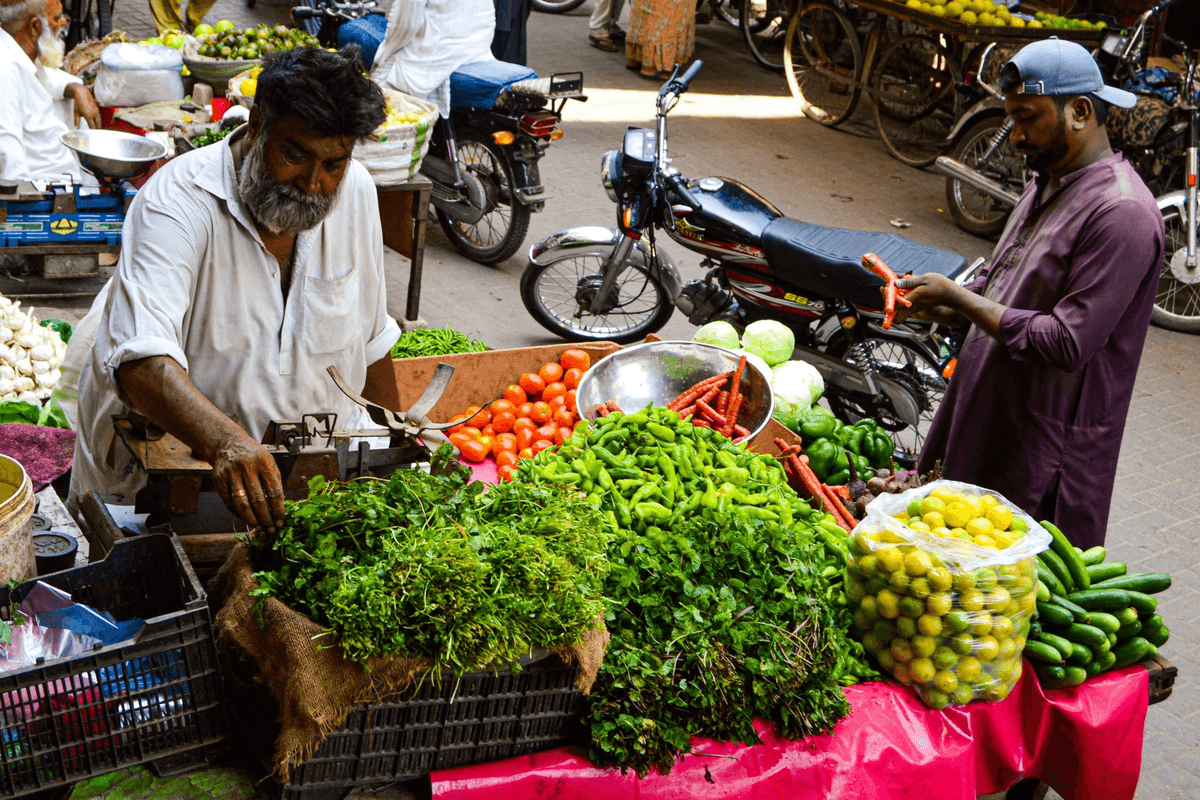
A vendor sells fresh vegetables at a market in Karachi. Rising food prices, particularly tomatoes, are expected to keep Pakistan's annual inflation near 10% in November despite cheaper petroleum products.
Pexels
Pakistan's annual inflation is expected to remain between 9.5% and 10% in November, as rising food, electricity and liquefied petroleum gas (LPG) prices offset cheaper petrol and diesel, according to forecasts by AKD Securities, Topline Securities and Sherman Securities. The projections suggest little change from October's 9.6% inflation rate.
What is Pakistan's November inflation forecast?
AKD Securities forecasts annual inflation of 9.8%, Sherman Securities 9.7%, and Topline Securities a range of 9.5% to 10%. The brokerages expect consumer prices to increase by around 0.4% to 0.65% from October. November 2025 inflation stood at 6.15%, according to their reports.
Topline Securities said the projected November reading would bring average inflation during the first five months of fiscal year 2027 to around 10%.
The Pakistan Bureau of Statistics reported annual consumer price inflation of 9.6% in October, down from 10.3% in September.
Why are food prices expected to rise in November?
Food prices are expected to remain a major source of inflationary pressure, with AKD Securities projecting a 2.5% month-on-month increase in the food index.
The brokerage expects tomato prices to surge 54.1%, followed by chicken at 11.3%, potatoes at 10.8% and eggs at 8.2%.
Wheat and wheat flour prices are projected to increase by 8% and 5.6%, respectively, amid domestic supply constraints. AKD linked the pressure to changes in the government's wheat procurement policy and the removal of support prices.
Topline Securities expects food inflation of approximately 2% month-on-month, also driven by higher prices of tomatoes, chicken, potatoes and eggs.
However, its tomato-price projection is considerably higher than AKD's estimate, at 82% month-on-month. Topline said the increase alone could add approximately 1 percentage point to food inflation.
Sherman Securities expects food prices to increase by 1.4% during November, citing higher vegetable and chicken prices.
The brokerage said wheat prices had reached around PKR 3,000 per 20-kilogram bag, although the increase might not be fully reflected in November's inflation reading because of the consumer price data collection methodology.
How will electricity and LPG prices affect inflation?
Higher electricity and LPG prices are expected to add to housing-related inflation, partly offsetting the relief from cheaper petroleum products.
AKD Securities projects the housing index to increase 1.9% month-on-month, compared with Topline Securities' estimate of 1.47% and Sherman Securities' forecast of 2.4%.
Electricity charges are expected to rise as the positive fuel charges adjustment reflected in November bills increases to PKR 2.3673 per kilowatt-hour for September consumption, compared with PKR 1.1086 per unit for August consumption reflected in October bills.
Sherman Securities expects electricity charges to increase 4.6% month-on-month. The brokerage also cited a positive quarterly tariff adjustment of approximately PKR 0.52 per unit, which applies to eligible consumers' bills during September, October and November.
LPG prices are another source of pressure, with Sherman Securities projecting an increase of more than 25% month-on-month.
The brokerage said local selling prices had reached around PKR 550 per kilogram, substantially above the Oil and Gas Regulatory Authority's (OGRA) notified maximum consumer price of approximately PKR 294 per kilogram for November.
AKD Securities separately expects the liquid hydrocarbons component of inflation to increase 22.4% during November, citing supply disruptions linked to the closure of the Strait of Hormuz amid the US-Iran conflict.
Will lower petrol prices help contain inflation?
Declining petroleum prices are expected to provide relief through the transport index, which all three brokerages forecast will contract during November.
AKD Securities expects transport costs to decline 9.8% month-on-month, while Topline Securities projects a 6.74% decrease. Sherman Securities forecasts a 9% reduction.
Topline estimates motor spirit prices have fallen by around 13% and high-speed diesel prices by 7%, based on the latest notified petroleum rates.
However, Topline said the effect of lower fuel prices on the broader transport index could be partly limited by the increasing share of subsidized public transportation and unchanged railway fares.
The expected decline in transport costs contrasts with the increases projected for food and housing, leaving overall annual inflation broadly stable.
What could November inflation mean for interest rates?
Despite the expected monthly increase in consumer prices, Topline Securities estimates Pakistan's real interest rate will remain positive at approximately 200 to 250 basis points, based on November inflation of 9.5% to 10%.
The State Bank of Pakistan (SBP) raised its policy rate by 50 basis points to 12% in October, citing heightened inflation risks from international energy prices and domestic food costs.
Topline expects inflation to average between 9.5% and 10.5% during FY27, assuming international oil prices remain between USD 90 and USD 95 per barrel for the remainder of the fiscal year.
Sherman Securities expects the SBP to maintain its policy rate at 12% at the next Monetary Policy Committee meeting, scheduled for December 14.
The brokerage cited inflation remaining above the central bank's medium-term target range of 5% to 7% as a reason for expecting the policy rate to remain unchanged.





Comments
See what people are discussing