

Global prices or tax: Who to blame for Pakistan's fuel hike?
Analysts say the ex-refinery price of diesel nearly doubled since March 1, but government could have cut the tax to ease the burden

Business Desk
The Business Desk tracks economic trends, market movements, and business developments, offering analysis of both local and global financial news.
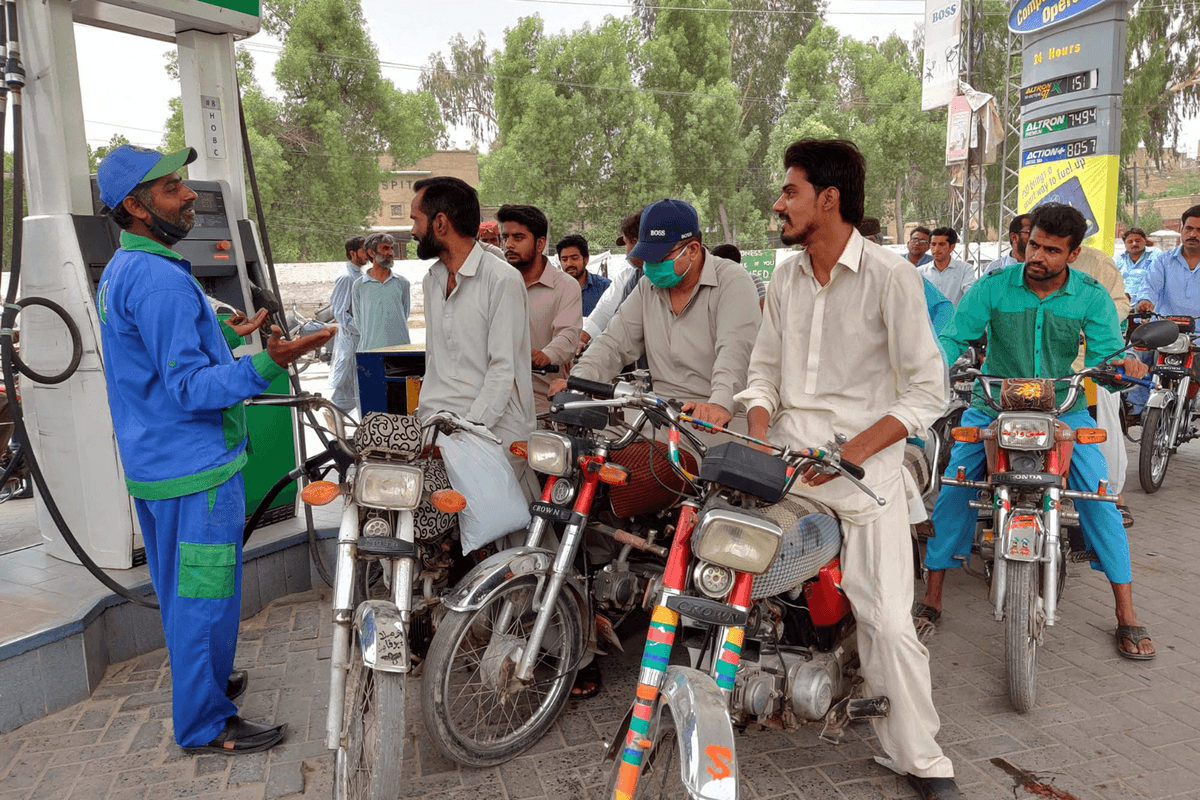
Pakistan's surging petrol and diesel prices are being driven primarily by higher global oil prices and rising landed costs during the Middle East conflict, analysts say.
However, they argue the government still had room to reduce or hold the petroleum development levy rather than raising it further.
What is driving Pakistan's fuel price increases in 2026?
The largest contributor to the fuel price surge is the jump in ex-refinery and landed costs. Diesel's ex-refinery price rose to PKR 342 per liter from PKR 179 on March 1, an increase of nearly 91%.
Petrol's ex-refinery price climbed to PKR 268 per liter from PKR 153 on March 1, while customs duty on both fuels rose sharply due to higher import values.
Customs duty on diesel increased from PKR 18 per liter in March to PKR 34 per liter currently. Petrol customs duty rose from PKR 15 to PKR 27 per liter over the same period.
Analysts said duties rose automatically because they are linked to import values, which surged with global oil prices.
Did Pakistan need to raise the petroleum development levy?
Analysts argue the government had room to hold or reduce the PDL instead of increasing it.
PDL collections during the first ten months of the fiscal year reached PKR 1.33 trillion against the annual target of PKR 1.47 trillion. That left a remaining gap of approximately PKR 140 billion, or PKR 70 billion per month, to meet the full-year target.
The PDL on petrol currently stands at PKR 117 per liter, up nearly 39% from PKR 84 per liter on March 1. The levy on diesel, by contrast, has been cut by around 44% from PKR 76 per liter to PKR 42 per liter over the same period.
Analysts said keeping the levy unchanged or reducing it could have lowered retail prices and supported consumption.
"Despite the rise in global oil prices, there was no pressing need to increase the petroleum levy further," one analyst said.
How have high fuel prices affected petroleum sales in Pakistan?
Pakistan's oil marketing companies recorded sales of 1.36 million tonnes in April 2026, down 7% year-on-year and 6% month-on-month.
The decline was attributed to the sharp rise in petrol and diesel prices following the escalation of tensions in the Middle East. Analysts said the steep price increases kept fuel demand subdued, in line with market expectations.
Average petrol prices in April rose 21% month-on-month to PKR 374.73 per liter from PKR 310.53 in March. High-speed diesel averaged PKR 409.61 per liter, up 26% from PKR 325.21 in March.
Key figures
Since May 9, the ex-refinery price of diesel is PKR 342 per liter, up from PKR 179 on March 1, and PKR 268 per liter for petrol, up from PKR 153 on March 1.
The PDL on petrol is PKR 117 per liter, and PKR 42 per liter on diesel. The PDL collection over 10 months of FY26 was PKR 1.33 trillion, with the full-year target set at PKR 1.47 trillion. Total sales by OMC in April 2026 stood at 1.36 million tonnes.



Comments
See what people are discussing