

Pakistan plans more panda bonds, weighs samurai issuance to diversify funding
Aurangzeb says Islamabad wants to become a repeat issuer in China and explore Japan’s bond market without increasing its overall external debt
Haris Zamir
Business Editor
Experience of almost 33 years where started the journey of financial journalism from Business Recorder in 1992. From 2006 onwards attached with Television Media worked at Sun Tv, Dawn Tv, Geo Tv and Dunya Tv. During the period also worked as a stringer for Bloomberg for seven years and Dow Jones for five years. Also wrote articles for several highly acclaimed periodicals like the Newsline, Pakistan Gulf Economist and Money Matters (The News publications)
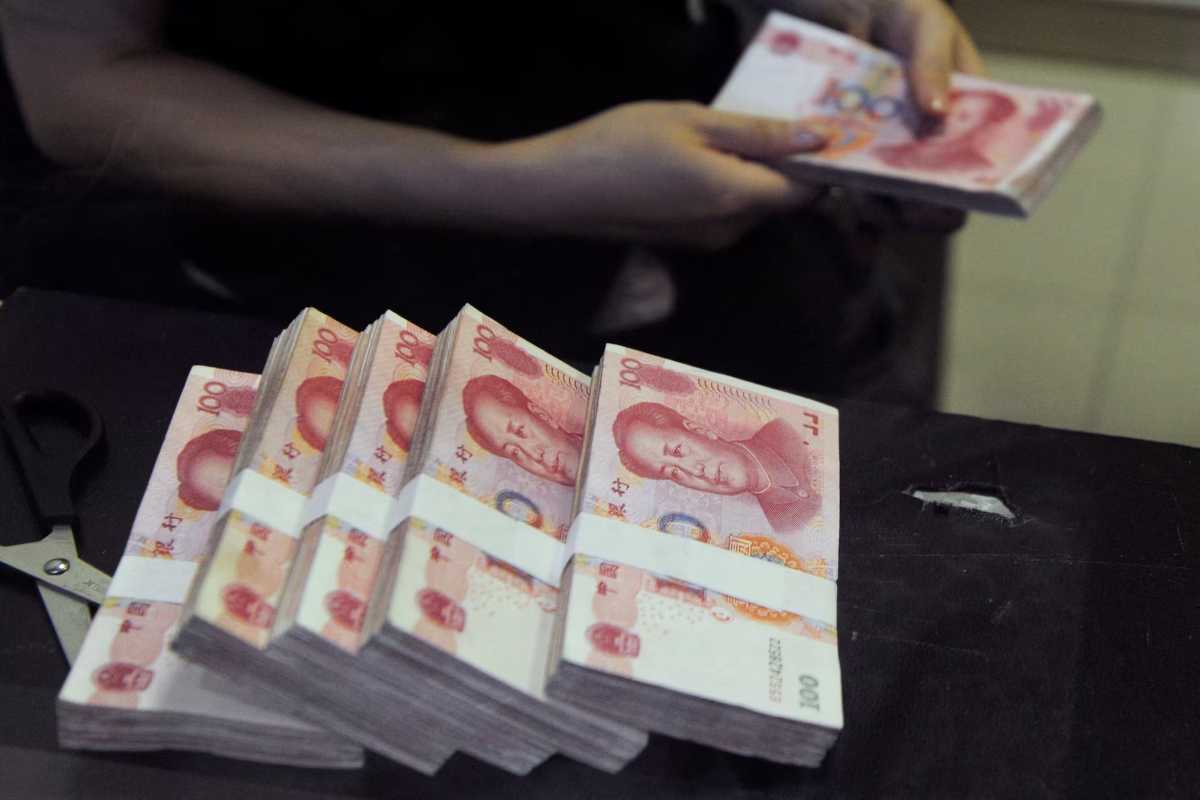
Finance Minister Aurangzeb says Pakistan’s inaugural panda bond in May would not be a “one-time issuance”.
Reuters
Pakistan plans to continue tapping China’s domestic bond market and is considering yen-denominated samurai bonds in Japan as it seeks to diversify its funding sources, Finance Minister Muhammad Aurangzeb told Nikkei.
Aurangzeb said Pakistan’s inaugural panda bond in May would not be a “one-time issuance” and that the government intended to return to China as a repeat issuer, while a potential samurai bond would require further assessment.
Why is Pakistan looking at more Asian bond markets?
Pakistan wants to broaden its investor base without increasing its overall external debt. After a CNY 1.75 billion panda-bond debut in May, the government intends to return to China as a repeat issuer and is also considering whether yen-denominated samurai bonds could provide another source of market financing.
“We do not want to increase the quantum of our external debt,” Aurangzeb said on Monday on the sidelines of the annual meetings of the International Monetary Fund and World Bank in Bangkok.
Pakistan issued its first panda bond worth CNY 1.75 billion in mid-May as part of a CNY 7.2 billion program. The Asian Development Bank and Asian Infrastructure Investment Bank provided partial guarantees for the issuance.
Panda bonds are yuan-denominated securities issued by foreign entities in China’s domestic bond market.
Aurangzeb said Pakistan intended to “keep going back and be a repeat issuer,” describing China as the “second largest and deepest capital market in the world.”
According to S&P Global figures cited by Nikkei, panda bond issuance reached about CNY 160 billion, or USD 23.8 billion, in the first half of 2026, up 68% from a year earlier. Foreign issuers accounted for 50% of issuance, compared with 39% a year earlier.
Emerging economies including Pakistan and Indonesia have increasingly used the market to broaden their investor bases and diversify financing sources.
Aurangzeb also expressed interest in tapping Japan’s samurai bond market.
Samurai bonds “would make sense” and were “something which we should think through,” he said, adding: “We need to do more homework.”
Tariff reforms aimed at boosting competitiveness
Alongside diversifying external borrowing, Pakistan is seeking to attract foreign direct investment by improving the competitiveness of domestic industries, including the automobile sector.
The government unveiled its five-year National Tariff Policy 2025-30 last year, providing for gradual reductions in import tariffs as part of a broader tariff-rationalization program.
“We will not make any compromise on the national tariff policy,” Aurangzeb said. “It’s not only about the auto industry — it’s about industries in general.”
He said previous government policies had provided protection to domestic industries without clear sunset clauses.
“That has not worked for Pakistan,” he said. “We want to make our industry competitive.”
Aurangzeb said he believed the tariff policy could help exports, “especially for raw materials and intermediate goods.”
He pointed to tariff reductions by members of the Association of Southeast Asian Nations in the late 1990s as an example of the broader benefits he believed trade liberalization could deliver.
“This can very much be a Southeast Asia moment for Pakistan,” he said.
New auto policy under consideration
Pakistan is seeking approval for a revamped Auto and Auto Parts Manufacturing Policy 2026-31, which remained under government consultation in September.
Separately, the government’s National Electric Vehicle Policy 2025-30 targets electric vehicles at 30% of all new vehicle sales by 2030 as part of Pakistan’s energy-transition and climate objectives.
Nikkei reported that strict export targets proposed for automakers under the new auto framework had generated debate, with some observers arguing that the requirements could favor Chinese new-energy vehicle manufacturers.
Chinese EV companies including BYD have already entered Pakistan. BYD is preparing to begin local assembly, with its Pakistani operation most recently targeting production for the fourth quarter of 2026. Publicly available information as of October 10 did not confirm that volume production had begun.
Aurangzeb said Pakistan welcomed Chinese automakers — “all of them.”
China is a major bilateral lender to Pakistan, while the two countries marked the 75th anniversary of diplomatic relations in May. Their relationship spans financing, infrastructure, trade, investment, defense and broader strategic cooperation.
IMF program supports investor engagement
Pakistan has entered 25 IMF arrangements since becoming a member of the fund in 1950, according to IMF data.
Nikkei reported that Pakistan owed the fund about USD 10.5 billion as of Monday. IMF data showed outstanding purchases and loans of SDR 7.991 billion as of September 30, before a scheduled repayment in October.
“We’re in good shape with respect to the program itself, which in turn helps us with our discussions with rating agencies and investors,” Aurangzeb said.
He said the current program contained a “structural reform agenda” that would “lead to sustainability.”
Aurangzeb said Pakistan would graduate from IMF assistance once the “rest of the world becomes convinced that we don’t need the lender of last resort.”
The government’s broader strategy combines efforts to widen access to international capital markets with tariff reform, export promotion and measures to attract foreign direct investment while seeking to contain growth in external debt.




Comments
See what people are discussing