

Pakistan PM says US-Iran ceasefire 'holding', efforts underway to resolve issues
Shehbaz Sharif says negotiations ‘nearly collapsed’ multiple times before Pakistan helped keep process alive

Ali Hamza
Correspondent
Ali; a journalist with 3 years of experience, working in Newspaper. Worked in Field, covered Big Legal Constitutional and Political Events in Pakistan since 2022. Graduate of DePaul University, Chicago.
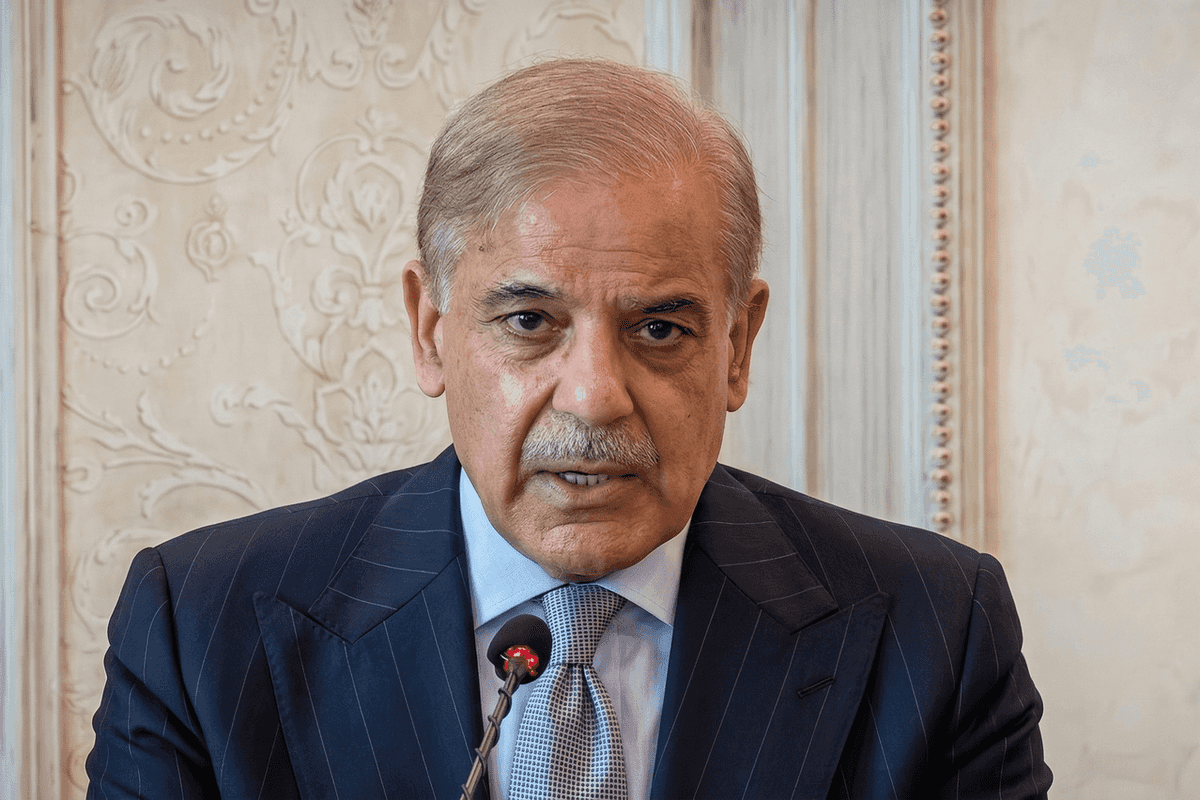
Sharif gave his most detailed public account yet of the behind-the-scenes diplomacy, saying Pakistan’s mediation repeatedly pulled the talks back from the brink during the cabinet meeting on April 13, 2026 in Islamabad.
Screenshot
Pakistan Prime Minister Shehbaz Sharif said Monday a ceasefire between the United States and Iran was “holding” and that efforts were underway to resolve outstanding issues after weekend talks failed to produce a full agreement.
Sharif made the remarks during a cabinet meeting in brief televised comments, saying, “The ceasefire is still holding and, as I speak, full efforts are underway to resolve the outstanding issues.”
He said the direct negotiations between the United States and Iran hosted in Islamabad came close to collapsing on multiple occasions but ultimately continued.
Sharif gave his most detailed public account yet of the behind-the-scenes diplomacy, saying Pakistan’s mediation repeatedly pulled the talks back from the brink.
“There were moments when the thread nearly snapped and then it held again,” he said, adding that negotiators worked through entire nights to keep the process alive.
“I am a witness to those moments,” he said. “As prime minister, my duty is to keep state secrets buried in my heart, but I can tell you this much.”
He said the Islamabad talks marked the first direct, face-to-face negotiations between the United States and Iran at the highest level since Iran’s 1979 Islamic Revolution, a gap of 47 years.
“All previous engagements between the United States and Iran at the highest levels were indirect talks,” he said, adding that both delegations came to Pakistan at Islamabad’s request and sat across from each other.
Sharif said the delegations held 21 consecutive hours of direct negotiations, describing the discussions as reflecting the complexity and stakes of the process.
“This is the first time these delegations sat face to face for 21 uninterrupted hours of direct talks,” he said.
He credited Pakistan’s mediation efforts, naming Deputy Prime Minister and Foreign Minister Ishaq Dar, Field Marshal Asim Munir, and their teams for staying engaged during critical phases.
“There were several moments when it seemed everything was about to fall apart and then it came back together,” Sharif said.
Sharif said both civil and military leadership roles would be remembered by history.
He also said Pakistan received international appreciation, including a phone call from Japan’s prime minister and messages from European leaders. He said both Iranian and U.S. delegations separately praised Pakistan’s hospitality and sincerity.
“They said Pakistan hosted us like brothers,” he said.
Sharif compared the effort to other major peace processes, including Oslo, Geneva, the Good Friday Agreement and the Sudan peace process, noting those took months or years.
“Pakistan was given by God not just the honor of hosting, but of mediating and of working toward the restoration of peace,” he said.
He ended his remarks by urging prayers for continued progress in the talks.
“I ask the nation to pray,” he said.
'Genuine chances for negotiations to succeed'
Meanwhile, Pakistan’s Defense Minister Khawaja Asif also expressed cautious optimism about ongoing Iran-United States negotiations, speaking to reporters outside Parliament House in Islamabad.
“We should pray to Allah, He has been very merciful to Pakistan,” Asif said. “In my estimation, there are still genuine chances for negotiations to succeed.”
He said the overall atmosphere following the latest round of talks appeared to be improving.
“There has been nothing negative to come out of the negotiations,” he said. “The positive aspects are becoming more visible.”
Asif suggested a possible breakthrough in the next round of talks.
“God willing, we will reach some conclusion by the next session,” he said, adding that outcomes ultimately depend on divine will.
On India, the minister said New Delhi was unsettled by Pakistan’s diplomatic role. “India is seething, they are burning from within over what is happening,” he said.



Comments
See what people are discussing