

Pakistan's private sector credit rises 16.6% to PKR 11.28 Tn
Finance Ministry's FY27 first-quarter scorecard shows stronger exports, remittances and investment, while manufacturing grows 1.85% in July–August

Business Desk
The Business Desk tracks economic trends, market movements, and business developments, offering analysis of both local and global financial news.
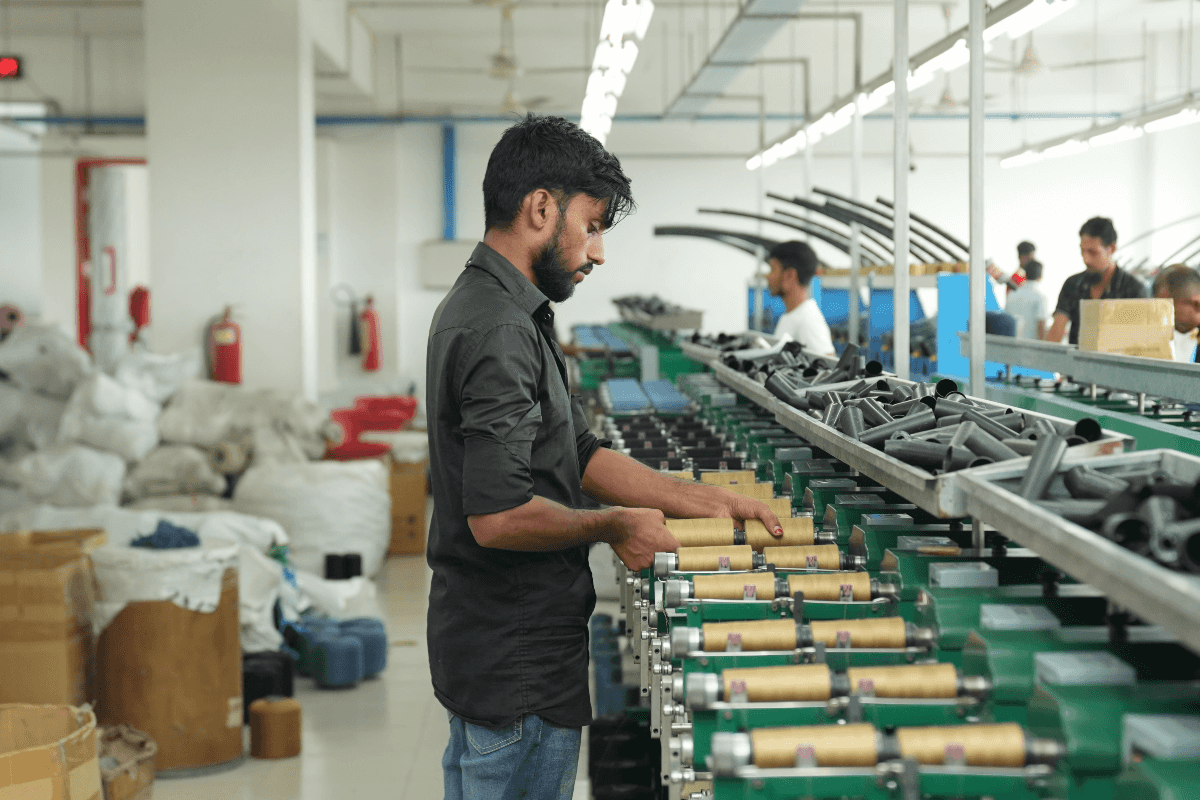
Credit to Pakistan's private sector rose 16.6% from a year earlier to PKR 11.28 trillion in September, while large-scale manufacturing grew 1.85% in July–August, according to the Ministry of Finance's first-quarter economic scorecard for fiscal 2026–27.
The ministry reported stronger exports, workers' remittances and foreign investment during July–September, alongside an increase in the current account deficit.
Combined exports of goods and services rose 11% from a year earlier to USD 11.2 billion, supported by growth in technology exports and freelancers' earnings.
Which sectors recorded the strongest credit growth?
Lending to small and medium-sized enterprises (SMEs) rose 66% from a year earlier to PKR 1.14 trillion in September, while housing finance increased 71.9% to PKR 365 billion, according to the Ministry of Finance. Automobile financing grew 33.6% to PKR 407 billion, and consumer financing climbed 34.5% to PKR 1.29 trillion.
Credit to the manufacturing sector reached PKR 5.89 trillion, an increase of 12.3% from a year earlier.
Large-scale manufacturing output rose 1.85% in July–August, with garments, automobiles and petroleum products among the sectors recording growth.
Other indicators pointed to stronger domestic demand during the first quarter. Cement sales increased 4%, fertilizer sales rose 2%, petroleum sales climbed 6% and automobile sales surged 28%.
Exports and remittances rise
Goods exports increased 8% to USD 8.5 billion in July–September, with September shipments reaching their highest level in 20 months, according to the ministry.
Services exports rose 23% to USD 2.7 billion.
Information technology and technology-related exports climbed 18% to USD 1.25 billion, with September recording the second-highest monthly level on record.
Freelancers' export earnings surged 46% to USD 550 million, while September registered an all-time monthly high.
Workers' remittances increased 14% to USD 10.9 billion during the quarter. Saudi Arabia, the United Arab Emirates, the United Kingdom and the European Union were among the leading sources.
Despite these inflows, Pakistan's current account deficit widened to USD 874 million from USD 755 million in the corresponding quarter last year.
The State Bank of Pakistan's foreign exchange reserves stood at USD 21.5 billion, up 52% from a year earlier, while total liquid foreign exchange reserves reached USD 26.8 billion.
Import cover improved to more than three months from 2.2 months a year earlier, and the rupee appreciated 1.5% from a year earlier.
Foreign investment and credit ratings improve
Total net foreign investment inflows reached USD 3.65 billion during the first quarter, compared with a net outflow of USD 33 million a year earlier, the ministry reported.
Foreign direct investment rose 20% to USD 720 million, while foreign private investment increased 44% to USD 691 million.
Foreign public investment recorded a net inflow of USD 2.96 billion, reversing a net outflow of USD 512 million in the same period last year.
The ministry also highlighted improvements in Pakistan's sovereign credit ratings.
Moody's upgraded Pakistan's rating by one notch to B3 from Caa1, with a stable outlook, while S&P Global Ratings raised its rating to B from B-, also with a stable outlook.
Fitch maintained Pakistan's B- rating with a stable outlook. All three major rating agencies now assign Pakistan ratings in the B category.
Pakistan also reached a staff-level agreement with the International Monetary Fund on the fourth review of its Extended Fund Facility and the third review of its Resilience and Sustainability Facility.
The agreement could unlock approximately USD 1.2 billion in additional financing, subject to approval by the IMF Executive Board.
Tax collection and government debt
The Federal Board of Revenue collected PKR 3.1 trillion in taxes during the first quarter, an increase of 7% from a year earlier and above its quarterly target.
The number of income tax filers rose 45% to 5.77 million.
The SBP maintained its policy rate at 11.5% through September, down from a peak of 22% in June 2024.
Pakistan's total government debt stood at PKR 86 trillion at the end of August, down PKR 714 billion, or 0.8%, from June 2026.
Domestic debt declined PKR 684 billion to PKR 58.8 trillion, while external debt remained broadly stable at USD 98.2 billion.
The government debt-to-GDP ratio stood at 68% at the end of FY26, compared with 75% in FY23, the ministry said.
Digital payments, privatization and relief programs
Digital transactions accounted for 92% of retail payments by volume in FY26, with 13.2 billion transactions, up 65% from a year earlier.
The number of active digital merchants exceeded 2 million, four times the previous level.
The ministry reported progress on privatization, including the post-transaction phase for Pakistan International Airlines and First Women Bank.
Preparations to privatize the Faisalabad, Gujranwala and Islamabad power distribution companies were advancing, with local and foreign investors prequalified and due diligence underway.
Privatization efforts involving airports in Islamabad, Lahore and Karachi were also progressing, with interest from investors in Saudi Arabia, Turkiye and the United Arab Emirates.
The ministry said PKR 75 billion had been allocated for fuel relief amid regional conflict, directly benefiting more than 12 million people.
It also reported progress in housing finance, agricultural lending and electric mobility initiatives.
The scorecard presents the government's assessment of Pakistan's economic performance and reform progress during the first quarter of FY27, with stronger credit growth, exports and foreign investment accompanied by a wider current account deficit.





Comments
See what people are discussing