

Pakistan's short-term inflation drops 0.45% as fuel and food prices ease
Pakistan's short-term weekly inflation decreased by 0.45% due to a sharp plunge in tomato and petroleum prices, though the annual rate remains at 11.94%

Business Desk
The Business Desk tracks economic trends, market movements, and business developments, offering analysis of both local and global financial news.
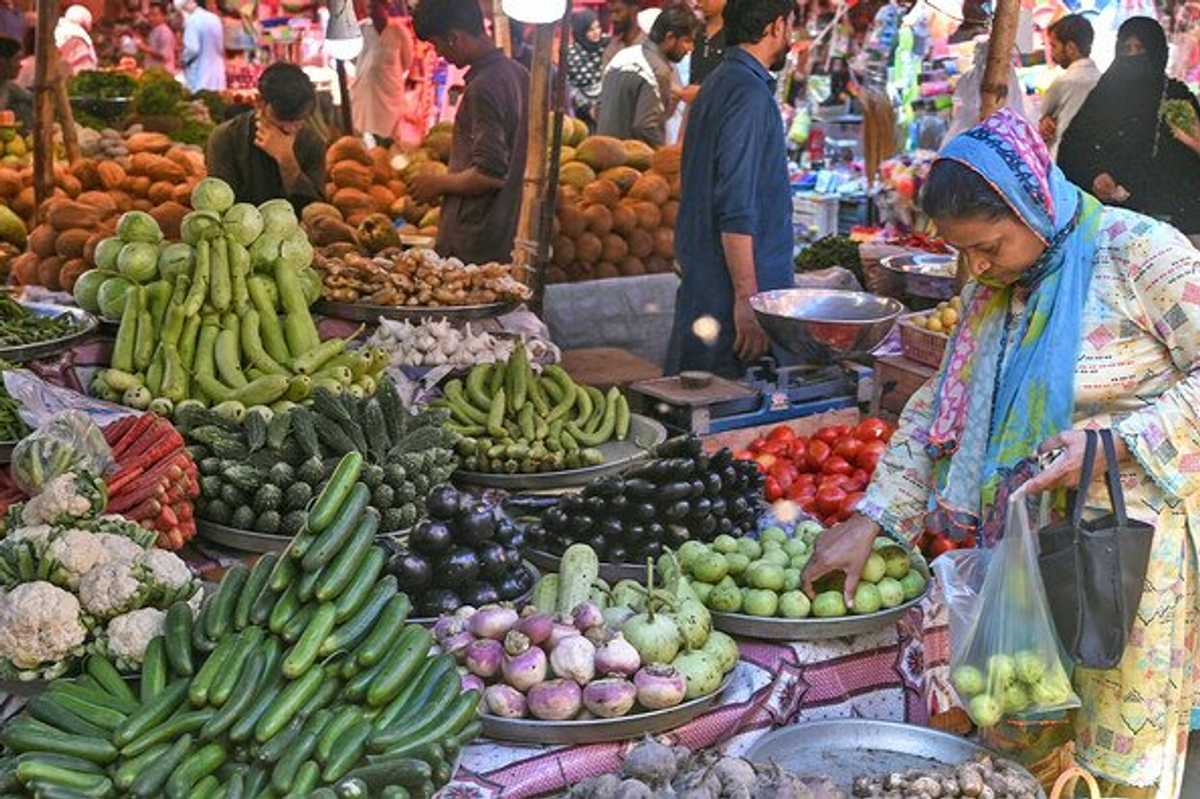
Pakistan’s short-term inflation fell by 0.45% week-on-week for the week ended July 9, 2026, driven primarily by lower costs of essential vegetables and domestic petroleum products.
Financial metrics compiled by the Pakistan Bureau of Statistics and evaluated by Optimus Capital Management indicate a mild easing of retail price pressures.
Which commodities drove the weekly drop in short-term inflation?
The weekly decline was spearheaded by a sharp 23.3% drop in the price of tomatoes, alongside a 15.1% contraction in liquefied petroleum gas (LPG) costs. Household budgets also found relief in minor price drops for pulse moong, which fell 2.2%, followed by a 0.7% decrease in petrol and a 0.6% reduction in diesel rates. Additional marginal declines were recorded in the prices of pulse masoor, sugar, and mustard oil.
The recent contraction marks the second consecutive weekly drop in the Sensitive Price Indicator (SPI), following a more pronounced 0.98% decline recorded during the preceding weekly cycle.
Economists view these consecutive dips as an encouraging indicator that immediate price pressures are beginning to stabilize for the average consumer. However, despite the short-term weekly relief, the broader annual SPI inflation metric remains elevated in double digits at 11.94% compared to the exact same period last year.
Which essential consumer goods recorded price increases?
Despite the overall downward trend, several essential kitchen staples experienced noticeable price hikes during the same tracking week. Potato prices climbed by 3.9%, while chicken costs rose by 3.7%, onions increased by 3.5%, and wheat flour became 1.6% more expensive. Smaller price increases were also documented for kitchen eggs, which went up 0.8%, and commercial washing soap, which edged higher by 0.4%.
The Sensitive Price Indicator monitors real-time weekly fluctuations across a specialized basket of essential consumer goods to act as a primary barometer for immediate inflation trends in Pakistan. While the cooling of energy and specific vegetable costs has successfully lowered the week-on-week index, the persistent double-digit annual rate continues to highlight long-term macroeconomic challenges.
Local market analysts remain watchful to see if this downward trajectory will successfully carry over into the broader consumer price index in the coming months.




Comments
See what people are discussing