

Pakistan's Supreme Court rules third-party property invalid in dower agreements without owner's consent
Pakistan's apex court rules third-party property cannot be pledged in dower agreement without owner's consent, partially overturning a Peshawar High Court order

Aamir Abbasi
Editor, Islamabad
Aamir; a journalist with 15 years of experience, working in Newspaper, TV and Digital Media. Worked in Field, covered Big Legal Constitutional and Political Events in Pakistan since 2009 with Pakistan’s Top Media Organizations. Graduate of Quaid I Azam University Islamabad.
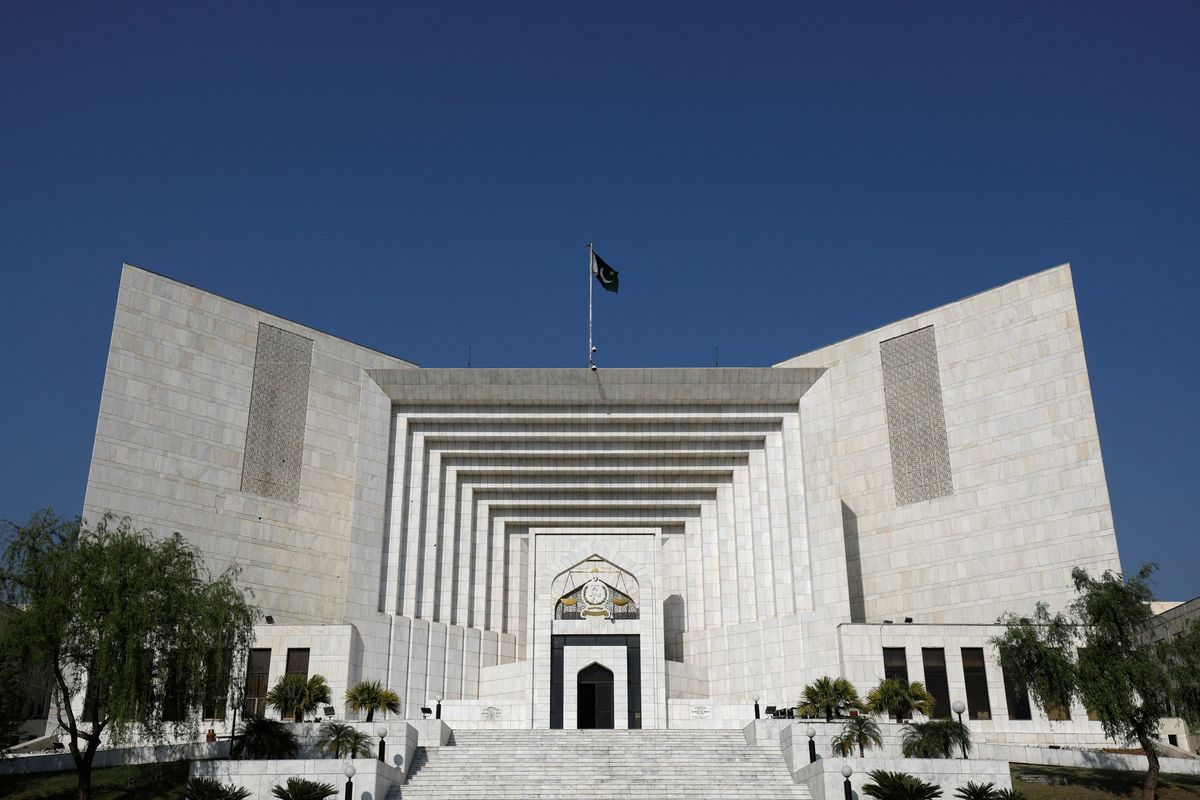
Pakistan's Supreme Court has ruled that assets owned by a third party cannot be included in a marital dower agreement unless the owner gives clear and voluntary consent.
The judgment, authored by Justice Musarrat Hilali, partially overturned a 2024 Peshawar High Court decision involving a residential plot listed as part of a bride's dower.
Known as Haq Mehr, this is the financial or material commitment a husband makes to his wife at the time of marriage, and can include cash, gold, or property. The court set aside orders relating to the disputed plot while upholding the remainder of the settlement.
Can a husband include property he does not own in a dower agreement in Pakistan?
No. The Supreme Court held that a husband cannot pledge or guarantee property belonging to a third party, including a relative, in a dower agreement without the explicit consent of the legal owner.
Any agreement that attempts to include such property without authorization is considered unenforceable. The ruling confirms that only property owned by the parties themselves can be pledged as part of a marital settlement.
What were the facts of the case?
The dispute centered on a one-kanal residential plot on Ring Road, Peshawar, which the bride claimed had been included in her agreed dower. Court records showed the property was registered in the name of the groom's father, who challenged its inclusion and said he had never consented to transfer or pledge it.
The Supreme Court found that lower courts had failed to properly assess the ownership evidence and had erred in granting relief over the disputed property.
The court also rejected the validity of a post-marriage agreement presented during proceedings, finding that witness testimony failed to establish it had been properly executed. While striking down the property-related claim, the court upheld the enforceability of the remaining dower, which included PKR 500,000 in cash and gold jewelery.
What does this ruling mean for dower agreements and women's property rights in Pakistan?
The judgment reinforces a core principle in Pakistan's family law: dower agreements must respect established property rights and cannot incorporate assets belonging to third parties without lawful approval.
It also reaffirms that whatever is validly included in a Haq Mehr agreement is legally enforceable and must be honored.
The ruling follows a broader line of Supreme Court decisions strengthening women's financial protections within marriage, including earlier rulings that all dowry, bridal gifts and presents given to a bride are her sole and exclusive property.




Comments
See what people are discussing