

Pakistan Senate seeks exporter tax relief and faster refunds in Finance Bill 2026-27 recommendations
The upper house urges the NA to restore the 1% Final Tax Regime for exporters, clear outstanding refunds, and cut energy costs in Finance Bill 2026-27.

Business Desk
The Business Desk tracks economic trends, market movements, and business developments, offering analysis of both local and global financial news.
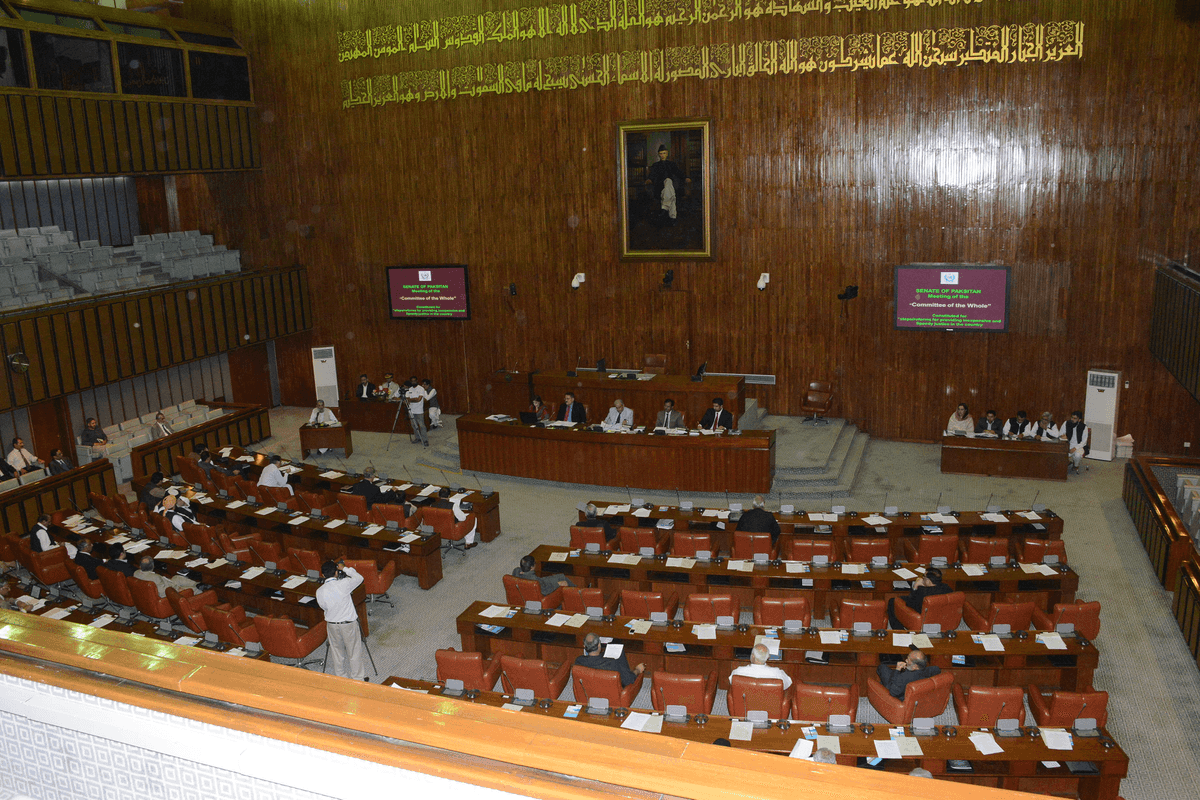
Pakistan's Senate has submitted a broad set of recommendations to the National Assembly on the Finance Bill 2026-27, calling for tax relief for exporters, industry, agriculture and consumers. The upper house urged restoration of the Final Tax Regime for exporters, faster refund processing, and reduced energy tariffs for industry. The National Assembly will now consider the proposals as budget deliberations continue ahead of final approval.
What did Pakistan's Senate recommend in the Finance Bill 2026-27?
The Senate recommended restoring the 1% Final Tax Regime for exporters to strengthen Pakistan's export competitiveness against regional rivals. It also called for a one-time clearance of all outstanding tax refunds, sales tax refunds for exporters within 72 hours, and refunds within one month for taxpayers integrated with the FBR's digital and e-invoicing systems. Energy tariff relief for industry was also sought.
How does the Senate want to improve export facilitation?
Beyond the FTR, the Senate called for exemptions or separate compliance mechanisms for export receipts under invoice requirements and priority handling of export-related disputes involving valuation, classification, input consumption and bond audits. For the textile sector specifically, senators proposed phasing in new compliance requirements, starting with large integrated units before extending them to medium-sized and smaller businesses. The Senate also recommended formally recognizing technologies such as loom monitoring systems, dye-house automation and energy monitoring systems to support industrial modernization.
The upper house urged the government to address what it described as the structural inequity of cross-subsidization in energy pricing and called for targeted relief on industrial electricity and gas tariffs. It also recommended a one-time clearance of outstanding refunds, citing similar measures introduced during the COVID-19 pandemic as a model. Improved business liquidity, senators argued, is essential to sustaining export growth.
What other tax changes did the Senate propose in the Finance Bill?
The Senate recommended reducing advance income tax on telecom services under Section 236 of the Income Tax Ordinance from 15% to 8%, saying the change would ease the burden on consumers and the telecommunications sector. On indirect taxes, senators suggested limiting sales tax on tea to retail-packaged branded products and reducing federal excise duty on aerated beverages to 15%. The upper house also urged the abolition of the 90% cap on input tax adjustments, or raising the threshold to at least 95%.
For small and medium-sized enterprises, the Senate recommended introducing turnover thresholds, technical support programs and sufficient transition periods before new tax measures take effect. It also called on the government to direct the FBR to issue tax exemption certificates to the Workers Welfare Board Sindh and the Sindh Employees' Social Security Institution.
What did the Senate recommend for agriculture and the fertilizer sector?
The Senate warned against imposing additional indirect taxes on agriculture, saying higher costs could harm farmers and affect food production. For the fertilizer sector, senators opposed the proposed increase in minimum tax under Clause 24D and recommended retaining the existing 0.25% rate for distributors, dealers, sub-dealers and wholesalers. They also called for a withdrawal or substantial reduction of withholding tax under Section 236H to avoid excessive turnover-based taxation.
In a separate administrative proposal, senators recommended making white uniforms mandatory for customs officials posted at airports to improve identification and uniformity. The full set of recommendations will now be considered by the National Assembly as lawmakers continue deliberations on the Finance Bill 2026-27.





Comments
See what people are discussing