

Pakistan’s series win over Sri Lanka masks persistent T20 concerns
Pakistan have secured the series, but questions remain over their preparations for tougher opposition and their willingness to give more opportunities to youngsters

Zaid Hassan
Producer
Zaid Hassan, a seasoned sports journalist, led Cricket Pakistan as editor for four years, shaping its coverage with insightful analysis. Now a producer at Nukta, he expands into broader storytelling while remaining a key voice in Pakistan’s sports media.
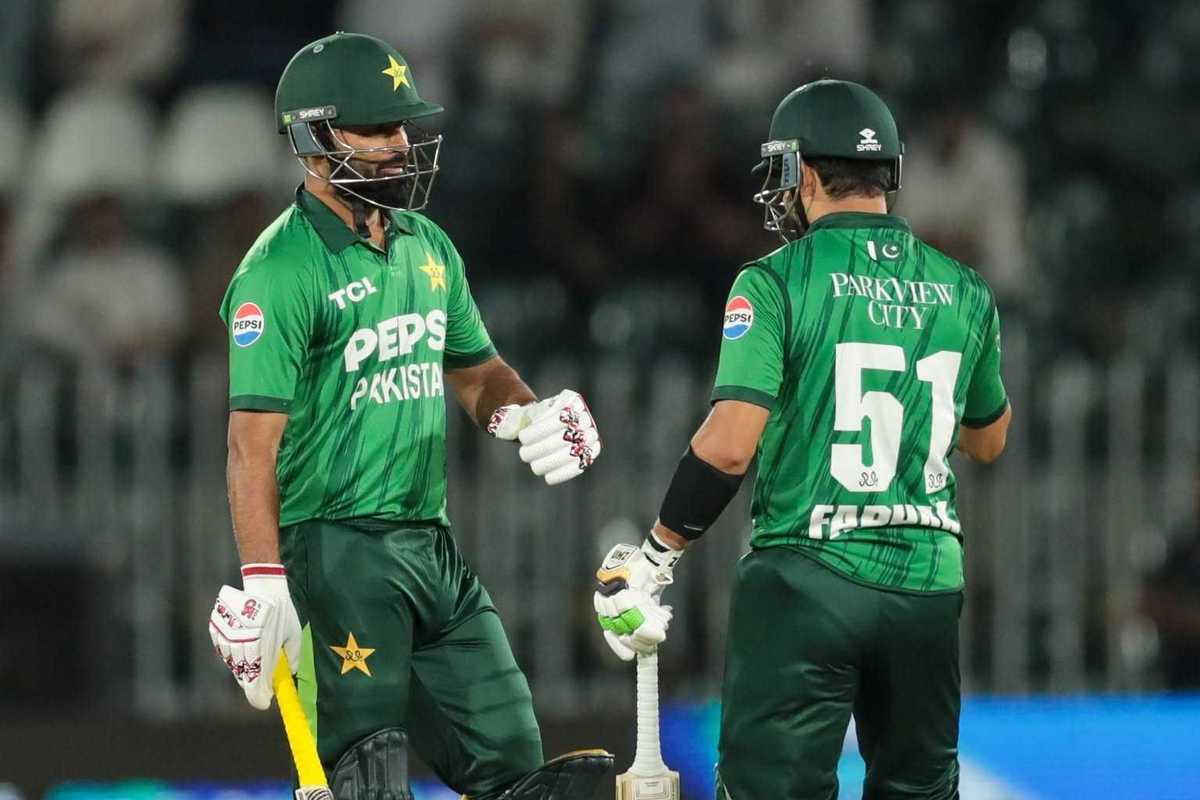
Pakistan captain Sahibzada Farhan and opener Fakhar Zaman in action during the second T20I against Sri Lanka in Rawalpindi on Sunday.
PCB
Hard-hitting batter Maaz Sadaqat and captain Sahibzada Farhan struck half-centuries before Pakistan’s bowlers delivered a clinical performance to secure a commanding 82-run win over Sri Lanka in the second T20I at the Rawalpindi Cricket Stadium on Sunday.
The victory put Pakistan 2-0 ahead in the three-match series, sealing the series with one match still to play at the same venue on Tuesday.
While the result underlined Pakistan’s superiority over a depleted Sri Lankan side, it also raised an important question: Has the team genuinely improved, or are the results masking concerns that could become costly against stronger opposition?
Have Pakistan addressed their batting concerns?
Farhan delivered a half-century in the second T20I, but his innings was not without its early struggles. At one stage during the powerplay, the Pakistan captain had managed just 14 runs off 15 deliveries.
His eventual 73-run knock from 44 balls was valuable, but Sri Lanka’s fielding errors played a significant role in giving him opportunities to settle. The visitors dropped catches that allowed Farhan to capitalize and build his innings.
Against a stronger team, such opportunities might not come so frequently. Pakistan cannot afford to depend on opposition mistakes when facing some of the leading sides in international cricket.
Farhan’s overall T20 career strike rate stands at around 138, but his scoring rate against teams ranked above Pakistan has been considerably lower, at around 115. That difference highlights an area the captain must address if Pakistan are to compete consistently against elite opposition.
Should Maaz Sadaqat open alongside Farhan?
Maaz has shown the ability to get Pakistan off to an aggressive start, making a strong case for a regular opening role alongside Farhan.
Fakhar Zaman, meanwhile, can also take time to settle before accelerating. While his experience and ability remain valuable, Pakistan must consider whether their opening combination offers the best balance between stability and early scoring.
Pairing Farhan with an attacking batter such as Maaz could help put immediate pressure on opposition bowlers. It would also allow the captain to build his innings without leaving Pakistan behind the required scoring rate during the powerplay.
The management should use the remaining matches to assess combinations that can work against higher-ranked teams, rather than judging success solely by results against weaker opposition.
Why are Pakistan still hesitant to back young players?
Pakistan have already seen what established players such as Shadab Khan, Saim Ayub and Abrar Ahmed can offer. All three have played more than 40 T20 internationals, giving the management a substantial body of evidence to assess their strengths and limitations.
That makes the decision to persist with familiar options, while younger alternatives wait for opportunities, increasingly difficult to justify.
Players such as Arafat Minhas and Sufiyan Muqeem could have benefited from a chance when the series was still competitive. Instead, Pakistan may now turn to experimentation in the third T20I, when the result will have no bearing on the series outcome.
A dead rubber can provide valuable experience, but opportunities in high-pressure situations are even more important for assessing whether young players can deliver when the stakes are higher.
Is it time to start building for the next T20 World Cup?
The next T20 World Cup is still two years away, giving Pakistan sufficient time to develop a settled and competitive squad. However, that window should be used to identify and back promising players rather than postpone difficult selection decisions.
Pakistan have previously turned to familiar names in the build-up to major tournaments, recalling Imad Wasim and Mohammad Amir ahead of the 2024 T20 World Cup. That approach reflected a search for experience and immediate solutions rather than confidence in a settled group.
The lesson should be clear: rebuilding cannot begin only when a World Cup approaches.
Winning the series against Sri Lanka is a positive result, and Pakistan deserve credit for their performances. But series victories must also serve a larger purpose.
The real test is whether Pakistan can translate these wins into progress against the world's best teams. That requires sharper batting in the powerplay, better preparation for elite opposition and, above all, the courage to trust young players before the pressure of a World Cup forces the issue.





Comments
See what people are discussing