

Pakistan sets FY27 gross financing needs at PKR 28.65 trillion
Government will cut net T-bill issuance, raise Sukuk and fixed-rate PIBs, and seek more than USD 2 billion from international bond markets in FY27

Business Desk
The Business Desk tracks economic trends, market movements, and business developments, offering analysis of both local and global financial news.
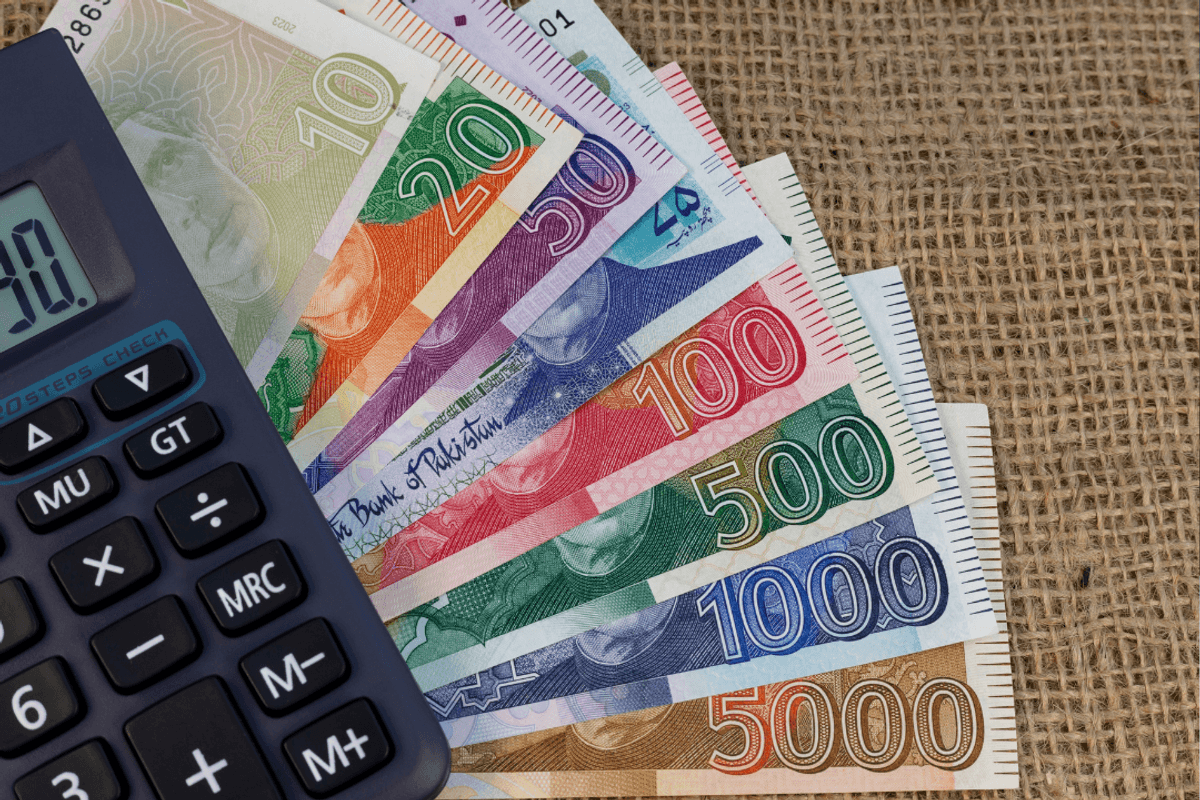
Pakistan's financing requirement is equivalent to about 20% of projected nominal GDP of PKR 143.67 trillion
Pakistan plans to meet gross financing needs of PKR 28.65 trillion in fiscal 2027, equivalent to about 20% of GDP, while shifting domestic borrowing away from short-term Treasury bills toward longer-term fixed-rate bonds and Sukuk, according to the Finance Division’s Annual Borrowing Plan released September 29.
How much financing does Pakistan need in FY27?
Pakistan’s gross financing needs for fiscal 2027 are projected at PKR 28.65 trillion, comprising a PKR 7.02 trillion federal fiscal deficit and PKR 21.63 trillion in debt maturities. The government plans to finance most of the deficit domestically while extending debt maturities and reducing refinancing risk.
The financing requirement is equivalent to about 20% of projected nominal GDP of PKR 143.67 trillion, compared with gross financing needs of around 21% of GDP in the previous fiscal year.
The borrowing plan is aligned with Pakistan’s Medium-Term Debt Management Strategy for fiscal years 2026-28 and seeks to lengthen the maturity profile of public debt, reduce refinancing and interest-rate risks, and broaden the investor base.
The government expects net domestic borrowing of PKR 6.05 trillion to finance most of the federal fiscal deficit. Net external financing is projected at PKR 813 billion, while privatization proceeds are estimated at PKR 161 billion.
How will Pakistan change its domestic borrowing mix?
The government plans to reduce its reliance on short-term borrowing by replacing maturing Treasury bills with medium- and long-term securities.
Net issuance of Market Treasury Bills is projected at negative PKR 2.59 trillion, while Pakistan Investment Bonds are expected to provide PKR 4.58 trillion in net financing. Fixed-rate PIBs are targeted to account for more than half of new issuances.
The plan limits floating-rate exposure to the 10-year variable-rate Government Ijara Sukuk structure as part of efforts to reduce sensitivity to short-term interest-rate movements.
The government also plans to introduce a 20-year fixed-coupon bond after consultations with stakeholders. It will continue using two- and 15-year zero-coupon bonds to serve institutional investors and broaden the range of government securities.
The strategy is intended to increase the average time to maturity of domestic debt while reducing refinancing and interest-rate risks.
How much Sukuk does Pakistan plan to issue?
Islamic financing will form a major part of the government’s domestic borrowing program, with gross Sukuk issuance targeted at around PKR 6.6 trillion during fiscal 2027.
Government Ijara Sukuk, Bai Muajjal and short-term Sukuk are expected to provide PKR 3.79 trillion in net financing.
The plan follows the launch of a hybrid Sukuk in April 2026 and subsequent issuance of three- and six-month short-term Sukuk.
The government also intends to accelerate development of a Central Asset Registry to streamline the issuance of Shariah-compliant securities.
The government said liability-management operations totaling PKR 4.7 trillion have been conducted since the program began in September 2024, including debt buybacks and retirement of SBP debt.
Further buybacks and debt switches will depend on available fiscal space and market conditions.
How much domestic debt matures in FY27?
Pakistan faces about PKR 17.1 trillion in domestic debt maturities during fiscal 2027, with Treasury bills accounting for the largest portion.
Around PKR 11.1 trillion in T-bills mature during the year, with much of the repayment concentrated in the first two quarters. PIB maturities total about PKR 3.1 trillion, including floating-rate bonds, while Government Ijara Sukuk maturities amount to about PKR 1.9 trillion.
Another PKR 900 billion of one-year discounted Government Ijara Sukuk is due during the fiscal year.
The concentration of short-term maturities helps explain the government’s push to replace short-term instruments with longer-duration securities and improve the debt repayment profile.
How much external financing does Pakistan expect?
Pakistan projects net external financing of PKR 813 billion, equivalent to about USD 2.8 billion using the plan’s assumed exchange rate of PKR 290 per dollar.
Multilateral lenders are expected to provide the largest positive contribution, with net inflows projected at USD 1.58 billion.
The government also plans to increase its use of international capital markets, aiming for more than USD 2 billion in Eurobond and international Sukuk issuance, subject to market conditions.
The plan says part of future international issuance could replace shorter-term external debt with longer-dated market financing, extending maturities and reducing refinancing risk.
The detailed borrowing table retains USD 2 billion of bond issuance based on fiscal 2027 budget estimates and notes that an actual USD 3 billion Eurobond has already been issued. It says domestic net financing will be adjusted accordingly.
Existing foreign commercial bank loans are also expected to be refinanced, while new facilities may be explored if financing terms and pricing are favorable.
The government will continue encouraging non-resident investment in government securities, Naya Pakistan Certificates and Islamic Naya Pakistan Certificates.
How much external debt matures in FY27?
External principal maturities during fiscal 2027 are projected at USD 15.6 billion.
Bilateral deposits account for USD 7 billion and are expected to be rolled over. Multilateral maturities total USD 5.3 billion, while commercial lenders account for USD 3.3 billion. No Eurobond maturities are scheduled during the fiscal year.
Pakistan’s total public debt stood at PKR 86.7 trillion at the end of June 2026, comprising PKR 59.4 trillion in domestic debt and PKR 27.3 trillion in external debt.
The Debt Management Office said the average time to maturity of public debt increased to 3.8 years in June 2026 from 2.7 years in June 2024. The government is targeting 4.2 years by fiscal 2028.
The borrowing plan also says interest expenditure declined by 22% in fiscal 2026.
How does the government plan to attract more retail investors?
The government plans to expand individual participation in the domestic debt market through digital access to government securities, including the InvestPak platform.
The Central Directorate of National Savings is also being restructured, with plans to improve products, introduce market-driven pricing and expand digitalization.
The Annual Borrowing Plan will be supplemented by quarterly auction calendars providing guidance on planned domestic borrowing, instruments and indicative timing.
The Finance Division cautioned that financing estimates could change depending on domestic and international economic conditions, interest rates, exchange rates and debt-market dynamics.





Comments
See what people are discussing