

Pakistan unveils another plan to revive dormant steel mill
Ministry says scrap from dismantled ships will be used as raw material in Pakistan Steel Mills

Business Desk
The Business Desk tracks economic trends, market movements, and business developments, offering analysis of both local and global financial news.
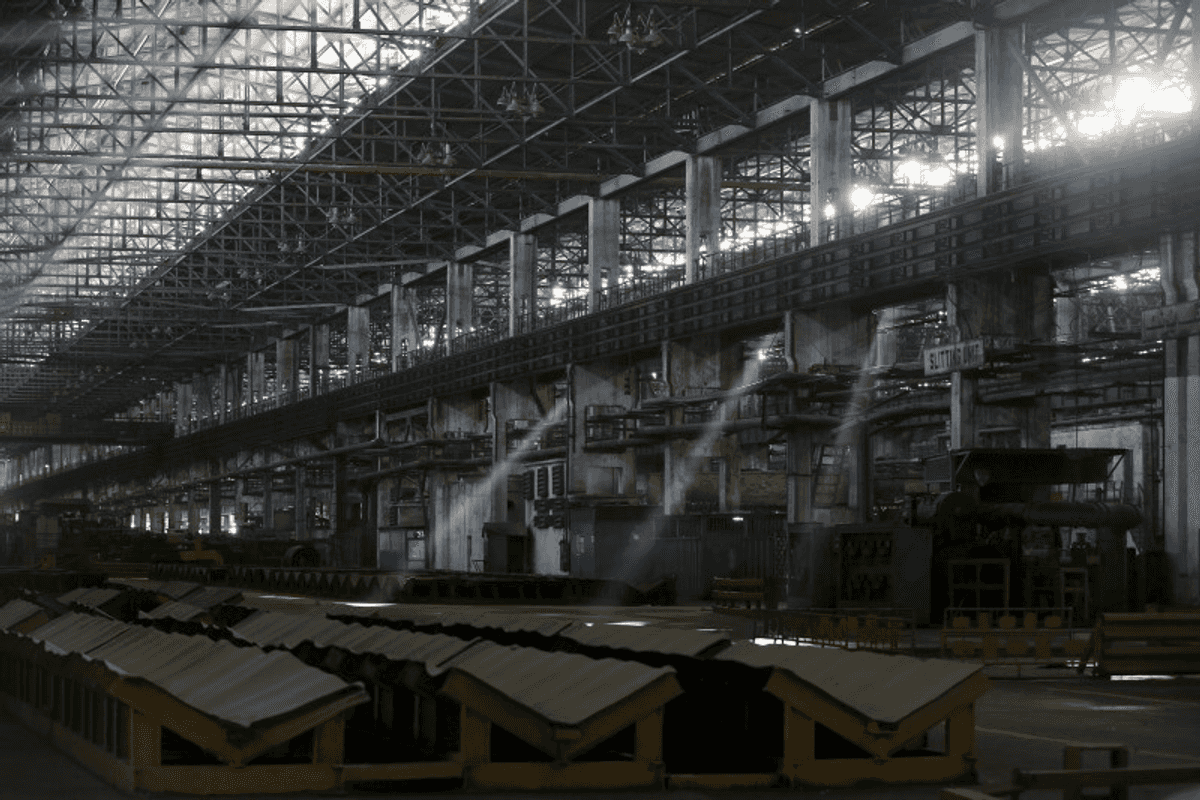
The Pakistan government had shut the steel mills in 2015 after decades of losses and financial mismanagement
PSM
Pakistan has floated another plan to revive a steel mill in the southern city of Karachi, which has been dormant for over a decade.
The Pakistan Steel Mills (PSM), established in 1973 with assistance from the Soviet Union, was once considered the backbone of Pakistan’s industrial base. The plant was capable of producing over 1.1 million tons of steel annually at its peak. However, the industry stopped production following decades of mismanagement and mounting utility bills.
After incurring billions of losses, the government shut the mill in 2015.
Over the past few years, Pakistan has made multiple attempts to revive PSM or sell it. However, the mill is shuttered.
In July, Pakistan and Russia signed an agreement to revive and expand PSM. The two countries have also agreed to form a joint working group to explore the establishment of a new steel mill in Karachi.
New plan
As per the new plan, unveiled by Federal Minister for Maritime Affairs Muhammad Junaid Anwar Chaudhry on Tuesday, PSM will be revived through a high-tech industrial initiative at Port Qasim, situated next to the mill.
The plan envisages integration of ship recycling, steel manufacturing, and green industry practices.
The minister made the announcement during a high-level meeting with Special Assistant to the Prime Minister on Industries and Production Haroon Akhtar Khan, according to an official statement.
The proposal includes the creation of Pakistan’s first “Sea to Steel Green Maritime Industrial Corridor,” envisioned as a strategic partnership between the maritime and industrial sectors.
Officials said the corridor would attract foreign investment, create jobs, and position Pakistan as a regional maritime hub.
Chaudhry said the initiative would reshape Pakistan’s industrial landscape by reducing steel imports, boosting local production, and supporting the blue economy.
According to the Ministry’s data, Pakistan currently imports nearly $6 billion worth of steel annually, with demand projected to grow by 6% per year through 2035.
The minister stated that the project could cut steel imports by 20%, potentially saving more than $13 billion over the next decade.
Central to the plan is the revival of the Iron Ore and Coal Berth (IOCB) at Port Qasim, inactive since 2015. The site would be transformed into a modern ship recycling and repair facility featuring a large floating dock capable of servicing Aframax-class vessels.
Steel recovered from dismantled ships would be supplied to PSM or processed at a new facility near the port into high-grade industrial steel, Chaudhry added. He emphasized that this would reduce reliance on imported raw materials and conserve foreign exchange reserves.
The minister also noted the facility could support the Pakistan National Shipping Corporation (PNSC), which currently sends vessels abroad for repairs. Developing domestic capacity would lower operational costs and strengthen maritime infrastructure.
Khan, the Prime Minister’s Special Assistant, endorsed the proposal and stressed the importance of inter-ministerial collaboration.
“We must work together for Pakistan’s economic growth and the welfare of our people,” he said, expressing confidence in the project’s transformative impact.
Muhammad Jawad Akhtar, Technical Advisor at the Maritime Affairs Ministry, said the project embodied the government’s Blue Economy vision.
He described the corridor as “an integrated model of sustainable ship recycling, green steel manufacturing, and maritime industrialization.”
A formal presentation to stakeholders on the PSM revival plan is expected in the coming weeks.
The meeting was attended by senior officials from both ministries and representatives from leading Chinese maritime firms.




Comments
See what people are discussing