

Pakistan stocks end week flat as politics, Middle East tensions offset economic gains
Investors eye IMF review, U.S.-Iran talks and oil prices, while refinery deals and stronger external buffers offer support amid geopolitical risks

Haris Zamir
Business Editor
Experience of almost 33 years where started the journey of financial journalism from Business Recorder in 1992. From 2006 onwards attached with Television Media worked at Sun Tv, Dawn Tv, Geo Tv and Dunya Tv. During the period also worked as a stringer for Bloomberg for seven years and Dow Jones for five years. Also wrote articles for several highly acclaimed periodicals like the Newsline, Pakistan Gulf Economist and Money Matters (The News publications)
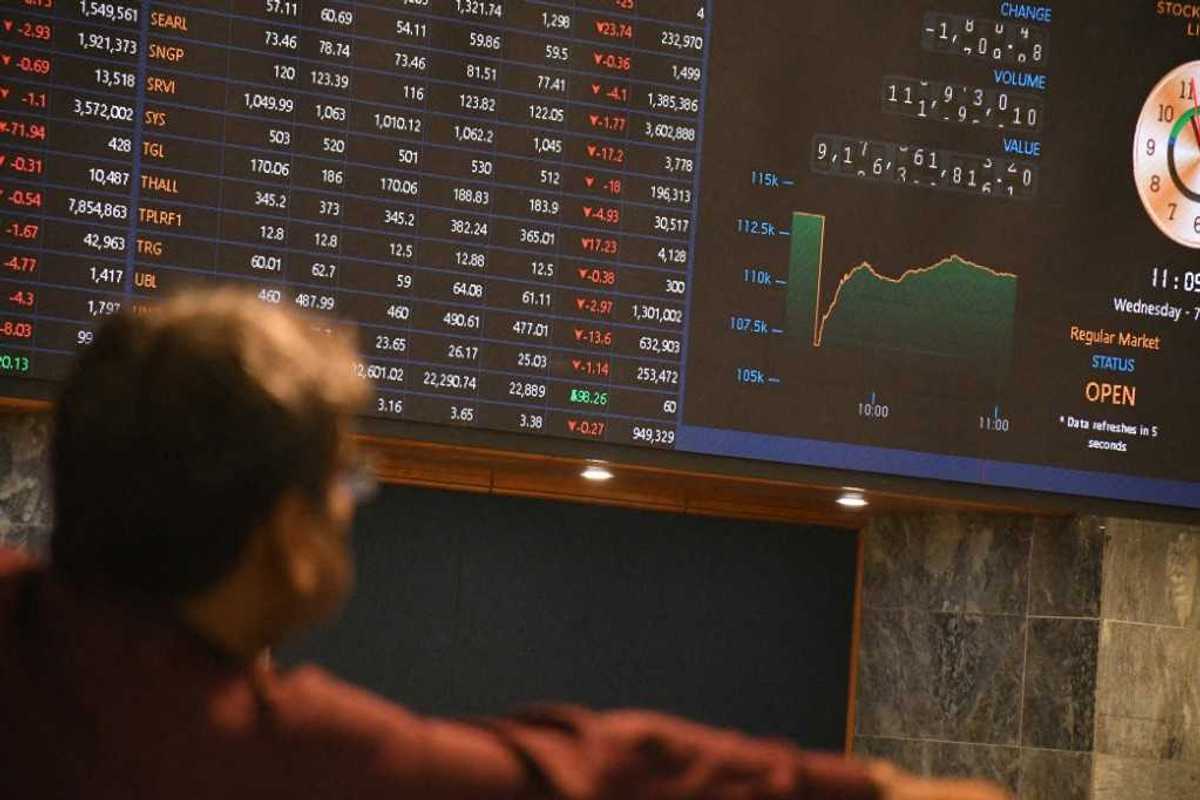
Pakistan’s benchmark stock index ended the week broadly flat as domestic political uncertainty and tensions in the Middle East offset improving external buffers and progress on refinery upgrade agreements, according to market research reports.
The KSE-100 Index closed Friday at 170,765.22 points, up 266.28 points, or 0.16%. However, it fell about 0.1% over the week. The index traded between 172,762 and 169,891 points as investors remained cautious amid elevated international oil prices and uncertainty over U.S.-Iran negotiations.
Market activity increased sharply, with average daily traded volume rising 107.7% week-on-week to about 1.2 billion shares, according to the research assessment.
AKD Securities said sentiment remained caught between rising domestic political uncertainty and Middle East tensions on one side and improving external buffers and the signing of about $6 billion in refinery upgrade agreements on the other.
The brokerage said valuations remained relatively undemanding, with the market trading at about 7.1 times forward earnings, compared with a long-term average of about 8.1 times and a peak of around 9.3 times earlier this year.
“Near-term direction will likely remain driven by the IMF program, Middle East tensions and oil prices,” AKD Securities said.
The brokerage expects the market to strengthen as economic indicators improve, with the upcoming International Monetary Fund review emerging as a key near-term catalyst. It also said a potential U.S.-Iran agreement could ease international oil prices from current elevated levels.
AKD Securities projected the KSE-100 Index to reach 263,800 points by December 2026.
Arif Habib Ltd. also highlighted geopolitical uncertainty and elevated crude prices as key factors weighing on investor sentiment. The brokerage said the index remained range-bound during the week, with selective profit-taking limiting gains.
Friday’s recovery came after the KSE-100 fell 1,733.57 points, or 1.01%, on Thursday as rising oil prices and uncertainty over U.S.-Iran talks triggered selling pressure. The index recovered part of those losses in Friday’s session.
An analyst at Arif Habib Ltd. said investors remained cautious because of geopolitical uncertainty. AHL said market direction would continue to depend on developments in the Middle East, oil prices and the upcoming IMF review.
Intermarket Securities also identified global oil prices, geopolitical developments and macroeconomic conditions as key variables for the Pakistan equity market, with the IMF programme and external-sector developments remaining important factors in its market outlook.
Brent crude settled about 1% higher on the week at $104.90 a barrel, according to the market assessment. A partial restart of Saudi Arabia’s East-West Pipeline was offset by fresh Houthi attacks on Saudi energy infrastructure, while reports of U.S.-Iran discussions on a phased reopening of the Strait of Hormuz added further uncertainty to energy markets.
For Pakistan, sustained high oil prices could increase pressure on the import bill, inflation and the external account, while any easing in crude prices could reduce those pressures.
The market is currently trading at about 7.6 times earnings and offers a dividend yield of about 6.6%, according to the research assessment.
Investors are expected to focus on the IMF review, U.S.-Iran negotiations and international oil prices in the coming weeks. Refinery upgrade agreements and stronger external buffers provide support, while geopolitical tensions and domestic political uncertainty remain key risks.





Comments
See what people are discussing