

Pakistan Sukuk issuance hits record PKR 3.5 trillion in FY2026 as debt reforms advance
Pakistan's sovereign Sukuk issuance nearly doubled to a record PKR 3.5 trillion in FY2026 as the government deepens Islamic debt markets and reforms debt management

Business Desk
The Business Desk tracks economic trends, market movements, and business developments, offering analysis of both local and global financial news.
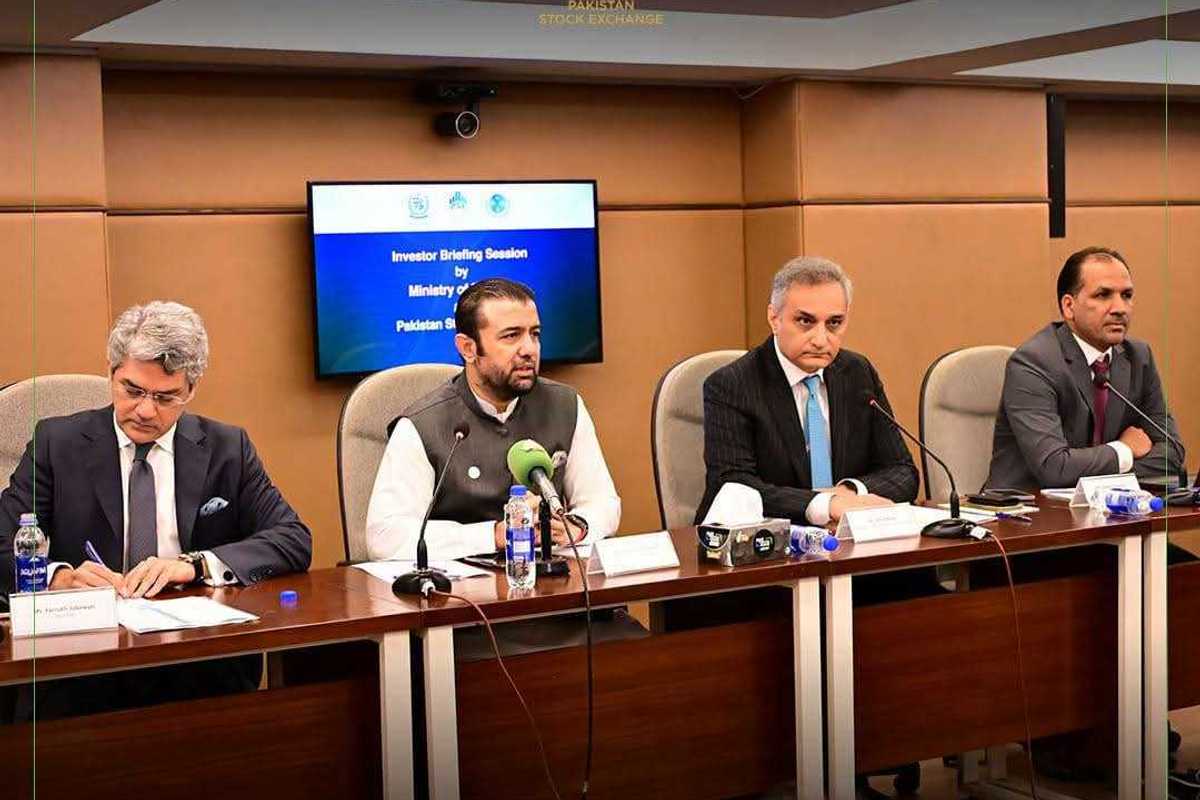
Pakistan Stock Exchange Managing Director Farrukh H. Sabzwari addresses an investor briefing jointly hosted by the Ministry of Finance and the Pakistan Stock Exchange on July 11, 2026.
Courtesy: PSX
Pakistan's sovereign Sukuk issuance nearly doubled to a record PKR 3.5 trillion in fiscal year 2026, up from PKR 2.2 trillion a year earlier, as the government continued reforms to deepen domestic capital markets and strengthen debt sustainability. The figures were disclosed at an investor briefing jointly hosted by the Ministry of Finance and the Pakistan Stock Exchange.
What drove Pakistan's record Sukuk issuance in FY2026?
Sovereign Sukuk issuance reached PKR 3.5 trillion in FY2026, driven by increased investor participation, new hybrid debt instruments, and the government's push to transition toward Shariah-compliant financing. Total government debt issuance through the capital market climbed to PKR 6.4 trillion. Average daily traded volume in government securities rose to PKR 3.9 billion from PKR 2 billion the previous year.
Secondary market participation also expanded significantly. Eleven banks and three asset management companies received direct market access, while 51 Bills and Bonds-enabled brokers now facilitate trading in government Sukuk. Sukuk trading through the Pakistan Stock Exchange surged 275% year over year, reflecting growing investor demand for Islamic instruments.
How has Pakistan's debt position changed in FY2026?
Finance Minister's Adviser Khurram Shehzad said Pakistan's debt-to-GDP ratio declined to 68.5% from 75.2% in 2023. The government retired PKR 4.7 trillion of expensive debt over the past two years, including PKR 2.2 trillion during FY2026. Public debt growth slowed to 5%, the lowest pace in 15 years, against a historical average of 12%.
The share of government revenue devoted to debt servicing also fell from 61% to 40%, according to Shehzad. He said the government's broader economic strategy rests on fiscal discipline, economic growth, and targeted relief measures. Privatization efforts are also advancing, with three electricity distribution companies expected to be offered by year-end, followed by transactions in the energy sector, airports, and banking.
What are Pakistan's plans for Sukuk and debt markets going forward?
Omer Khan, adviser on debt to the finance minister, said improving debt sustainability remains the government's central objective. Pakistan extended the average time to maturity of its debt portfolio to 3.9 years from 2.6 years three years ago. Roshan Digital Account inflows increased by approximately USD 300 million per month, while external debt repayments totalled USD 1.8 billion during the year.
The government plans to introduce Pakistan's first short-term sovereign Sukuk programme, targeting PKR 400 billion to PKR 500 billion through three- and six-month instruments. The initiative aims to complete the sovereign Sukuk yield curve and broaden the investor base. Pakistan has also re-entered international capital markets through Eurobond and Panda bond issuances and is preparing to launch tokenized sovereign debt to modernize debt issuance through digital technology.




Comments
See what people are discussing