

Pakistan urges UN to help resolve Kashmir dispute, strengthen multilateralism
Senate Chairman Syed Yusuf Raza Gilani tells UN General Assembly president that unresolved Kashmir and treaty disputes threaten South Asian stability
Aamir Abbasi
Editor, Islamabad
Aamir; a journalist with 15 years of experience, working in Newspaper, TV and Digital Media. Worked in Field, covered Big Legal Constitutional and Political Events in Pakistan since 2009 with Pakistan’s Top Media Organizations. Graduate of Quaid I Azam University Islamabad.
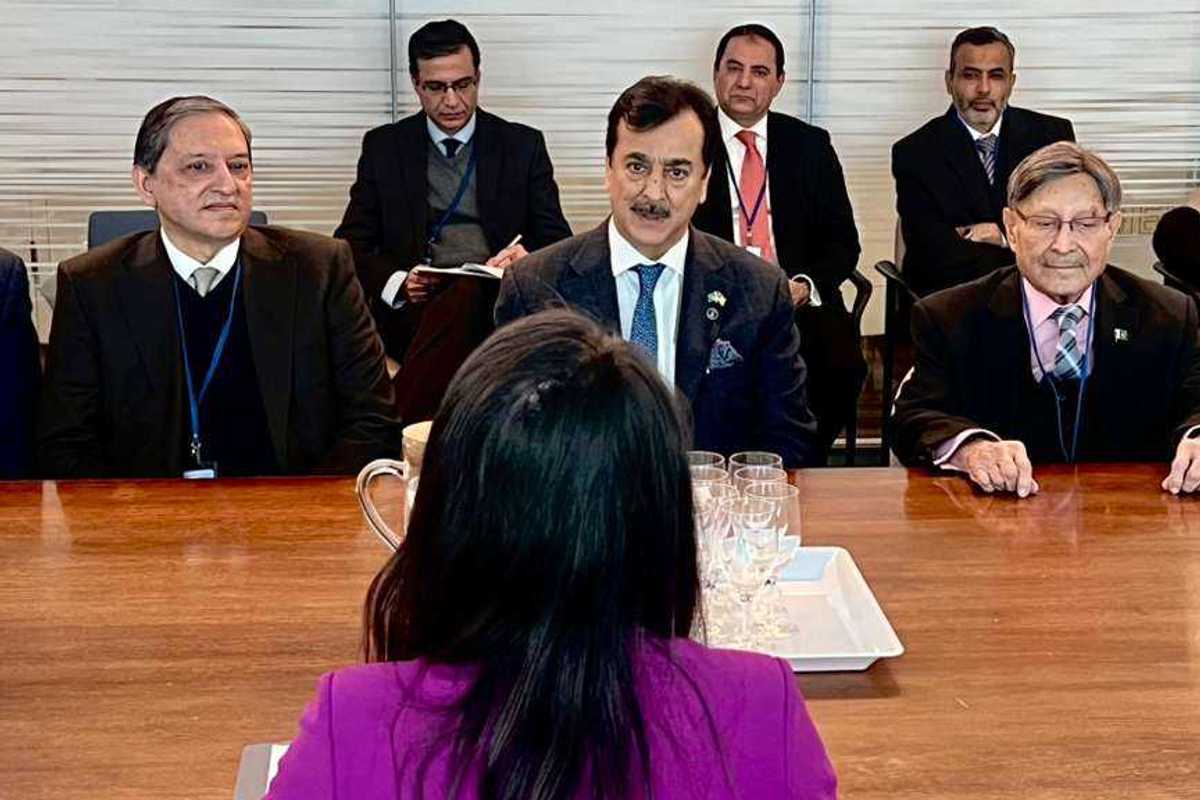
Senate Chairman Syed Yusuf Raza Gilani reaffirms Pakistan’s support for the United Nations as the central pillar of multilateral cooperation.
A senior Pakistani parliamentary delegation urged the United Nations to help resolve the Kashmir dispute, reinforce multilateral cooperation and address terrorism during meetings at UN headquarters.
The delegation, led by Senate Chairman Syed Yusuf Raza Gilani, met Annalena Baerbock, president of the United Nations General Assembly, on the sidelines of the Annual Parliamentary Hearing 2026 organized with the Inter-Parliamentary Union.
During the meeting, Gilani reaffirmed Pakistan’s support for the United Nations as the central pillar of multilateral cooperation, according to the Pakistani delegation.
Referring to Pakistan’s policy of promoting friendly neighborhood relations and peaceful dispute settlement, Gilani said the resolution of the Jammu and Kashmir dispute in line with relevant United Nations Security Council resolutions was essential for lasting peace and stability in South Asia.
He said the Security Council’s resolutions on Jammu and Kashmir remained unimplemented and alleged that India had taken destabilizing steps by placing the Indus Waters Treaty in abeyance.
Gilani described the move as unlawful and a violation of the treaty’s provisions and principles of customary international law, according to the delegation.
He warned that such actions threatened the lives and livelihoods of more than 240 million Pakistanis and set a dangerous precedent, particularly at a time of climate stress and water scarcity that required cooperation and adherence to international agreements.
Turning to security concerns, Gilani said Pakistan faced terrorist threats from groups including the Tehreek-e-Taliban Pakistan, the Balochistan Liberation Army, Al-Qaeda and ISIL-K, which he said were allegedly using Afghan soil to carry out attacks against Pakistan.
He reiterated that Pakistan’s public strongly supported the UN’s mission of promoting international peace and security, sustainable development and human rights protection.
Gilani said the multilateral system faced serious challenges amid overlapping global crises, including violations of the UN Charter and the non-implementation of long-standing Security Council resolutions.
He cautioned that what he described as an erosion in adherence to international law and established legal instruments was undermining the international order.
On climate change, Gilani said Pakistan was among the countries most severely affected and called for urgent collective action, climate justice and strengthened international cooperation. He said the UN remained indispensable for addressing interconnected global challenges.
Baerbock conveyed condolences to Pakistan over recent terrorist incidents and said combating terrorism required collective global efforts, according to the delegation.
She said the meeting marked her first engagement with visiting high-level parliamentary delegations in this context, welcomed Pakistan’s participation in the IPU hearing and acknowledged the country’s active role at the United Nations.
Members of the Pakistani delegation included Senators Saleem Mandviwala, Farooq H. Naek, Muhammad Abdul Qadir and Syed Faisal Ali Subzwari.


Comments
See what people are discussing