

Pakistan-US talks: Rubio thanks Ishaq Dar for Iran mediation as both sides pledge stronger partnership
Rubio publicly thanked Pakistan for its Middle East mediation role as Dar and the US Secretary of State agreed to expand trade, security, and investment ties in Washington.
Aamir Abbasi
Editor, Islamabad
Aamir; a journalist with 15 years of experience, working in Newspaper, TV and Digital Media. Worked in Field, covered Big Legal Constitutional and Political Events in Pakistan since 2009 with Pakistan’s Top Media Organizations. Graduate of Quaid I Azam University Islamabad.
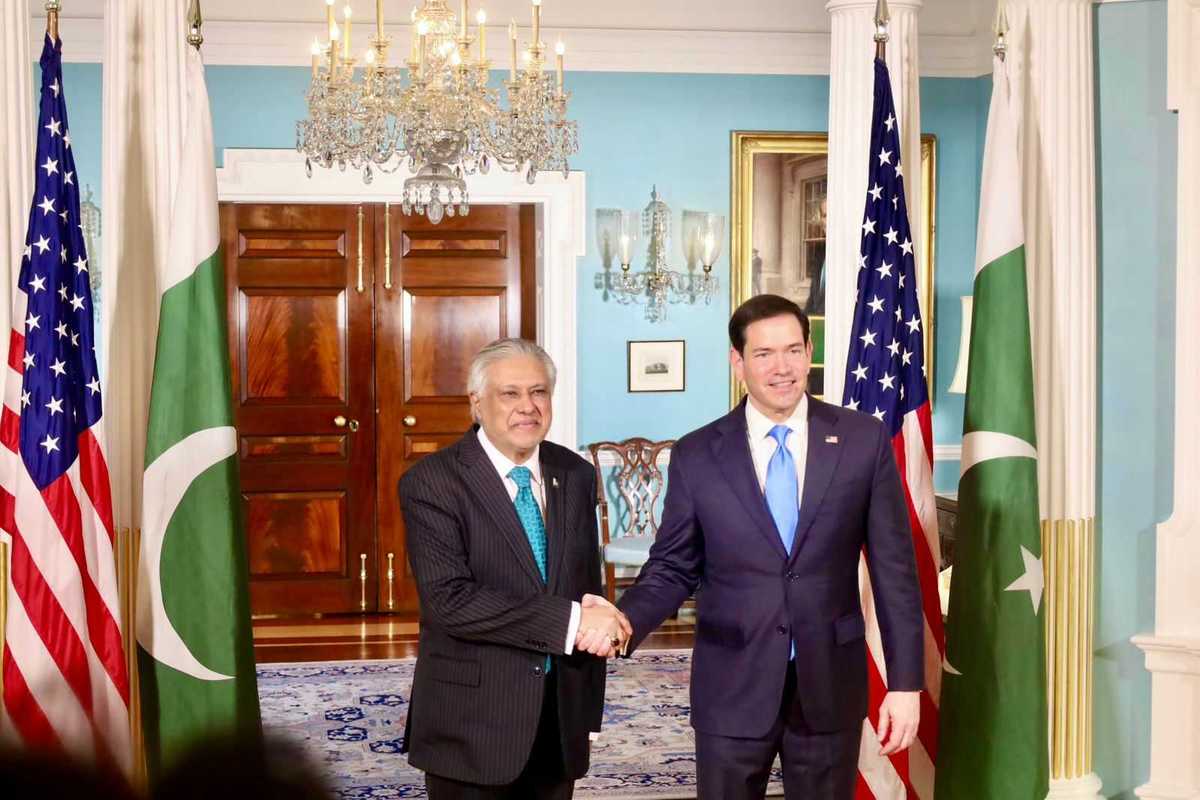
U.S. Secretary of State Marco Rubio greets Pakistan's Deputy Prime Minister and Foreign Minister Ishaq Dar at the State Department in Washington on May 29, 2026.
Courtesy: Pakistan's Foreign Office
Pakistan's Deputy Prime Minister and Foreign Minister Mohammad Ishaq Dar met US Secretary of State Marco Rubio in Washington on Thursday, where both sides agreed to strengthen bilateral cooperation across trade, investment, security, and counter-terrorism. Rubio publicly thanked Pakistan for its mediation and peace-building efforts in the Middle East, recognising Islamabad's constructive role in the ongoing Iran conflict.
What did Pakistan and the US agree to in the Washington talks?
The two sides agreed to expand cooperation into new sectors, including critical minerals, energy resources, and hydrocarbons, alongside existing commitments on trade and counter-terrorism. Both leaders reaffirmed the importance of high-level engagement to advance the Pakistan-US partnership. Pakistani officials also assured US representatives that security arrangements are in place to protect American companies operating in strategic projects such as the Reko Diq mining venture.
Why did Rubio thank Pakistan during the Ishaq Dar meeting?
Rubio's public acknowledgement of Pakistan's mediation role came as Washington and Tehran moved closer to a potential deal to end the Middle East war. Pakistan has been leading mediation efforts between the US and Iran, and US Vice President JD Vance told reporters Thursday that "a lot of progress" had been made toward an agreement. Hopes of a deal lifted Asian stock markets on Friday, while oil prices receded slightly as investors assessed the chances of resumed shipping through the Strait of Hormuz.
What is Pakistan's role in the Iran-US peace process?
Pakistan has served as a key mediator in negotiations between Washington and Tehran throughout the conflict. US sources told AFP that a potential deal was awaiting President Donald Trump's sign-off following weeks of halting negotiations led by Islamabad. Iran's top negotiator said Tehran would only trust Washington's actions rather than its words, while Trump said Friday he was making his final decision on the potential agreement.
Energy markets have swung sharply this week as investors weigh the likelihood of an accord that could reopen the Strait of Hormuz, which Iran has blockaded since the war began. The Dar-Rubio meeting in Washington underscored Pakistan's growing diplomatic profile as both a bilateral partner to the US and a regional broker in one of the most consequential conflicts of recent years.

Comments
See what people are discussing