

Pakistan warns of self-defense response at UN over cross-border terrorist threats from Afghanistan
Addressing the UN Security Council, Pakistan’s Permanent Representative Ambassador warned that Islamabad will exercise its right to self-defense against terrorist groups operating from Afghan soil after over 4,700 Pakistanis were killed in cross-border attacks over the past three years

News Desk
The News Desk provides timely and factual coverage of national and international events, with an emphasis on accuracy and clarity.
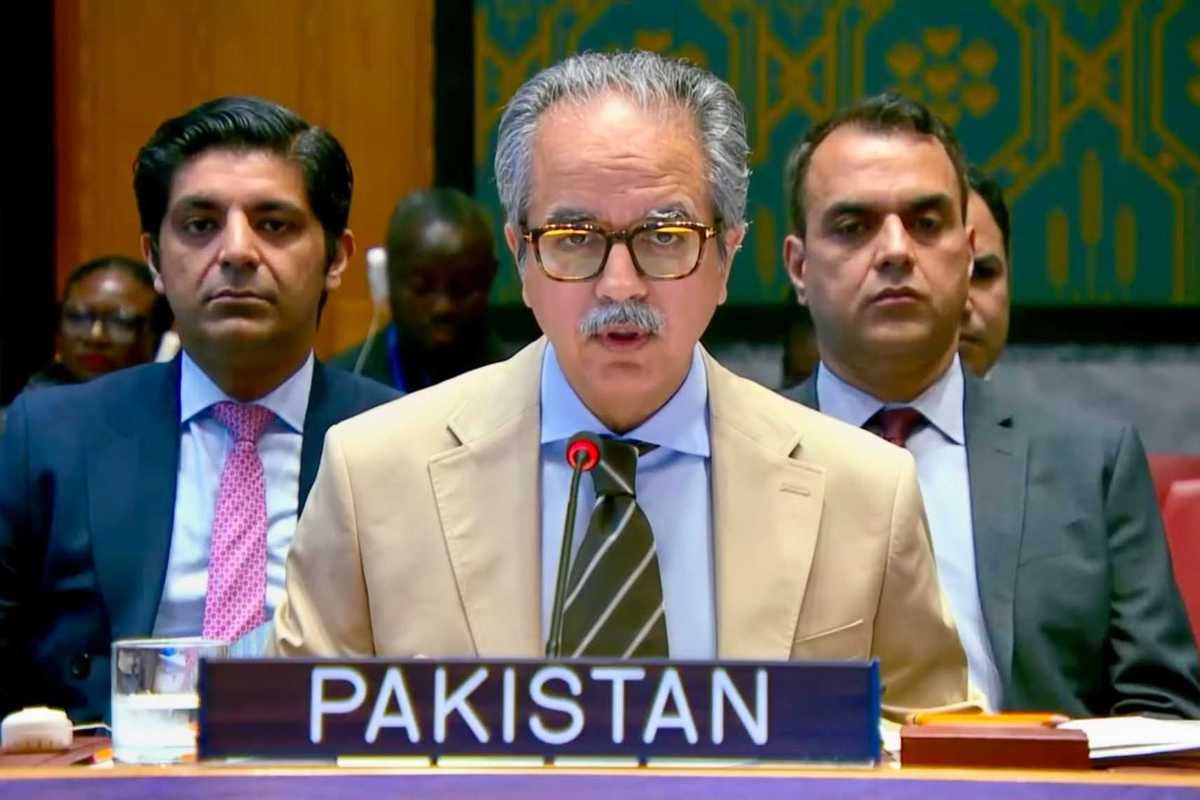
Pakistan’s Permanent Representative to the United Nations, Ambassador Asim Iftikhar Ahmad, issued a stern warning to the UN Security Council on Wednesday, stating that Islamabad will act in self-defense under international law to neutralize cross-border terrorist threats originating from Afghanistan.
Addressing a council briefing on the situation in Afghanistan, the ambassador emphasized that Pakistan cannot remain passive while facing a persistent terrorist onslaught.
What specific threats and casualties did Pakistan highlight at the UN Security Council?
Ambassador Asim Iftikhar stated that despite repeated commitments, the Taliban administration in Kabul has failed to take concrete and verifiable action against militant outfits operating from Afghan territory. He detailed the severe toll inflicted on Pakistani national security, saying over 4,700 Pakistanis have been killed in terrorist attacks over the last three years emanating from sanctuaries in Afghanistan.
He also cited what he described as a deep nexus between the Taliban leadership and banned militant groups, including Tehreek-e-Taliban Pakistan (TTP), the Balochistan Liberation Army (BLA) and its Majeed Brigade, ISIL-K, and the East Turkestan Islamic Movement (ETIM), saying the Taliban’s refusal to publicly denounce these organizations demonstrates active support and complicity.
He further raised concerns over sophisticated military equipment, drones and small arms left behind by foreign forces in Afghanistan, which he said continue to feed illicit arms markets and terror financing networks through Hundi and Hawala systems.
How did Pakistan characterize broader governance and humanitarian concerns in Afghanistan?
The Pakistani diplomat highlighted that international expectations following the Taliban's takeover five years ago have degraded into severe disappointment due to rising human rights violations, an unrepresentative governance structure, and systematic restrictions placed on women and girls.
Citing the Organisation of Islamic Cooperation's (OIC) Islamabad Declaration, Ambassador Asim Iftikhar reaffirmed that bans on female education and public life violate fundamental Islamic tenets.
While emphasizing that Pakistan has hosted millions of Afghan refugees for over four decades and continues to facilitate humanitarian cargo corridors—including 687 cargo trucks in the latest reporting cycle—he urged the global community to shoulder greater responsibility. He reiterated Pakistan's support for the UN-led Doha Process to establish a realistic roadmap for regional security, inclusive governance, and post-conflict recovery.



Comments
See what people are discussing