

Pakistan, World Bank discuss investment, reforms and job growth
World Bank team briefs minister on CPF projects, fiscal reforms and macro stabilization

News Desk
The News Desk provides timely and factual coverage of national and international events, with an emphasis on accuracy and clarity.
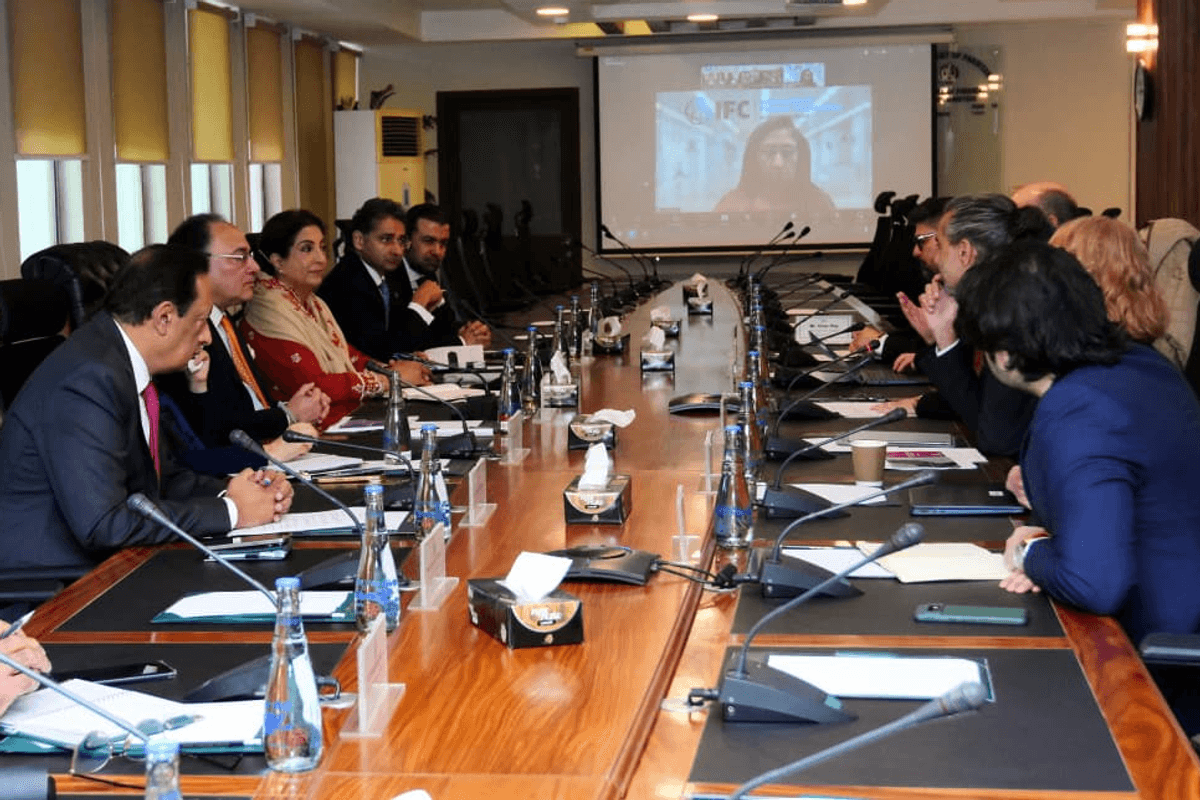
Senator Aurangzeb reaffirmed government commitment to tariff, regulatory, and transparency reforms.
GOP
Pakistan’s Finance Minister, Muhammad Aurangzeb, met with Bolormaa Amgaabazar, World Bank Country Director for Pakistan, to review ongoing collaboration and discuss priority areas under the World Bank’s Country Partnership Framework (CPF).
The meeting, held at the Finance Division, included senior officials from both sides.
The World Bank team briefed the minister on progress across CPF-supported operations and projects, including fiscal and revenue reforms, macroeconomic stabilization efforts, and policy-based engagements.
Both parties acknowledged Pakistan’s strides toward macroeconomic stability through prudent fiscal and monetary policies, while emphasizing the need to convert this stability into sustained economic growth, higher private investment, and job creation.
The World Bank highlighted that private investment in Pakistan remains below CPF targets and stressed the need for a coherent investment framework aligned with CPF objectives.
Discussions focused on reforms to improve the business environment, state-owned enterprise governance, trade facilitation, capital markets, and export competitiveness. A results-based approach, with clear policy milestones, performance indicators, and targeted technical assistance, was proposed to support implementation.
Senator Aurangzeb reaffirmed the government’s commitment to ongoing structural reforms, including tariff rationalization, regulatory modernization, and enhanced transparency.
He also underscored the importance of developing capital markets, expanding access to long-term finance, and strengthening institutional coordination to promote private sector-led growth.
Employment and skills development emerged as a key pillar of discussion. The minister emphasized market-driven vocational and technical training programs, greater public-private collaboration, and alignment of workforce skills with domestic and overseas labor market demands, particularly in IT, healthcare, nursing, hospitality, and construction sectors.
The World Bank highlighted its ongoing initiatives on labor mobility, skills matching, and digital platforms to enhance workforce productivity and overseas employment opportunities.
Sectoral priorities such as digital services exports, agriculture and agribusiness, minerals and mining, healthcare, and selected manufacturing segments were also discussed as potential focus areas for future World Bank-supported operations. Both sides agreed that targeted interventions, backed by regulatory and institutional reforms, could generate high-impact employment and export growth.
The World Bank also briefed the minister on potential policy-based guarantees to support Pakistan’s liability management, refinancing of high-cost debt, and innovative financing solutions, contingent on achieving agreed policy milestones. Climate finance, regulatory streamlining, and provincial coordination were also discussed within the broader context of development financing and reform implementation.
The meeting concluded with a commitment to continue technical-level engagements to refine priorities, narrow the scope of proposed interventions, and prepare future World Bank-supported programs in line with Pakistan’s reform agenda and the objectives of the Country Partnership Framework.



Comments
See what people are discussing