

Pakistani rupee to remain steady at 280 per dollar in 2026, report says
Tight policy and IMF-backed reserves to anchor currency, but external pressures threaten longer-term slide

Business Desk
The Business Desk tracks economic trends, market movements, and business developments, offering analysis of both local and global financial news.
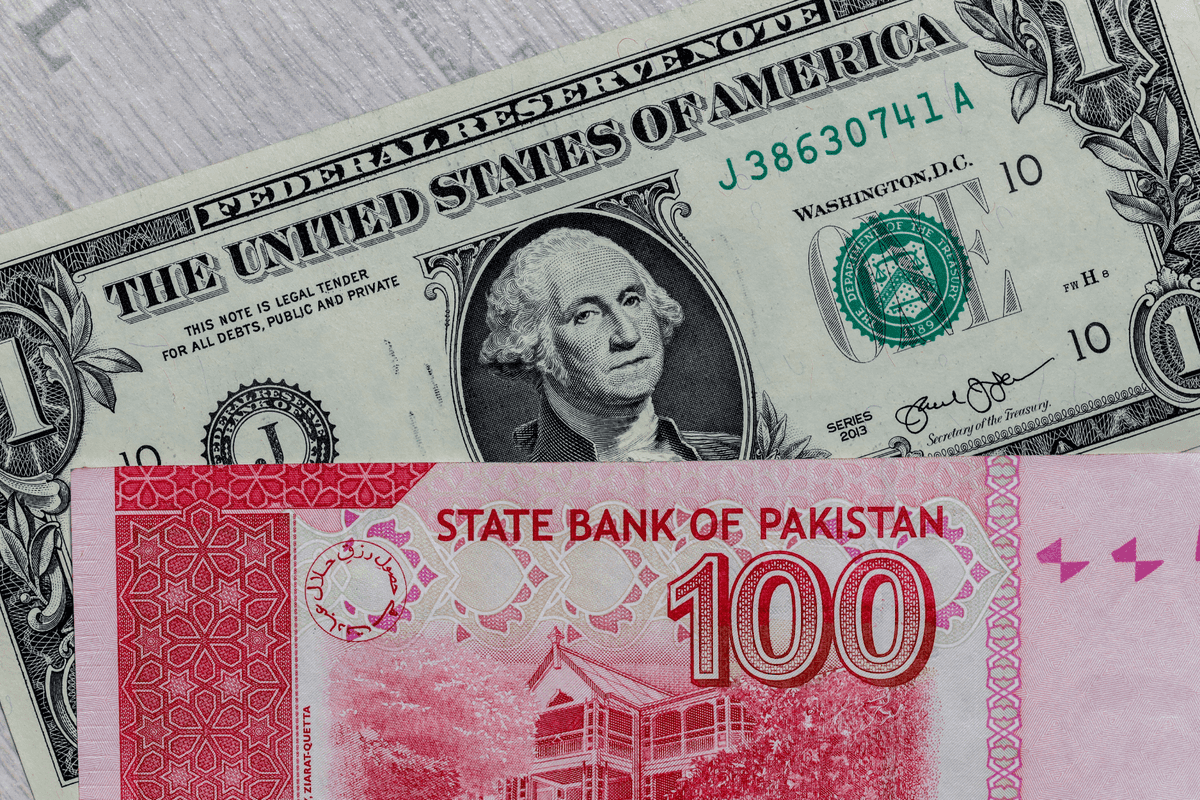
The Pakistani rupee is expected to remain broadly stable against the U.S. dollar this year, supported by tight monetary policy and foreign exchange intervention, even as external pressures persist, according to a report by BMI, a unit of Fitch solutions.
BMI said in its Feb. 12 update that it expects policymakers to keep the currency hovering around PKR 280 per dollar in 2026, the same average level projected for 2025.
Tight policy to anchor currency
BMI’s baseline forecast sees the rupee averaging 280 per dollar in 2026, unchanged from its 2025 average forecast and current spot levels. It also projects the policy rate to ease to 9% by the end of fiscal year 2025-26, down from 10.5% at the latest reading and 11% in 2025
The report noted that the currency has remained relatively stable since February 2024 following a sharp devaluation during the 2023 balance of payments crisis.
That stability has helped contain inflation, giving authorities a strong incentive to maintain the exchange rate to limit imported price pressures. BMI said policymakers are likely to rely on tight monetary policy and foreign exchange intervention to achieve that goal.
Pakistan’s monetary stance remains “meaningfully tighter” than that of the United States, with a real policy rate differential of around 380 basis points as of December. BMI expects the State Bank of Pakistan to hold rates through the remainder of FY2025/26, with a 25 basis-point cut forecast between March and June 2026, which would still keep the differential wide and ease near-term devaluation pressures
Foreign exchange reserves have also been bolstered by the IMF program. The IMF disbursed about $1.2 billion in December, lifting SBP-held net reserves to $16.2 billion in January, the highest level since February 2022. Recent U.S. dollar weakness has reduced the need for heavy intervention, allowing policymakers to keep the rupee near 280 per dollar through 2026, BMI said
External risks mount
Still, BMI warned that Pakistan’s weakening external position poses near-term risks. In the first seven months of FY2025/26, merchandise exports fell 7.1% year on year, while imports rose 19.9%. Imports have outpaced reserve growth, reducing import cover to 2.3 months as of December 2025, below the IMF-recommended three months.
That leaves the country vulnerable to external shocks that could force an earlier-than-expected devaluation.
Over the longer term, BMI said Pakistan’s “weak external fundamentals”, including a persistent trade deficit and heavy reliance on imported energy, will weigh on the currency. While authorities are not expected to abandon the de facto dollar peg, BMI forecasts a gradual 5% depreciation to 294 per dollar by the end of 2027.
“A larger and sudden de-valuation cannot be ruled out,” the report said, citing mounting external pressures and a narrow export base heavily reliant on textiles and apparel, which account for up to 60% of total exports
BMI expects 19% U.S. “reciprocal” tariffs and a fading competitive tariff advantage following India’s recent trade deal with Washington to weigh on exports in 2026. Climate shocks add to the strain. Flooding in July last year disrupted agricultural output and exports while lifting import demand. As a result, the current account swung to a $1.1 billion deficit in the first half of FY2025/26, from a $1.9 billion surplus, or 0.5% of GDP, in FY2024/25
Given significant external headwinds and limited reserves, policymakers will struggle to defend the rupee at 280 per dollar in the long term, BMI said. It expects a staggered devaluation in small steps to avoid a repeat of the sharp 40% multi-month slide seen in 2023
Risks to the outlook are skewed toward a sudden devaluation. Potential disruptions in the Strait of Hormuz could drive oil prices higher, while further climate disasters could erode foreign exchange buffers more quickly than expected. However, tighter policy discipline under the IMF program makes a repeat of the 2023 slump unlikely, the report said.





Comments
See what people are discussing