

Pakistan’s current account seen broadly balanced, rupee to stay stable
Analysts cite strong remittances, IT exports and tight policies

Haris Zamir
Business Editor
Experience of almost 33 years where started the journey of financial journalism from Business Recorder in 1992. From 2006 onwards attached with Television Media worked at Sun Tv, Dawn Tv, Geo Tv and Dunya Tv. During the period also worked as a stringer for Bloomberg for seven years and Dow Jones for five years. Also wrote articles for several highly acclaimed periodicals like the Newsline, Pakistan Gulf Economist and Money Matters (The News publications)
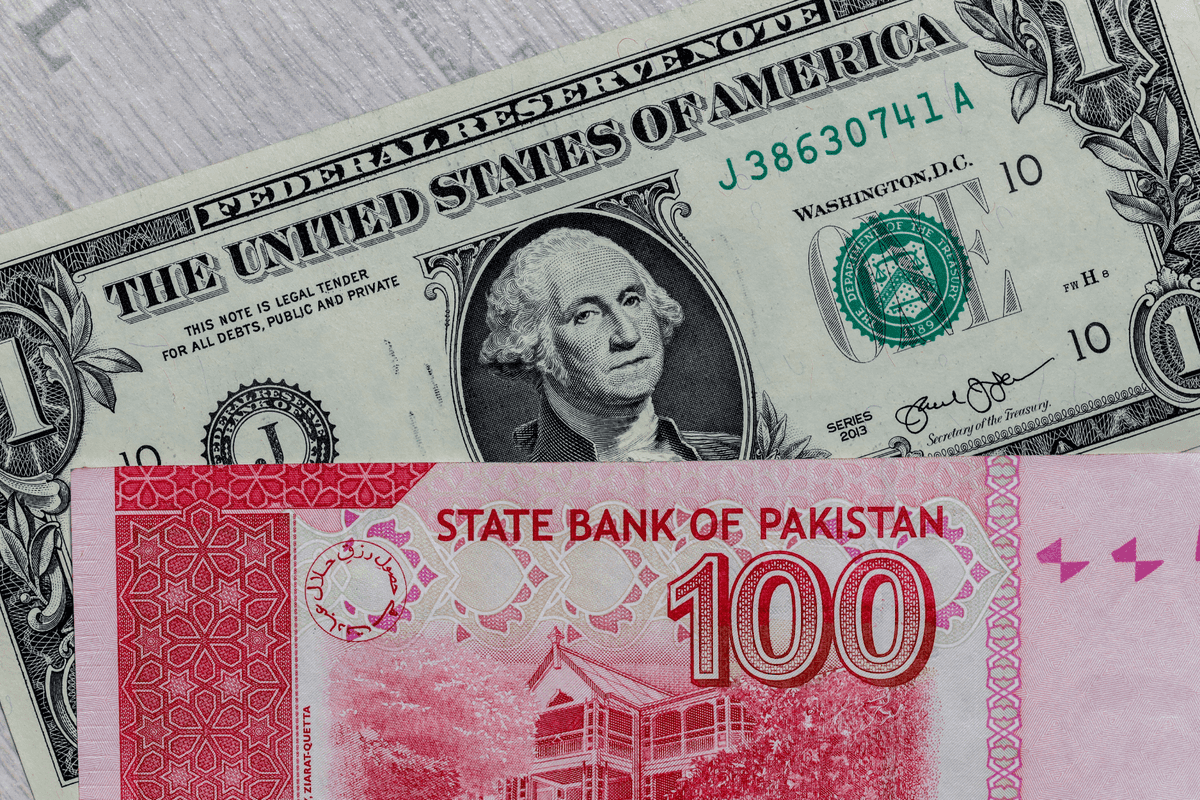
Pakistan’s current account is expected to remain broadly in balance in the current fiscal year, supported by resilient workers’ remittances, while the rupee is projected to stay relatively stable against the U.S. dollar amid a well-managed external account, rising IT exports and tight monetary and fiscal policies, analysts said.
Resilient remittance inflows, coupled with moderation in interest and dividend repatriation, are expected to offset pressures from widening trade and services deficits as economic activity picks up and food supply disruptions persist following an abnormal monsoon.
The current account is forecast to post a marginal surplus of $99 million in fiscal year 2026 before slipping to a deficit of $1.1 billion in FY27.
Trade and services deficits are projected to widen to $36.8 billion by FY27, as imports are expected to grow at an average annual rate of 7%, outpacing an estimated 3.3% annual increase in exports.
Non-oil imports, particularly machinery, metals, agriculture and transport-related items, are anticipated to rise faster on the back of strengthening domestic demand, though food import growth is expected to moderate after a surge in the first five months of FY26 due to improved supplies.
Petroleum and textile imports are expected to decline, supported by lower global prices and the planned diversion of liquefied natural gas cargoes from January 2026.
Analysts estimate about 35 LNG cargoes could be diverted annually, easing pressure on the import bill. Textile imports are also likely to remain contained, helped by stable cotton production despite flooding and erratic weather.
On the export side, overall goods shipments are expected to fall in FY26, driven largely by a sharp downturn in rice exports amid intense international competition.
Rice exports are projected to decline by about 38% to below $2 billion, their lowest level since FY18. Textile exports, however, are expected to remain relatively resilient despite uncertainty linked to U.S. tariffs. Knitwear exports are forecast to post double-digit growth, while growth in bedwear and readymade garments is likely to moderate. Exports of cotton cloth and towels are expected to decline due to lower volumes.
Technology exports are expected to record double-digit growth in the near term, providing some offset to weaker performance in traditional goods exports.
Workers’ remittances are expected to continue providing significant support to the external account, reflecting favorable policy measures, a stable kerb market premium and increased emigration over the past three years amid subdued domestic economic conditions.
The primary income deficit is projected to narrow to $8.1 billion by FY28 from $9.1 billion in FY25, aided by global monetary easing despite a moderate rise in external debt.
The rupee is expected to remain broadly stable against the dollar, with analysts forecasting depreciation largely in line with inflation differentials as foreign exchange reserves build and external account conditions improve. Currency stability has helped keep inflation in single digits, they said.
Foreign exchange market movements have remained modest, with the rupee hovering around 280 per dollar for more than two years. Authorities attribute the stability to a crackdown on illegal currency trading, smuggling and hoarding, alongside reforms by the State Bank of Pakistan to improve market functioning.
A stable foreign exchange market has enabled the central bank to make sizeable dollar purchases to rebuild reserves. Between June 2024 and September 2025, the central bank made net purchases of $9.7 billion, according to analysts. However, the real effective exchange rate has risen since May 2025, reflecting higher inflation readings and the rupee’s appreciation against the dollar.





Comments
See what people are discussing