

PM Shehbaz, Fazlur Rehman discuss ways to ease political tensions
Shehbaz Sharif spoke to Fazlur Rehman about easing political tensions as PTI’s long march and security disputes complicate talks
Aamir Abbasi
Editor, Islamabad
Aamir; a journalist with 15 years of experience, working in Newspaper, TV and Digital Media. Worked in Field, covered Big Legal Constitutional and Political Events in Pakistan since 2009 with Pakistan’s Top Media Organizations. Graduate of Quaid I Azam University Islamabad.
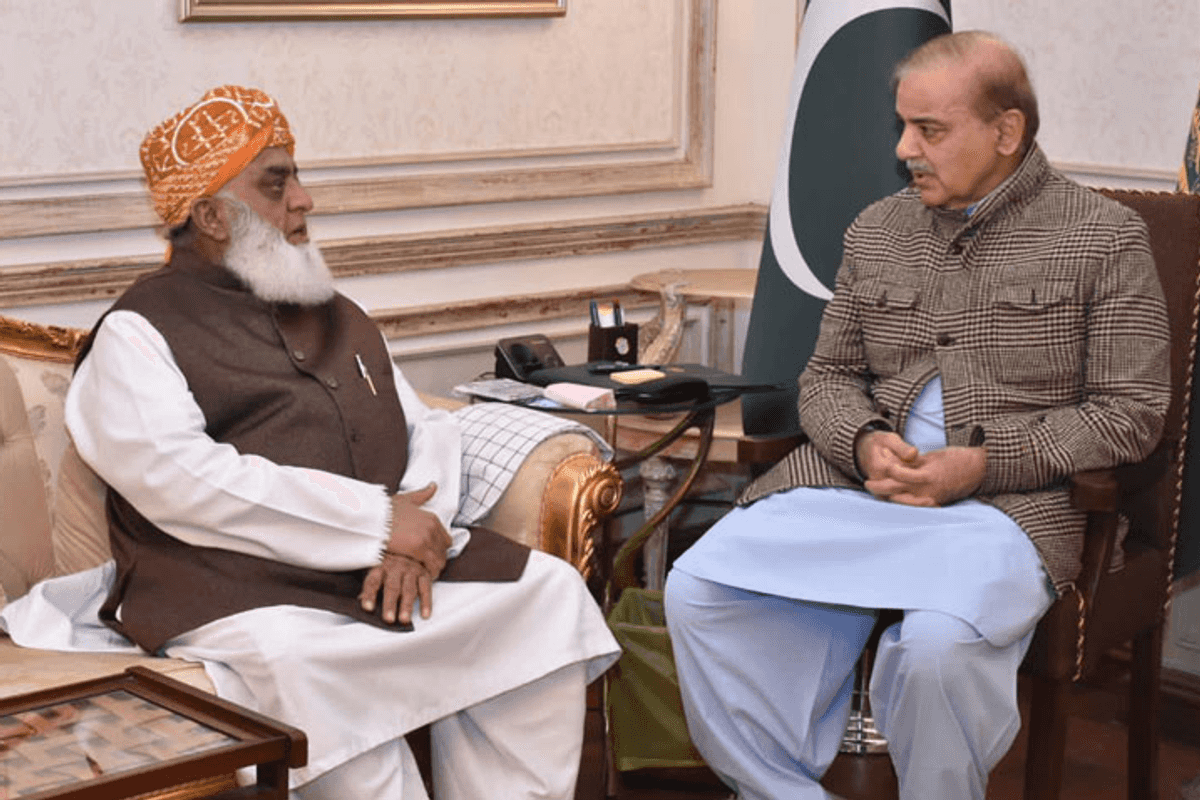
The two leaders discussed the political situation, developments in KP and the PTI long march.
Courtesy: Radio Pakistan
Pakistani Prime Minister Shehbaz Sharif contacted Jamiat Ulema-e-Islam-Fazl (JUI-F) chief Maulana Fazlur Rehman by telephone on Thursday to discuss easing political tensions, as an opposition march towards Islamabad and disagreements over security measures complicate efforts to revive dialogue, according to media reports citing sources.
What did Shehbaz Sharif and Fazlur Rehman discuss?
The two leaders discussed the political situation, developments in Khyber Pakhtunkhwa province and the Pakistan Tehreek-e-Insaf’s (PTI) long march.
Shehbaz said the federal government was willing to resolve disputes through negotiations. Fazlur Rehman said differences should be settled through consultation and mutual understanding rather than confrontation, the reports said.
What did Fazlur Rehman ask the government and opposition to do?
The JUI-F chief urged the government and opposition to give their respective negotiating committees sufficient authority to make decisions and reach agreements on their behalf. He said both sides should treat the committees’ decisions as final, according to the reports.
Fazlur Rehman called on both camps to show flexibility on their positions and demands. He warned that meaningful progress would be difficult without a willingness to compromise. Sources said he also advised them to refrain from making public statements on social media and through the news media while negotiations were under way.
Why are the government and PTI at odds?
The latest outreach comes as the government and PTI remain divided over the party’s insistence on continuing its march towards the federal capital. They also disagree over counterterrorism measures in Khyber Pakhtunkhwa. PTI, led by supporters of jailed former prime minister Imran Khan, launched the march from the province on October 5, demanding his release.
The protest had been postponed from September 27 after negotiations with the government failed to produce an agreement. The government has opposed the march, deploying additional security and warning against attempts to enter the capital.
A day ago, Shehbaz also urged the Khyber Pakhtunkhwa government and opposition parties to take the political situation seriously and make practical efforts to resolve their differences, according to sources. The prime minister maintained that the federal government remained open to negotiations but opposed efforts to pressure it through protests or a march on the capital.
He also stressed the importance of political stability for economic recovery, saying continued uncertainty could complicate efforts to strengthen the economy. Shehbaz reportedly appreciated Fazlur Rehman’s political services and his efforts to promote a conciliatory approach to resolving disputes.
Why does Fazlur Rehman’s role matter in Pakistan’s politics?
The JUI-F is an Islamist political party with a long history of parliamentary participation and political alliances. It has played a role in negotiations and opposition coalitions across successive governments. Although it is not one of the country’s largest parliamentary parties, its leader has frequently acted as an interlocutor between rival political groups.
In August, the JUI-F chief announced that opposition parties had agreed in principle to work towards a united parliamentary front with leaders of the Tehreek Tahafuz Ayeen-e-Pakistan (TTAP), an opposition alliance. That initiative reflected his efforts to coordinate opposition parties and strengthen their collective role in parliament.
His latest calls for empowered negotiating teams and restraint in public statements come amid wider efforts to establish a channel for dialogue between the government and opposition. Whether the latest contacts will lead to substantive negotiations remains unclear, with both sides still facing disagreements over the march, security policy and the conditions for a political settlement.




Comments
See what people are discussing