

Pro-Israel lobby pours tens of millions into US midterms amid growing voter and candidate backlash
The American Israel Public Affairs Committee (AIPAC) has emerged as the single largest outside spender in the 2026 US midterm elections, deploying over $54 million through its United Democracy Project super PAC to influence primary races

News Desk
The News Desk provides timely and factual coverage of national and international events, with an emphasis on accuracy and clarity.
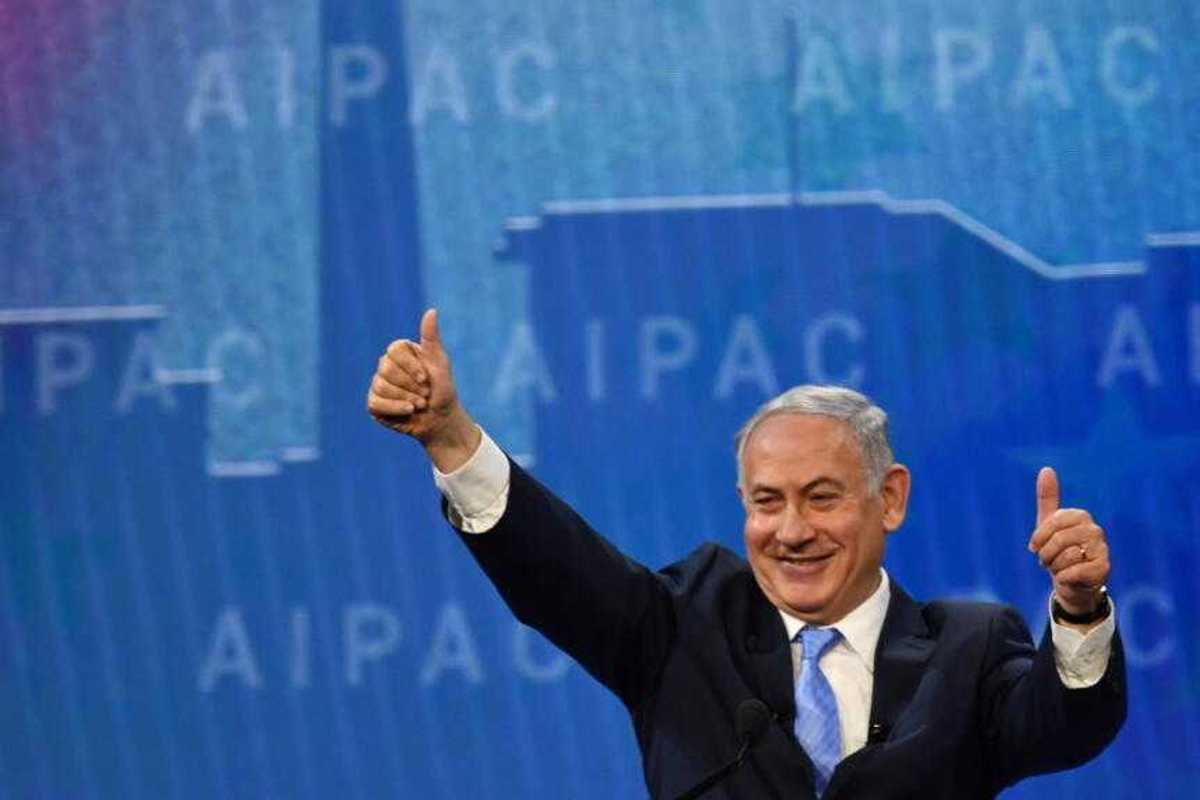
Democrats say AIPAC is too closely aligned with Israeli Prime Minister Benjamin Netanyahu, pictured at the group's 2018 policy conference.
AFP
The American Israel Public Affairs Committee (AIPAC) and its affiliated election vehicles have poured tens of millions of dollars into the 2026 US midterm elections, making its super PAC the single largest outside spending group of the cycle.
However, as the pro-Israel lobby escalates its campaign spending, its backing has increasingly turned into a lightning rod for political opponents who leverage the heavy financial intervention to mobilize grassroots voters against AIPAC-funded candidates.
Where is AIPAC directing its midterm election spending?
According to campaign finance tracking data from OpenSecrets and Sludge, AIPAC's primary independent expenditure arm, the United Democracy Project (UDP), has poured $54 million directly into congressional primary races, contributing to a broader pro-Israel network spend exceeding $71 million. The group entered the 2026 cycle with over $100 million in available capital, concentrating its resources primarily on Democratic primary contests to bolster staunchly pro-Israel candidates and block progressive critics of US military aid.
A major battleground unfolded in Michigan, where AIPAC and allied PACs directed upwards of $30 million in an effort to block progressive epidemiologist and former health official Abdul El-Sayed in his Democratic Senate primary against establishment Representative Haley Stevens. Additional spending targeted races in California, Illinois, Missouri, and New York, where UDP funneled millions both directly and through local affiliate PACs.
Foreign policy analysts note that UDP rarely references Israel or Middle East policy in its television advertisements, focusing instead on local economic issues, abortion rights, or general party loyalty to avoid drawing voter scrutiny to its primary funding sources.
Why is AIPAC facing an increasing backlash across the political spectrum?
Despite delivering victories in several House races, AIPAC's aggressive intervention has encountered significant friction. Recent polling by Quinnipiac University indicates that 48 percent of American voters—including 66 percent of Democrats—believe Washington provides too much support to Israel, representing the highest level of voter skepticism recorded in nearly a decade.
The pushback is no longer confined to progressive Democrats like Senator Bernie Sanders, who condemned the group's billionaire-backed funding model. Conservative and "America First" Republicans have also begun distancing themselves. In Michigan, allies of Republican Senate candidate Mike Rogers recently requested that AIPAC refrain from running independent advertisements on his behalf, fearing that public endorsements from the group would alienate Arab-American voters and bolster opponent turnout in key districts.
A growing list of congressional candidates have publicly rejected AIPAC endorsements or pledged to refuse its campaign contributions. While the lobby retains formidable influence and legislative support on Capitol Hill, political strategists emphasize that heavy outside spending now risks backfiring in competitive primaries where voters view mega-PAC money as an infringement on local political choices.




Comments
See what people are discussing