

Commonwealth observers say 2024 Pakistan polls 'lacked fairness, inclusivity'
Report cites arrests, internet shutdowns and court interference as undermining credibility of elections

News Desk
The News Desk provides timely and factual coverage of national and international events, with an emphasis on accuracy and clarity.
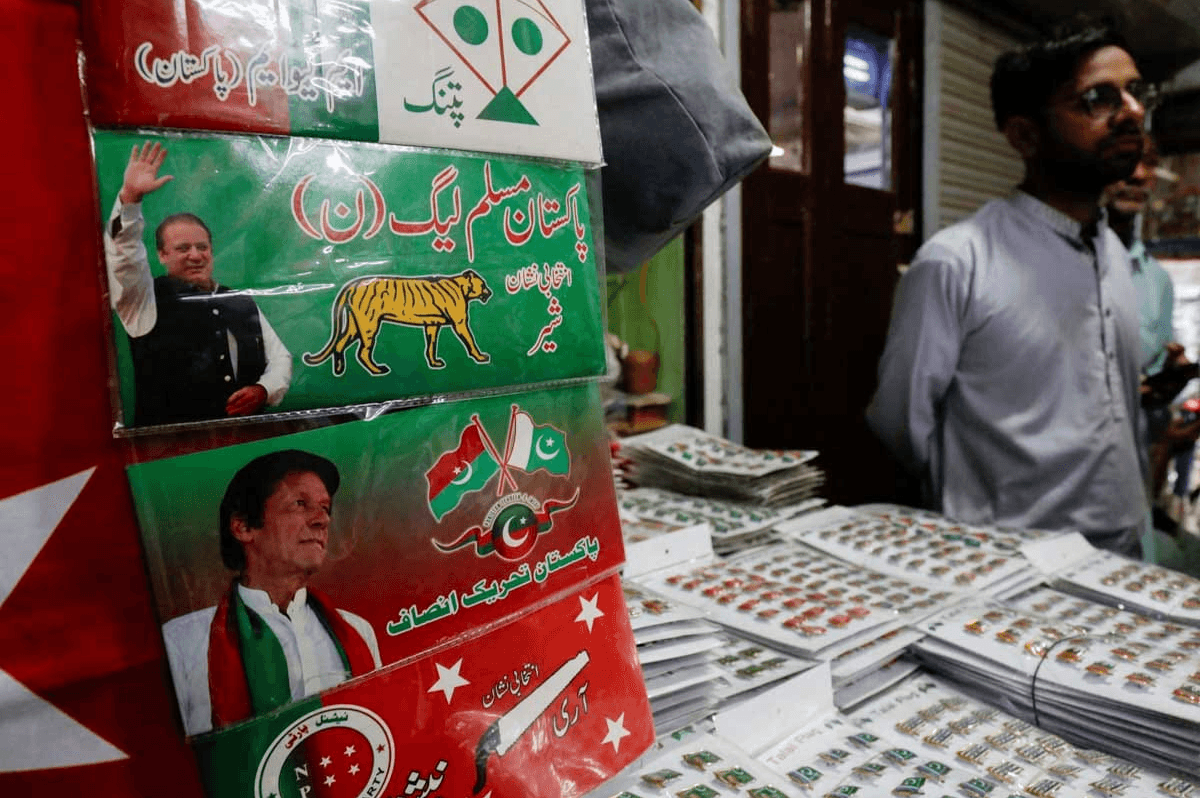
The report said legal hurdles barred candidates, including Imran Khan, from contesting.
Reuters
Election observers from the Commonwealth have raised serious concerns over the fairness and inclusivity of Pakistan’s last general elections, saying that key institutional decisions consistently limited the ability of one political party to compete, hurting the credibility of the process.
The Election Commission of Pakistan (ECP) has repeatedly dismissed claims of irregularities and rigging. No government spokespersons responded to repeated requests for comment on the report.
In a report released Tuesday – more than 18 months after the vote – the Commonwealth Observer Group said former Prime Minister Imran Khan’s party faced restrictions that undermined confidence in the democratic process.
“The ability of one political party to compete on equal terms was consistently limited,” the group said.
The group consisted of 12 eminent Commonwealth citizens and was supported by a nine-member Commonwealth Secretariat team. Members were briefed by political parties, the ECP, judiciary representatives, civil society organizations, the media, security officials and international observers.
The observers acknowledged the security challenges surrounding the elections and praised voters in Balochistan and Khyber Pakhtunkhwa for showing commitment to democracy “despite the risks.” But they said the political environment remained “fraught,” echoing patterns seen in previous electoral cycles.
The arrest of Khan before the polls sparked nationwide protests, the report noted, adding that the overall political and security environment negatively affected the ability of parties to campaign freely.
Multiple reports suggested that members of Khan’s Pakistan Tehreek-e-Insaf (PTI) were arrested, detained and at times disappeared, and that PTI offices and homes were raided.
The observers said internet disruptions appeared to coincide with PTI’s online campaigns and fundraising events, restricting rights to association, assembly and expression.
Government response
Minister of State for Law and Justice Aqeel Malik defended the electoral process while sidestepping the report’s core findings on fabricated results and violations of political rights.
Malik said only that “further improvements can be made, which every observer group always says, and this is a work in progress.” He emphasized that Pakistan has “immense potential in democracy” and pointed to progress in narrowing the gender gap in voter registration, from 12 percent in 2013 to 7.17 percent in the last polls. “This is obviously commendable,” he said.
He dismissed criticism as PTI “propaganda” driven by a “social media troll brigade.”
On PTI’s loss of its electoral symbol, which the Commonwealth group called “injurious to the level playing field” and “highly disproportionate to the offense,” Malik said the party had failed to meet legal requirements for intra-party elections. “This was their responsibility, not the government’s responsibility,” he said, adding that PTI’s later elections were “in violation of the constitution and law.”
Legal concerns and judiciary pressure
The report highlighted legal hurdles that prevented some candidates, including Khan, from contesting effectively. It pointed to “jurisprudential inconsistencies” in two key cases: the denial of PTI’s election symbol and the reversal of lifetime bans for politicians.
It also cited a letter by six Islamabad High Court judges alleging intimidation, abduction and torture of a judge’s family member, and surveillance of judges’ homes by security services. Such interference “may have occurred in relation to election-related court cases,” the observers said, urging the Supreme Court to pursue its investigation with rigor and transparency.
Census, inclusivity and media freedoms
The group noted delays and transparency issues in the national census and said the rushed delimitation of constituencies placed pressure on the ECP and may have affected equality of the vote.
It commended improvements in inclusivity, such as narrowing the gender gap in voter registration and strong youth turnout, but said women’s political representation remained limited. It also warned of obstacles for marginalized groups and cited restrictions on the media, noting that some regulatory directives appeared to target individuals and that violence against journalists continued.
Election day and aftermath
On election day, voters were generally able to cast ballots, but the nationwide shutdown of cellular networks raised “serious concerns,” the report said. The shutdown disrupted the Election Management System, forcing reliance on manual transmission of results, which reduced transparency and created opportunities for manipulation.
Civil society groups said copies of result forms held by party agents sometimes differed from those posted later on the ECP website.
The report also criticized post-election legislative changes, including giving the ECP authority to appoint retired judges and reversing Supreme Court rulings, calling them undemocratic.
Cycle of politics
The observers concluded that arrests of opposition members, denial of party symbols and network shutdowns all undermined the fairness of the elections.
Pakistan’s democracy has “enormous potential,” the report said, but warned that a clearer separation of military and civilian authority was necessary.
“For democracy to flourish, political parties must break the cycle of zero-sum retributive politics and foster greater levels of trust and tolerance in each other,” it said.



Comments
See what people are discussing