

Russia-Taliban military agreement sparks questions over Pakistan’s security
Afghanistan’s Taliban government has signed military and technical cooperation agreement with Russia, prompting claims from the Taliban that Pakistan can no longer threaten Afghanistan militarily

Kamran Ali
Correspondent Nukta
Kamran Ali, a seasoned journalist from Khyber Pakhtunkhwa, Pakistan, has a decade of experience covering terrorism, human rights, politics, economy, climate change, culture, and sports. With an MS in Media Studies, he has worked across print, radio, TV, and digital media, producing investigative reports and co-hosting shows that highlight critical issues.
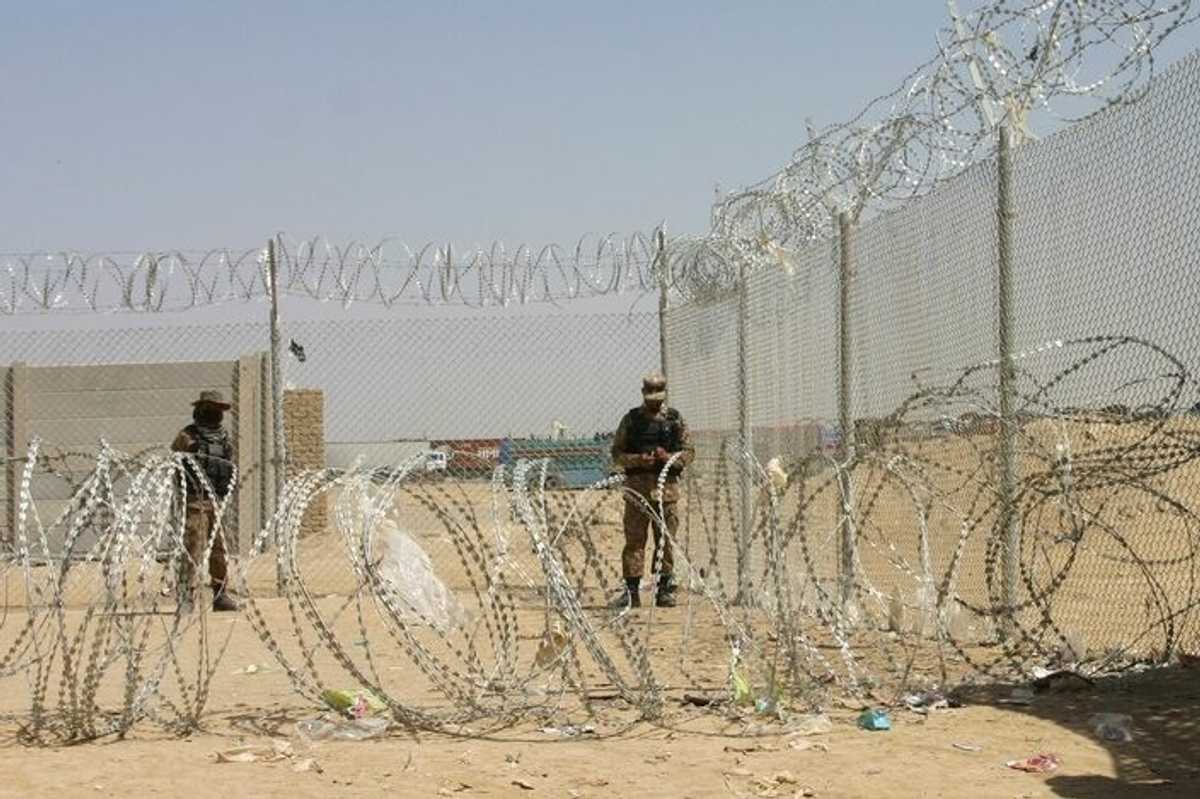
Afghanistan’s Taliban government has signed a military and technical cooperation agreement with Russia, prompting claims from the Taliban that Pakistan can no longer threaten Afghanistan militarily.
On May 27, Russia and Afghanistan’s Taliban-led administration reached a military-technical cooperation agreement during the Moscow International Security Conference. While both sides confirmed the deal, its specific provisions and scope have not been disclosed publicly.
Upon returning from Moscow, Afghan Taliban Defense Minister Mullah Mohammad Yaqoob said Pakistan had carried out airstrikes across Afghanistan just months ago, but Kabul was now working to ensure such actions could not be repeated in the near future.
Does the Taliban-Russia deal pose a threat to Pakistan?
Following the remarks by Afghan officials, questions have emerged over what the agreement could mean for Pakistan and the broader regional security landscape, and whether it represents any potential military threat.
Fida Adeel, senior journalist covering Afghan affairs, told Nukta that the agreement was initially perceived by some as a full-fledged defense pact, similar to the Pakistan–Saudi Arabia arrangement in which an attack on one side is treated as an attack on the other.
He added that there was also speculation that Russia could provide advanced military technology, including air defense systems, new weaponry, and potentially S-400 systems. However, he clarified that the agreement is in fact a limited military-technical cooperation framework with no direct defense commitments for Afghanistan.
Adeel said the agreement does not appear to pose any threat to Pakistan or other neighboring countries, adding that Russia is unlikely to take the risk of transferring any weapons to the Taliban that could be perceived as a threat to other states.
Security and defense analyst Brig. (R) Mahmood Shah described Mullah Yaqoob’s remarks as propaganda, arguing that such statements are aimed at political messaging rather than reflecting ground realities.
He said the claims come amid what he called unverified Afghan assertions, including past reports of downing a Pakistani aircraft and detaining a pilot, adding that such narratives suggest Kabul is engaging in propaganda because, in his view, they are not being taken seriously internationally
How does Russia view the Afghan Taliban despite growing ties with Kabul?
Adeel said Russia is effectively compelled to engage with and extend cooperation to the Taliban-led administration in Afghanistan, as Moscow seeks to prevent a renewed U.S. military foothold in the country, referring to comments attributed to U.S. President Donald Trump regarding the possibility of regaining control of Bagram airbase.
He said Russian reports estimate that around 18,000 to 23,000 foreign militants from roughly 20 groups are currently operating in Afghanistan. Against this backdrop, he argued that Russia cannot afford to extend cooperation that could pose a direct security threat to any country, noting that Pakistan has already expressed concerns over weapons left behind following the 2021 U.S. withdrawal.
Mahmood Shah also said Russia is well aware of the Afghan Taliban, citing past militant attacks in Moscow and the alleged presence of groups such as the Tehrik-i-Taliban Pakistan (TTP) operating and recruiting from Afghan territory. “Why Moscow would provide advanced military technology under such circumstances,” he questioned.
He further added that even if Russia were to supply systems such as the S-400 or other advanced platforms, Pakistan possesses the capability to neutralize them, referring to past Pak-India conflicts in which, he claimed, Pakistani forces targeted similar air defense systems.
What does the Taliban-Russia deal actually entail?
In an article on the agreement, international affairs specialist Silvia Boltuc argued that the Russia–Taliban military-technical accord carries limited strategic significance.
However, she said the deal should be seen as part of Moscow’s broader effort to build a multi-dimensional relationship with Kabul, aimed at securing long-term influence in Afghanistan regardless of the Taliban government's internal stability.
Mullah Yaqoob also said that much of Afghanistan’s military equipment is of Russian origin, including helicopters, weapons and other hardware that require repairs and modernization. “The agreement with Moscow is intended to help maintain and upgrade these systems, enabling Afghanistan to make more effective use,” he added.
He described the deal with Russia as a military-technical agreement rather than a defense or security pact, saying it was not intended to threaten any country and would serve only Afghanistan’s interests.
Zamir Kabulov, Russia’s special envoy for Afghanistan, said the military-technical agreement is primarily focused on repairing and maintaining Russian-made equipment already in Afghanistan. He noted that large quantities of Russian and former Soviet military hardware have remained in the country for decades.
Kabulov said the deal could serve as a foundation for future defence-related contracts between Moscow and Kabul, but stressed that its current focus is limited to restoring and servicing military equipment already in Afghanistan’s arsenal.




Comments
See what people are discussing