

SBP lowers housing interest rate to 5%, hikesloan limit to PKR 10M
Subsidy for the affordable housing scheme increased from PKR 62B to PKR 282Bbillion

Business Desk
The Business Desk tracks economic trends, market movements, and business developments, offering analysis of both local and global financial news.
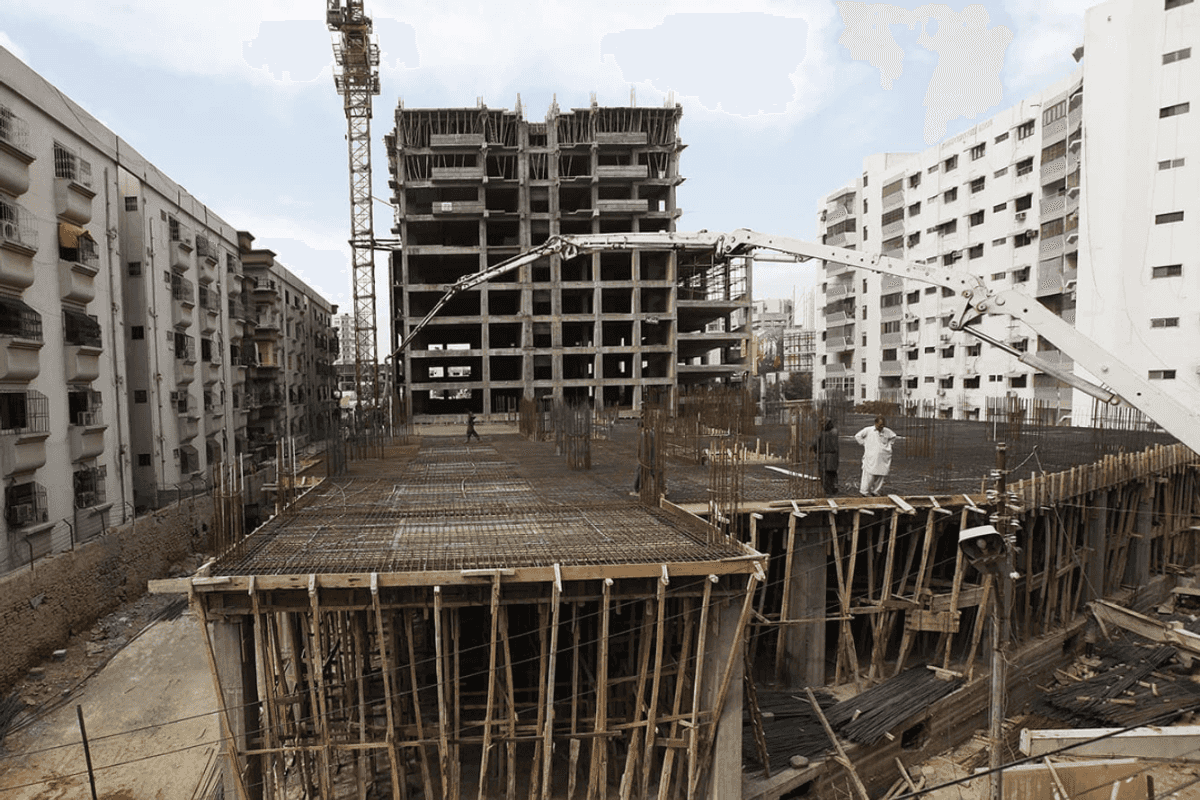
Access to affordable housing finance has historically remained one of the biggest challenges in Pakistan
File
The State Bank of Pakistan has set a uniform 5% interest rate for affordable housing loans under a revised government-backed finance scheme, lowering borrowing costs and significantly expanding loan limits in an effort to address the country’s housing shortage.
Under the updated Markup Subsidy and Risk Sharing Scheme for Affordable Housing Finance, the central bank said all eligible borrowers will now be charged a fixed 5% markup. Loans previously disbursed at 8% will be adjusted downward to align with the new rate.
The government has also sharply increased the subsidy allocation for the scheme to about PKR 282 billion, up from an earlier allocation of PKR 62 billion, signaling a major fiscal push to support low- and middle-income homebuyers.
Loan limits have been raised to PKR 10 million, a significant increase from the earlier ceiling of PKR 2 million to PKR 3.5 million. The revised criteria allow financing for houses up to 10 marla (about 2,720 square feet) and flats up to 1,500 square feet. Previously, loans were restricted to homes of up to 5 marla and apartments of around 1,360 square feet.
Authorities said participating financial institutions have been directed to ensure wide dissemination of the revised terms through their branch networks.
The government says the revised scheme is part of wider efforts to boost homeownership while encouraging banks to expand lending to underserved segments through risk-sharing mechanisms.
The policy comes as Pakistan grapples with a deepening housing crisis, with an estimated shortage of more than 10 million units nationwide. Rapid population growth and urban migration have intensified demand, particularly in major cities such as Karachi, Lahore and Islamabad.
Barriers to homeownership
Access to affordable housing finance has historically remained one of the biggest challenges in Pakistan. High interest rates, strict lending requirements, and limited formal income documentation have excluded a large segment of the population from the mortgage market.
Pakistan’s mortgage-to-GDP ratio remains among the lowest in the region, reflecting limited penetration of housing finance.
By lowering the markup rate and capping loan sizes within a more accessible range, policymakers aim to stimulate demand while encouraging banks to lend to underserved segments through risk-sharing mechanisms.
Policy continuity and outlook
While the revised scheme maintains most of its original features, analysts say the reduced interest rate could significantly improve affordability, particularly for first-time buyers. However, they caution that financing reforms alone may not fully resolve the housing crisis without parallel efforts to increase housing supply, streamline land regulations, and reduce construction costs.
The government’s latest move underscores its ongoing attempt to balance affordability with financial sector participation—an approach seen as critical in narrowing Pakistan’s housing gap over the coming years.




Comments
See what people are discussing