

Pakistan keeps policy rate unchanged at 10.5% over inflation concerns
The decision was contrary to analysts' expectations of a second successive cut in the policy rate

Business Desk
The Business Desk tracks economic trends, market movements, and business developments, offering analysis of both local and global financial news.
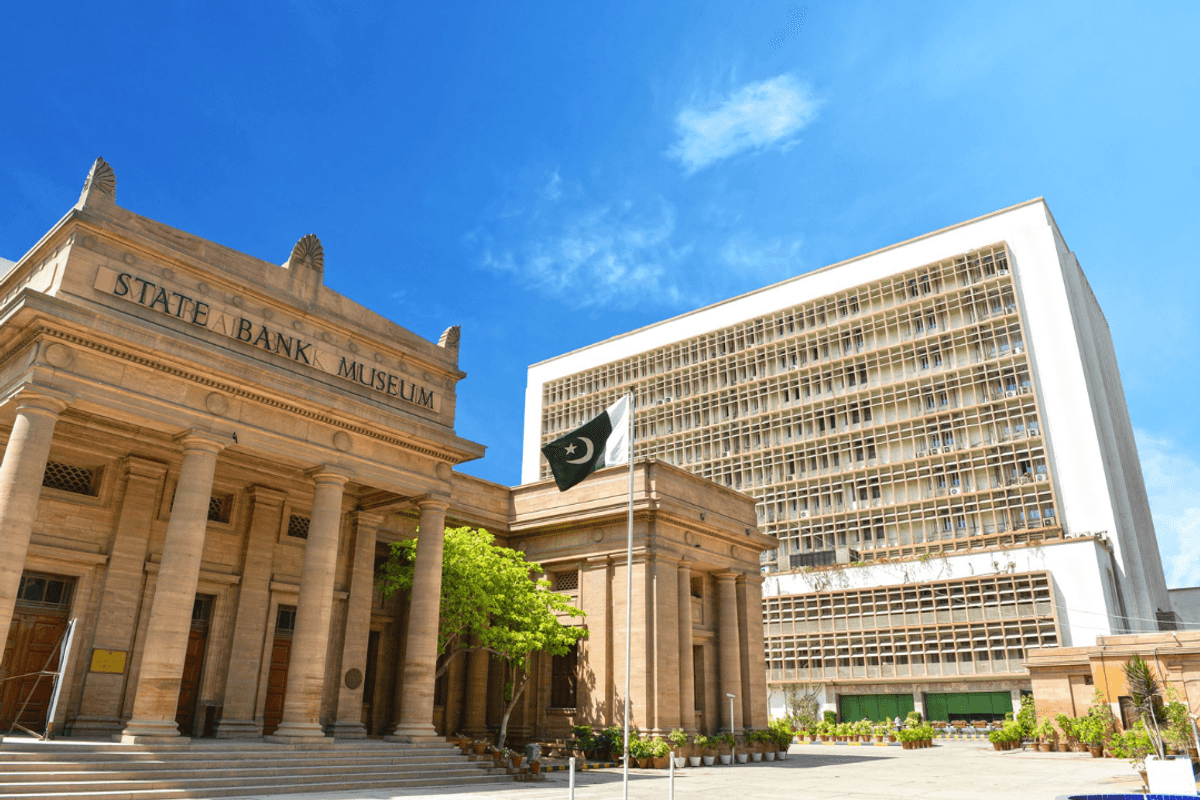
In an unexpected move, Pakistan's central bank has decided to keep the key policy rate unchanged on Monday, at 10.5%, over inflation concerns.
The decision was contrary to expectations as analysts had forecast a second successive cut in the policy rate. On December 15, the central bank cut the policy rate by 50 basis points (bps).
In a press conference following the Monetary Policy Committee (MPC) meeting, SBP Governor Jameel Ahmed said inflation was the reason behind the decision.
The meeting reviewed inflation trends, particularly core inflation, which has persisted around 7.4% for the past few months.
Our outlook is that inflation will cross 7% in some months of the second half of fiscal year 2026, Ahmed added.
Inflation outlook
In its Monetary Policy Statement, the central bank said headline inflation eased to 5.6% year on year in December, broadly in line with its expectations, while core inflation remained elevated at around 7.4% in recent months. Food prices moderated overall, although wheat and related products saw a sharp uptick, while energy inflation rose as favorable base effects in electricity tariffs faded.
The Monetary Policy Committee said inflation expectations among consumers and businesses continued to ease. It projected inflation would stabilize within the 5% to 7% target range in fiscal years 2026 and 2027, after temporarily breaching the upper bound for a few months this calendar year.
The outlook, however, remains vulnerable to swings in global commodity prices, domestic wheat prices, changes in administered energy tariffs and a faster-than-expected pickup in domestic demand.
Economic growth and activity
Economic growth has gained momentum faster than anticipated, the central bank said, with provisional data showing real GDP expanded 3.7% year on year in the first quarter of FY26, compared with 1.6% in the same period last year. Growth was led mainly by the industry and agriculture sectors.
High-frequency indicators point to continued strength in the second quarter, with gains recorded in auto sales, cement dispatches, petroleum product sales excluding furnace oil, fertilizer off-take and imports of machinery and intermediate goods, signaling resilient domestic demand.
Large-scale manufacturing grew 8.0% in October and 10.4% in November, lifting cumulative LSM growth to 6.0% in the first five months of the fiscal year.
Reflecting these trends, the central bank revised up its growth outlook, projecting real GDP growth of 3.75% to 4.75% for FY26. It said momentum is likely to strengthen further in FY27 as the impact of earlier rate cuts feeds through and macroeconomic stability is maintained.
External sector and reserves
The central bank said the current account deficit remained relatively contained despite a widening trade gap, driven by higher import volumes and weaker exports, particularly food shipments. The deficit stood at $244 million in December, bringing the cumulative shortfall to $1.2 billion in the first half of FY26.
Strong workers’ remittances and growth in information technology services exports helped offset trade pressures, allowing the central bank to continue building foreign exchange reserves through interbank purchases. SBP reserves rose to $16.1 billion by Jan. 16, exceeding the end-December target, and are projected to surpass $18 billion by June, assuming planned official inflows materialize.
Money, credit and liquidity
Broad money growth picked up to 16.3% by Jan. 9, driven by rising private-sector credit and government borrowing, the central bank said. Private-sector credit expanded by Rs578 billion during the fiscal year to date, supported by easing financial conditions.
Borrowing was concentrated in sectors such as textiles, wholesale and retail trade, and chemicals, while consumer financing also continued to rise. To further support credit growth, the central bank said it would lower the average cash reserve requirement for banks to 5% from 6%, a move expected to improve liquidity and lending capacity.





Comments
See what people are discussing