

SBP raises interest rate to 12%, highest in 17 months
Central bank hikes policy rate by 50 basis points amid Middle East inflation risks, while projecting stronger economic growth and foreign exchange reserves
Haris Zamir
Business Editor
Experience of almost 33 years where started the journey of financial journalism from Business Recorder in 1992. From 2006 onwards attached with Television Media worked at Sun Tv, Dawn Tv, Geo Tv and Dunya Tv. During the period also worked as a stringer for Bloomberg for seven years and Dow Jones for five years. Also wrote articles for several highly acclaimed periodicals like the Newsline, Pakistan Gulf Economist and Money Matters (The News publications)

Taha Jaffry
Producer, Business Desk
Taha Jaffry is a journalist and editor with experience in digital news publishing. Before joining Nukta, he worked as a Sub Editor at Geo.tv/Interlink Multimedia, affiliated with Geo News, for around two years, following an earlier stint at The Express Tribune.
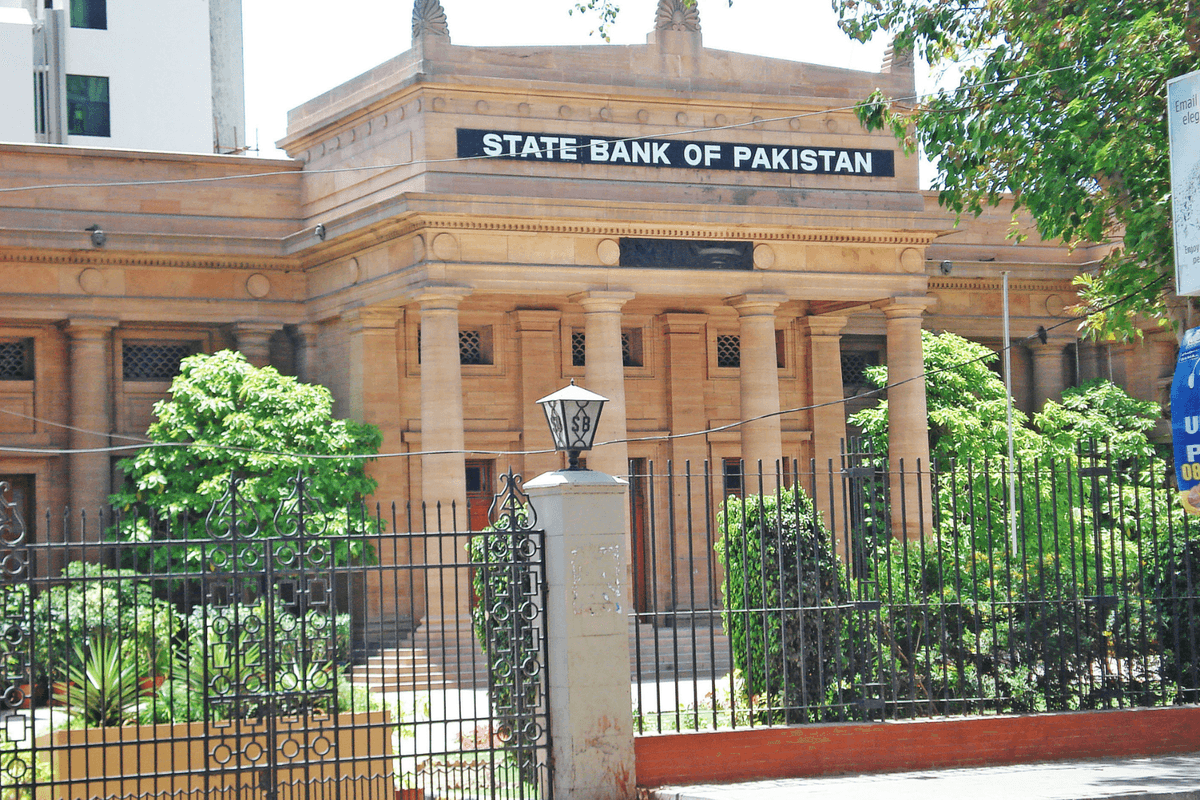
The State Bank of Pakistan (SBP) raised its benchmark interest rate by 50 basis points to 12% from 11.5% on Monday, taking borrowing costs to their highest level in 17 months amid concerns that the Middle East crisis could fuel inflation.
The decision marks the central bank's first interest rate change since April 27, 2026, when it increased the rate by 100 basis points to 11.5%.
SBP Governor Jameel Ahmad said the Monetary Policy Committee (MPC) made the decision after assessing changes in the economic outlook, key economic indicators and the potential consequences of the regional crisis.
Nine of the committee's 10 members supported the 50-basis-point increase, Ahmad told a news conference.
Why has the State Bank raised interest rates?
The central bank is concerned that the Middle East crisis could increase inflationary pressures and delay efforts to bring price increases under control. Ahmad said the economic outlook had changed significantly since the previous monetary policy meeting, prompting the committee to reassess inflation risks and consumers' expectations of future prices.
Pakistan's inflation reached 11.1% in August, up from 9.2% in July, before easing to 10.26% in September.
Ahmad said inflation had previously been expected to ease toward the upper end of the SBP's target range of 5% to 7% by the end of the current fiscal year in June 2027.
However, recent developments have made that outlook more uncertain.
“More time will be required to bring inflation within the target range,” the governor said.
He explained that although inflation had initially shown signs of improvement, the potential effects of the Middle East crisis remained a concern.
The committee also considered consumers' inflation expectations when deciding to increase the rate, Ahmad said.
What does the rate increase mean?
A 50-basis-point increase is equivalent to half a percentage point, taking the policy rate from 11.5% to 12%.
A higher policy rate can make borrowing more expensive for businesses and consumers, while helping the central bank contain demand and limit inflationary pressures.
The decision reflects the SBP's concern that external shocks, particularly those linked to the Middle East crisis, could make it harder to maintain price stability.
What are the latest projections for remittances and trade?
The central bank has raised its remittance forecast for fiscal 2026–27 to USD 45 billion, up from its previous projection of USD 44 billion.
Governor Jameel Ahmad said remittances were close to USD 11 billion in the first quarter of the current fiscal year.
The SBP expects imports to reach USD 71 billion during the fiscal year, while exports are projected at USD 32.5 billion to USD 33 billion.
Ahmad also said the current account deficit was expected to remain within the central bank's existing target of 0% to 1% of GDP.
Remittances are an important source of foreign currency for Pakistan, helping households meet expenses and supporting the country's external finances.
What is the outlook for economic growth?
The State Bank projects Pakistan's economy will grow by 3.75% to 4.75% during fiscal 2026–27, compared with its earlier forecast of 3.5% to 4.5%.
Ahmad said economic growth had averaged around 4.2% during the first three quarters of fiscal 2025–26, but a slowdown in the fourth quarter affected the full-year growth rate.
He said economic activity had started recovering in the current fiscal year.
The agricultural sector is expected to perform better than last year, with improved production anticipated for sugarcane, rice and maize.
However, estimates for cotton production have been revised slightly downward.
How are Pakistan's foreign exchange reserves performing?
The central bank expects Pakistan's foreign exchange reserves to reach USD 23 billion, with a further increase to USD 25 billion by June 2027.
Ahmad said reserves now cover three months of imports, which he described as meeting international reserve adequacy benchmarks.
He highlighted the improvement in Pakistan's external financial position compared with previous years, recalling that foreign exchange reserves had fallen to just a few billion dollars in January 2023.
The governor stressed that sustaining the recovery in reserves would be critical to maintaining external account stability.
Foreign exchange reserves help Pakistan finance imports and meet international payment obligations, providing protection against global economic uncertainty and external financing pressures.
The latest projections reflect the central bank's efforts to strengthen Pakistan's external financial position while managing inflation risks and supporting economic recovery.





Comments
See what people are discussing