

Solar boom could save Pakistan over $100B in fuel imports, report says
Think tank says distributed PV is reshaping energy system, cutting fossil dependence

Business Desk
The Business Desk tracks economic trends, market movements, and business developments, offering analysis of both local and global financial news.
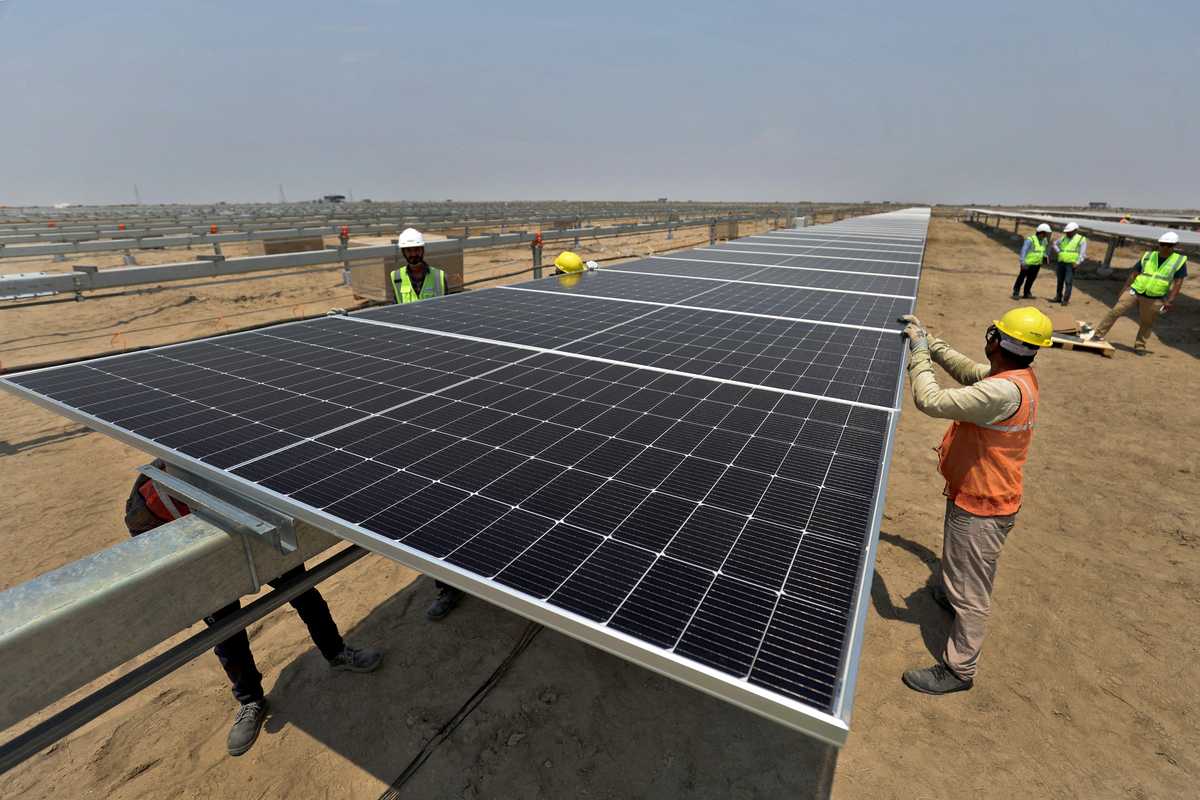
Report says Pakistan moves toward an “electrostate,” as electricity proves far more efficient than fuel-based energy.
Reuters/File
Pakistan’s growing solar energy sector could save the country more than $100 billion in fossil fuel imports, according to a new policy paper by Islamabad-based think tank Renewables First.
The report, “Electrons In, Hydrocarbons Out: Pakistan’s Quest for Economic and Resource Efficiency”, says official energy statistics fail to capture a shift toward consumer-led solar adoption, which is more efficient and resilient than traditional fossil fuels.
“Much of Pakistan’s energy debate relies on incomplete data,” said Sohaib Malik, senior fellow at Renewables First. “Our research shows the rapid uptake of distributed solar is reshaping Pakistan’s energy system and can guide policymakers toward energy security and economic resilience.”
Households, farmers, and businesses are increasingly installing solar panels to cope with high electricity costs and unreliable supply, creating a parallel energy system outside official reporting. In fiscal year 2023-24 alone, distributed solar PV could have generated 19 terawatt-hours of electricity — nearly one-fifth of the national grid—displacing about 5 million tonnes of oil equivalent.
The study highlights the inefficiency of fossil fuel imports. Every rupee spent on imported oil, gas, and coal loses about 59% of its energy value due to physical losses. In contrast, solar PV is a long-term asset, producing electricity for decades.
“Solar converts upfront imports into decades of domestic energy supply, rather than ongoing fuel dependence,” said Nabiya Imran, associate at Renewables First.
From 2017 to 2025, Pakistan imported $7.4 billion in solar panels and another $2-3 billion in supporting equipment. By June, total installed solar PV capacity reached about 48 gigawatts, potentially avoiding $100-120 billion in future fuel imports.
The report says Pakistan is moving toward an “electrostate,” where electricity dominates the economy due to its higher efficiency. Electric systems convert 80-90% of energy into useful work, compared with 20-40% for combustion-based fuels.
The challenge now is aligning planning and regulation with the reality of distributed solar as a core energy asset, according to the report.




Comments
See what people are discussing