

South Korea issues first emergency heatwave warning under new rating system
South Korea issued its first emergency heatwave warning under a new alert system, as officials work to address longer and more intense heatwaves

News Desk
The News Desk provides timely and factual coverage of national and international events, with an emphasis on accuracy and clarity.
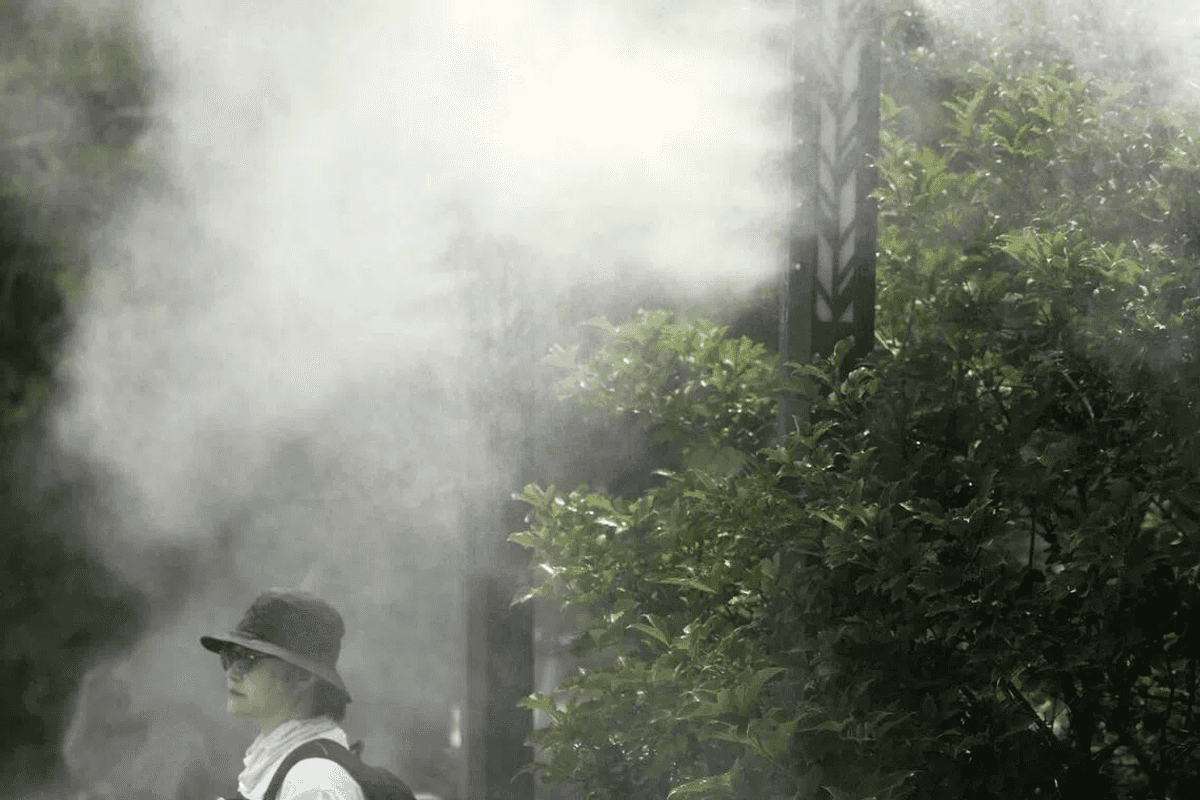
A person walking under a cooling fog system to escape the heat in Seoul.
Courtesy: EPA
South Korea issued its first-ever emergency heatwave warning on Sunday, under a new rating system launched this year, for two cities in North Gyeongsang Province.
The Korea Meteorological Administration ordered residents in Gyeongsan and Pohang to halt outdoor activities and move indoors. Officials said the system was introduced to address a rising number of heatwaves that have grown longer and more intense.
What is an emergency heatwave warning in South Korea?
An emergency heatwave warning is issued when perceived temperatures are forecast to reach 38 degrees Celsius, or actual temperatures hit 39 degrees Celsius, for at least one day. It marks the highest tier under South Korea's revised warning system. The alert signals a level of heat that puts even healthy people at serious risk, not just uncomfortable weather.
Why did South Korea issue the warning now?
KMA chief Lee Mi-seon said the Emergency Heatwave Warning was issued at 10 a.m. Sunday (0100 GMT) for Gyeongsan and Pohang, both in southern North Gyeongsang Province. "This marks the first time it has been issued since the system took effect," she said at a press briefing. The two cities saw temperatures reach the emergency criteria over the weekend.
Lee said the warning reflects genuine danger rather than routine hot weather. "It indicates conditions in which even healthy people face a significantly elevated risk of serious harm, including heat-related illness and death," she said. She added that anyone outdoors should stop activity immediately and move to a cool place, and that no one, including children or pets, should be left inside a vehicle.
How have South Korea's heatwaves changed over time?
KMA data show the average annual number of heatwave days has more than doubled to 19 over the past five years, up from eight in the 1970s. The average annual number of tropical nights has also jumped from four to 14 over the same period. A heatwave day is defined as one with a maximum temperature of at least 33 degrees Celsius, while a tropical night is one where the overnight low stays at 25 degrees Celsius or above.
How does this compare to Europe's recent heatwave?
South Korea's new system arrives as Europe endures a scorching summer, following a June heatwave that shattered temperature records across the continent. France recorded more than 2,000 excess deaths during the June heatwave, and 300 during high temperatures in late May, according to official figures. The Eiffel Tower and other Paris landmarks closed early over the weekend, and the Tour de France shortened a stage for the first time in its history.
Oceans have also experienced their hottest June on record and could set fresh highs in the months ahead, the European Union's Copernicus Marine Service said this month. Warmer oceans intensify tropical storms and add more moisture, which can fall as heavy rain. Adding to the mix is the return this year of El Nino, a natural climate phenomenon that warms Pacific Ocean surface temperatures and typically occurs every two to seven years.


Comments
See what people are discussing