

Syrian Democratic Forces declare formal dissolution following integration into national army
Syrian Democratic Forces leader Mazloum Abdi announced the official dissolution of the Kurdish-led group as an independent military force, finalizing a merger into state army brigades under a unification pact with President Ahmed al-Sharaa

News Desk
The News Desk provides timely and factual coverage of national and international events, with an emphasis on accuracy and clarity.
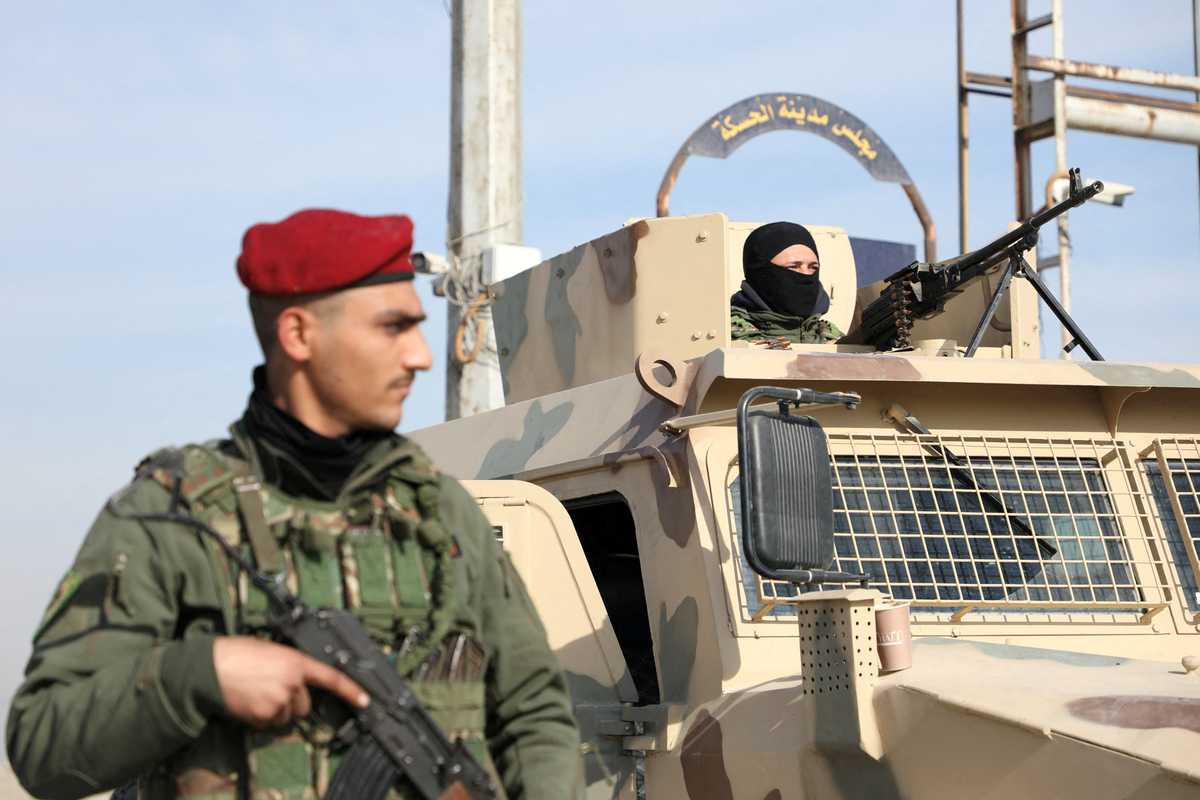
General Commander Mazloum Abdi of the Kurdish-led Syrian Democratic Forces (SDF) formally announced the dissolution of the paramilitary group as an independent military entity on Tuesday.
Delivering a televised address alongside President Ahmed al-Sharaa at the People's Palace in Damascus, Abdi confirmed that the group's mission had concluded following the complete integration of its units into the national Syrian army.
How did the dissolution and integration process unfold?
The formal disbandment completes a multi-month integration framework initiated following a January 29 agreement between Damascus and Kurdish leadership. Under the agreement, approximately 10,000 to 12,000 former SDF combatants have been organized into newly established army brigades positioned across Hasakah, Qamishli, and Kobani under central command. Additionally, civil institutions, customs border checkpoints, and local security apparatuses (Asayish) have been transferred under the administrative authority of the Syrian Interior and Defense Ministries.
According to Anadolu Agency, Abdi stated that the country is transitioning "from battlefields to the fields of construction". The transition follows territorial shifts earlier in the year that saw government forces reestablish control over Raqqa and Deir Ezzor provinces, alongside executive decrees from President al-Sharaa guaranteeing Kurdish linguistic rights, cultural recognition, and national citizenship protections.
The integration deal also required the expulsion of non-Syrian Kurdistan Workers' Party (PKK) commanders from the territory, addressing longstanding security concerns raised by neighboring Turkey.
How did international stakeholders respond to the SDF's disbandment?
US Special Envoy to Syria and Iraq Tom Barrack commended the development as a milestone toward national stability, framing the transition as a diplomatic solution yielding "one army, one government, one state". Formed in 2015 with US military support, the SDF served as Washington's primary ground partner in defeating the territorial caliphate of the Islamic State (IS) across northern and eastern Syria.
Analyses published by Radio France Internationale and Al Jazeera note that while the dissolution concludes a decade of de facto Kurdish administrative autonomy in the northeast, the political agreement grants former SDF leaders roles within the national political structure to advocate for constitutional rights within a unified Syrian state.




Comments
See what people are discussing