

Trump appoints hardliner Stephen Miller as Chief of Staff following midterm defeat
US president appoints long-time senior adviser and immigration hardliner Stephen Miller as his new White House Chief of Staff

News Desk
The News Desk provides timely and factual coverage of national and international events, with an emphasis on accuracy and clarity.
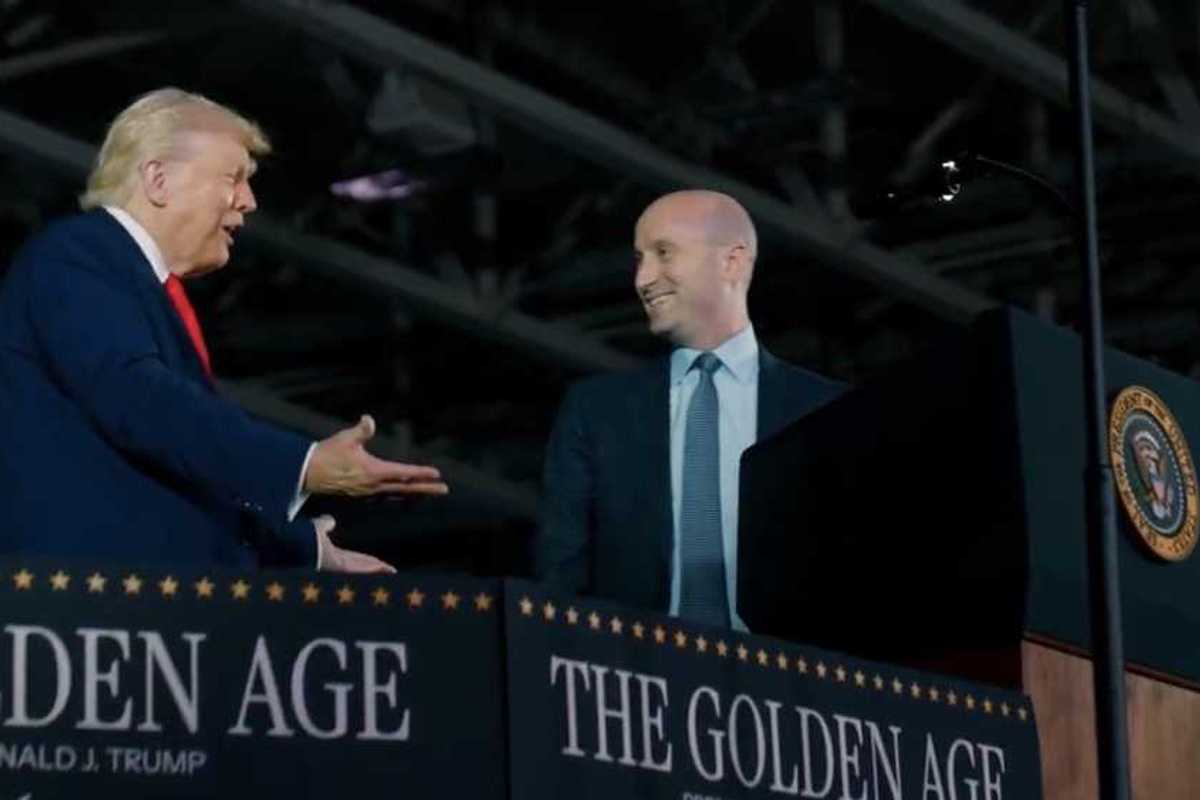
Picture Courtesy: The White House/X
U.S. President Donald Trump has appointed his long-time senior adviser and immigration hardliner Stephen Miller as the new White House Chief of Staff, initiating a high-level West Wing shakeup in the wake of the Republican Party's sweeping defeats in the 2026 midterm elections.
The personnel shift, announced by Trump following days of internal deliberations, signals an aggressive, combative posture from the executive branch rather than a pivot toward compromise with incoming Democratic majorities in the House of Representatives and the Senate.[
Why did Trump elevate Stephen Miller to White House Chief of Staff?
According to Politico, Miller replaces Susie Wiles in the administration’s most powerful gatekeeping role, with Wiles transitioning to oversee Trump’s broader political operation.
The elevation of Miller—who previously served as White House deputy chief of staff for policy and homeland security adviser—places an ideological architect of the "America First" movement at the helm of the executive apparatus. As the primary strategist behind the administration's hardline border enforcement, mass deportation directives, and protectionist trade measures, Miller’s promotion demonstrates Trump’s intention to double down on his core political base as legislative scrutiny mounts.
How will the West Wing prepare for an adversarial Capitol Hill?
As reported by The New York Times, the appointment comes as the White House braces for a contentious institutional dynamic on Capitol Hill.
With Democrats reclaiming committee gavels, subpoena authority, and budgetary oversight across both chambers of Congress, administration insiders expect Miller to establish an uncompromising defensive perimeter. His mandate will focus on insulating the executive branch from upcoming congressional inquiries targeting Trump's executive orders, immigration enforcement operations, cabinet ethics, and the ongoing military confrontation in the Middle East.
What does the move signal for domestic governance and foreign policy?
According to Axios, Miller’s appointment cements the dominance of nationalist hardliners within Trump's inner circle.
Operating from the Chief of Staff’s office, Miller is positioned to exert direct administrative influence over domestic enforcement agencies, primarily the Department of Homeland Security (DHS) and the Department of Justice (DOJ). Crucially, analysts note his positioning will reinforce the administration’s deep skepticism toward traditional diplomatic concessions and multilateral frameworks, impacting how the White House manages international crises—from the confrontation with Iran to disputes over Persian Gulf maritime corridors.





Comments
See what people are discussing