

Trump convenes national security team on Iran as Pentagon finalizes strike plans: Axios
Axios reports that U.S. President Donald Trump meets with top national security advisers to discuss the Iran standoff

News Desk
The News Desk provides timely and factual coverage of national and international events, with an emphasis on accuracy and clarity.
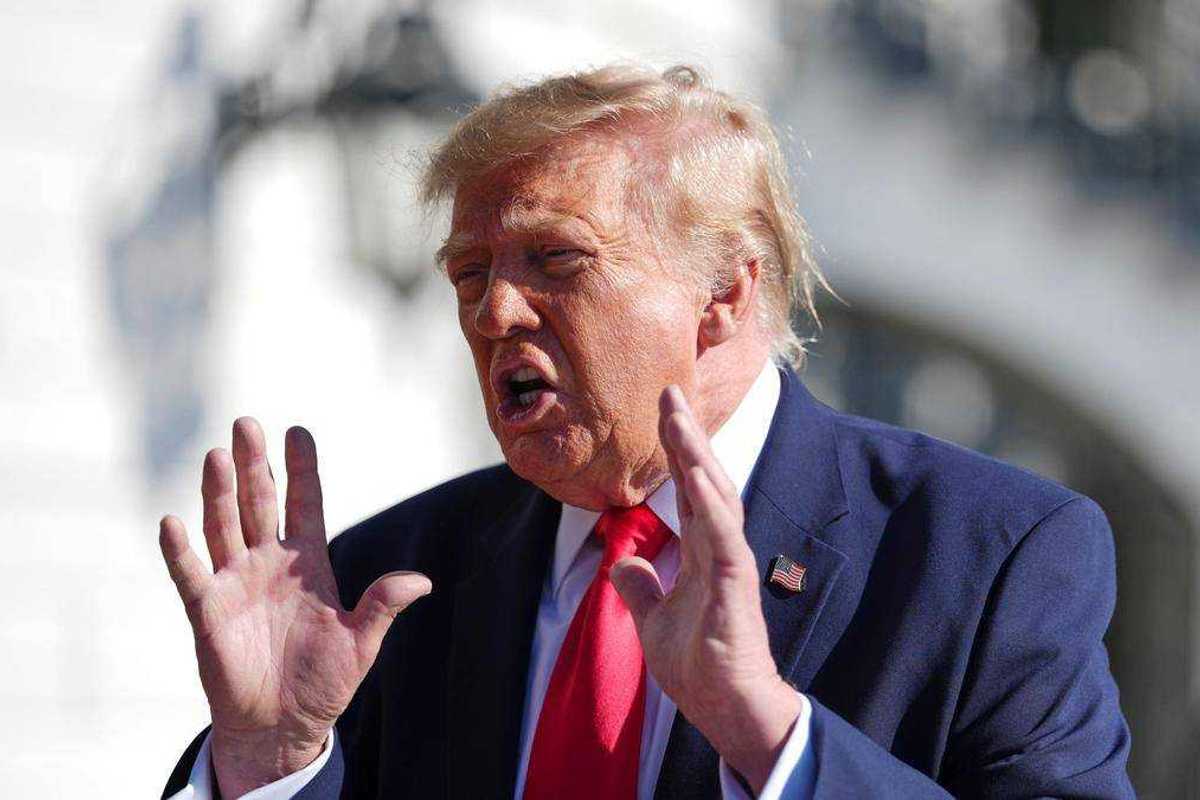
U.S. President Donald Trump convened his top national security advisers at the White House on Friday, November 6, 2026, to deliberate on the escalating standoff with Iran, marking the administration's first high-level defense review of the Middle East file since the midterm elections.
The closed-door strategy session comes as military planners put the finishing touches on operational plans to potentially resume kinetic strikes against Iranian military targets.
What operational preparations is the Pentagon finalizing?
Citing a U.S. official, Axios reported that military commanders are finalizing operational preparations for the possibility of resuming active warfare against the Islamic Republic. The planning encompasses targeted strikes against coastal missile sites, subterranean military installations, and command-and-control infrastructure.
To reinforce the regional posture, the Pentagon is accelerating naval reinforcements to the Middle East. The nuclear-powered aircraft carrier USS Theodore Roosevelt (CVN-71) is scheduled to arrive in the region by the middle of this month, substantially expanding American carrier strike reach, persistent aerial surveillance, and deterrence capabilities across the Persian Gulf, the Gulf of Oman, and adjoining maritime choke points.
How does military review intersect with acute Strait of Hormuz friction?
According to Reuters, the renewed operational planning unfolds against a backdrop of intense naval skirmishes across the Strait of Hormuz.
Over recent days, multiple commercial oil tankers have caught fire and been abandoned after detonating naval mines while attempting to transit unauthorized channels with their Automatic Identification System (AIS) transponders deactivated.
The friction follows limited, unannounced U.S. defensive airstrikes on Iranian radar and coastal installations on strategic Qeshm Island after Iranian air defense units fired surface-to-air missiles at an American aircraft.
While Washington sought to keep those tactical engagements localized, the continued placement of sea mines and drone shootdowns have kept regional shipping routes heavily restricted and pushed commercial war-risk insurance premiums to historic peaks.
What internal cabinet divisions surround White House Iran strategy?
The White House review highlighted persistent internal divisions within the Trump administration regarding its Middle East trajectory, according to CNN.
Defense Secretary Pete Hegseth and Secretary of State Marco Rubio have advocated decisive military action to further degrade the Iranian regime's military capacity and enforce maritime passage.
Conversely, other senior administration figures—including Vice President JD Vance and Treasury Secretary Scott Bessent—have urged caution against entering an expanded kinetic confrontation.
They point to soaring domestic fuel costs, the risk of retaliatory strikes on Gulf energy infrastructure, and the voter backlash over the economy that contributed directly to the administration’s congressional midterm defeats.
While backchannel negotiations mediated by Qatar in Tehran and Doha continue to explore a possible diplomatic de-escalation framework, defense officials note that military assets are being positioned to ensure the White House retains immediate strike options should talks collapse.




Comments
See what people are discussing