

How last-minute diplomacy keeps delaying a wider US-Iran war
Kamran Khan says Trump's approach remains the defining pattern of the conflict, repeatedly shifting between military escalation and diplomatic pauses

News Desk
The News Desk provides timely and factual coverage of national and international events, with an emphasis on accuracy and clarity.
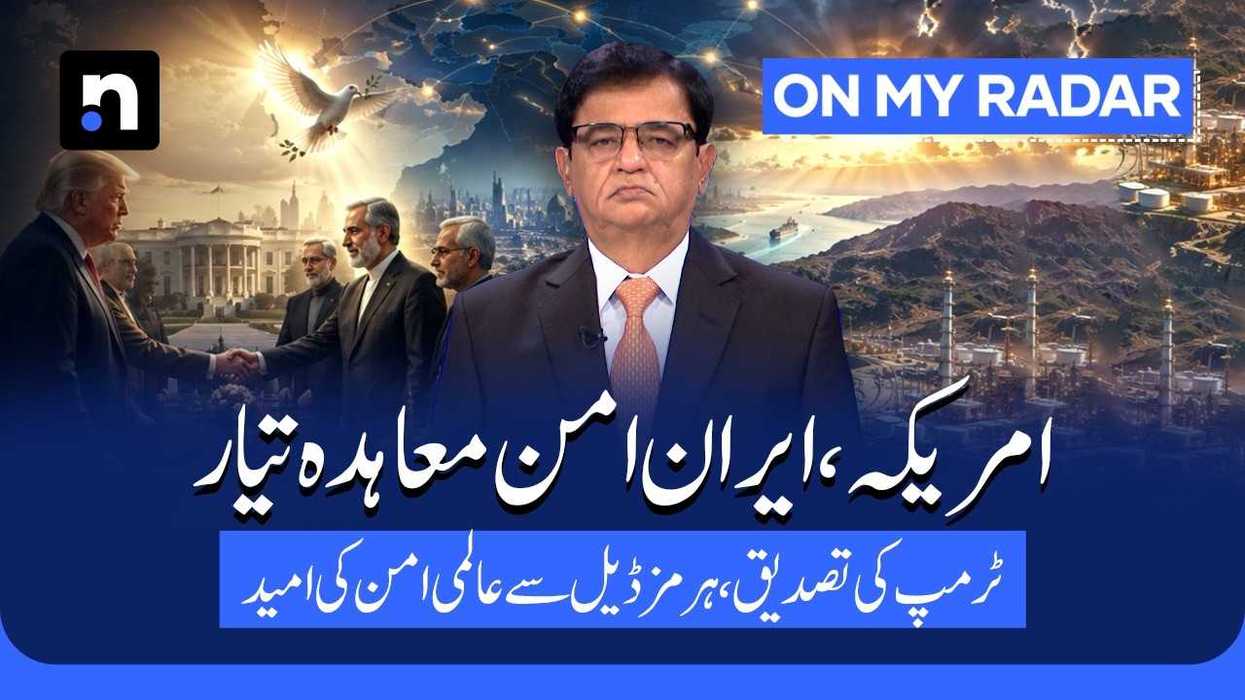
After five months of conflict, diplomacy has once again pushed the United States and Iran back from the brink of a wider military confrontation. While threats of major strikes have repeatedly raised fears of regional escalation, last-minute diplomatic interventions have, time and again, prevented those plans from materializing. The latest developments suggest the same pattern may be unfolding once again.
The latest twist came on Sunday when U.S. President Donald Trump announced that an agreement with Iran was in its final stages and that U.S.-Iran talks would begin on Monday afternoon. However, he did not disclose where the negotiations would take place or who would participate.
Speaking in the latest episode of On My Radar, Kamran Khan said perhaps the most striking aspect of the five-month conflict has been President Trump's own approach. One day, he threatens devastating strikes on Iran's energy infrastructure; the next, he announces those attacks have been postponed. Now, once again, at the eleventh hour, Trump has halted plans for a major military operation against Iran. Once again, Pakistan, Saudi Arabia, Qatar and other regional powers have stepped up diplomatic efforts. Once again, negotiations have been given another opportunity, and military strikes have largely paused over the past 48 hours.
According to Kamran Khan, this is far from a new development. Since the conflict between the United States and Iran began on February 28, the same cycle has repeated itself: threats, military preparations, diplomatic engagement, temporary de-escalation, and then renewed fears of another confrontation. For the past five months, this recurring pattern has kept the Middle East in a state of prolonged uncertainty.
A similar sequence unfolded last week when U.S. media reported that the United States and Israel were preparing a major airstrike targeting Iran's energy infrastructure. According to CBS News, the operation could even have been carried out before global financial markets opened on Monday.
Interestingly, Trump claimed on social media on Sunday that Iran and several other Middle Eastern countries had asked Washington to postpone the attack to allow time for a final agreement. According to Trump, the proposed deal would immediately, fully and permanently reopen the Strait of Hormuz while also addressing international concerns over Iran's nuclear program. He also warned that Iran needed to reach an agreement as quickly as possible.
Iran, however, has continued to reject Trump's assertions. Iranian Foreign Ministry spokesperson Esmaeil Baghaei said on Monday that Tehran is not currently engaged in any direct negotiations with the United States, nor are any such talks planned.
Despite the conflicting statements, diplomatic engagement has continued—although not directly between Tehran and Washington. Baghaei said Iran and Oman have been holding continuous discussions over the past week. According to him, the talks are focused on establishing a new joint maritime shipping route through the Strait of Hormuz, and significant progress has been made.
Baghaei also described Pakistan's role as important, saying Islamabad is acting as a mediator between Iran and the United States, while Qatar is providing diplomatic facilitation whenever required.
In reality, Pakistan is not the only country involved. Saudi Arabia, Qatar, the United Arab Emirates and Türkiye have all intensified diplomatic efforts over the past week to reduce tensions between Washington and Tehran and encourage both sides to return to the negotiating table.
As part of these efforts, Iranian Foreign Minister Abbas Araghchi held separate telephone conversations on Sunday with Pakistan's Field Marshal Asim Munir and Saudi Foreign Minister Prince Faisal bin Farhan.
At the same time, Saudi Crown Prince Mohammed bin Salman also spoke by telephone with President Trump. According to Saudi state media, the Crown Prince emphasized the need to prioritize dialogue, prevent further escalation and pursue a diplomatic solution capable of preserving regional peace, stability and global security.
Meanwhile, The Wall Street Journal reported that Gulf states are increasingly dissatisfied with Washington's strategy. According to the report, the prolonged conflict has left Gulf countries more vulnerable to Iranian attacks, while regional governments believe the United States lacks a clear and sustainable strategy for ending the crisis.
Analysts say Washington must recognize that military pressure alone is unlikely to force Iran to change its position. If a lasting solution is to be achieved, they argue, diplomacy, credible incentives and serious negotiations—not simply threats—will be essential.
Five months into the conflict, the region remains caught between the prospect of war and the hope of diplomacy. Reports of impending military action continue to alternate with announcements of fresh negotiations. Yet one reality has become increasingly evident: this is no longer merely a confrontation between the United States and Iran. Pakistan, Saudi Arabia, Qatar, the United Arab Emirates, Oman, Türkiye and other regional powers are now actively working to prevent the crisis from escalating further, recognizing that if diplomacy fails, the consequences will extend far beyond the Middle East—disrupting global energy supplies, international trade and the wider world economy.




Comments
See what people are discussing