


News Desk
The News Desk provides timely and factual coverage of national and international events, with an emphasis on accuracy and clarity.
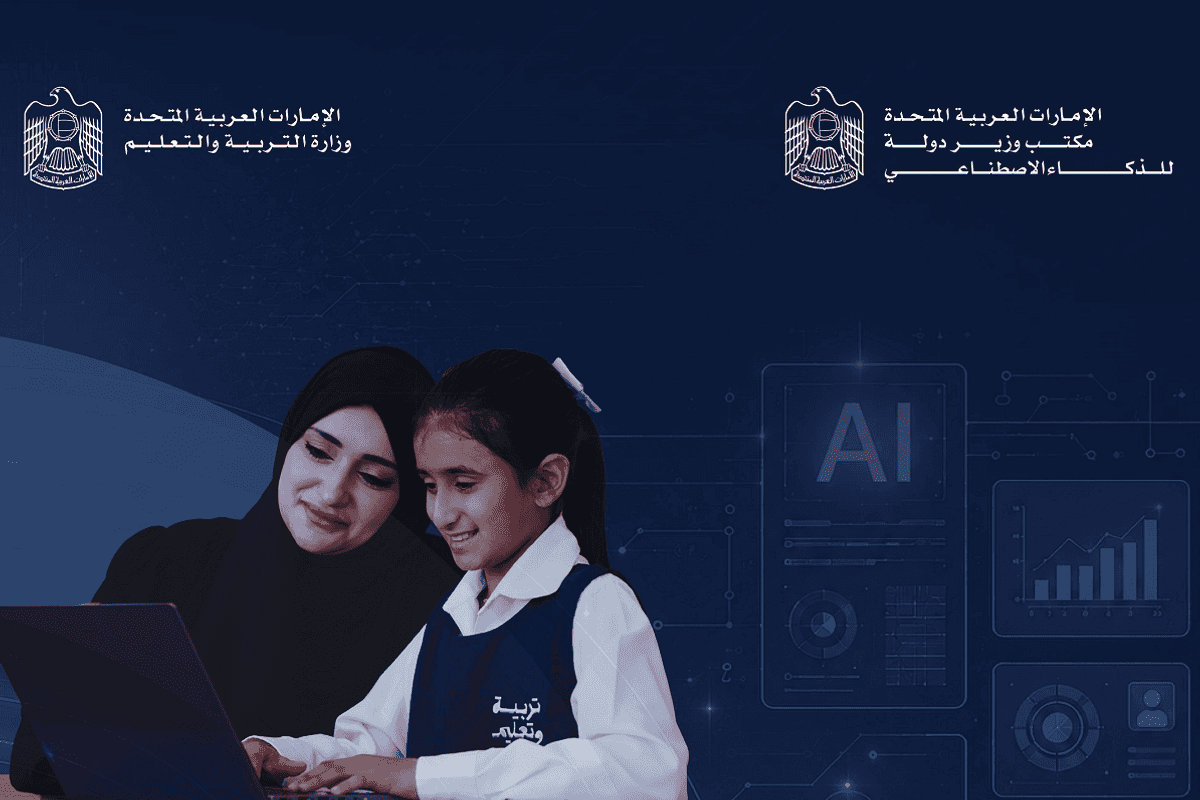
The Parent's Guide to Artificial Intelligence in Education is a UAE handbook that explains AI to families.
WAM
The UAE has launched a national AI guide for parents to help families understand artificial intelligence and support its responsible use in children's education, according to WAM.
The Ministry of Education and the Minister of State for Artificial Intelligence Office jointly introduced it, aiming to strengthen cooperation between homes and schools.
What is the Parent's Guide to Artificial Intelligence in Education?
The Parent's Guide to Artificial Intelligence in Education is a UAE handbook that explains AI to families. It shows how parents can use AI tools to support learning while protecting children's development, privacy and digital well-being. It builds on the UAE's wider efforts to bring AI into school education.
Education Minister Sarah bint Yousif Al Amiri said parents have an increasingly important role in helping children benefit from technological advances while developing the skills needed for the future. She said the guide would give families practical knowledge to introduce AI tools safely, encourage intellectual curiosity and support lifelong learning.
Why does the UAE want families involved in AI education?
Minister of State for Artificial Intelligence Omar Sultan Al Olama said preparing future generations for technological change must begin within families. He said families play a central role in shaping children's values and understanding of the world.
He added that the UAE wanted to make AI knowledge accessible to every household. The aim is to strengthen parents' ability to guide their children towards responsible use of the technology.
What does the UAE AI guide for parents cover?
The guide explains basic AI concepts, including machine learning, generative AI, algorithms and data, alongside their uses in everyday life. It also examines how AI can influence four aspects of child development: cognitive abilities, social and emotional well-being, physical health, and digital and ethical awareness.
The publication highlights AI's potential to improve creativity, learning and problem-solving. It also stresses the need to balance technology use with children's developmental needs.
What advice does the guide give parents on using AI with children?
The guide advises parents to discuss technology openly with their children and check the accuracy of AI-generated information. It also recommends protecting personal data and encouraging honesty and accountability when using digital tools.
Families are encouraged to explore AI applications together, set appropriate limits on screen time and consider a child's age and maturity when allowing access to different platforms. The guidance emphasises preserving independent thinking, communication and social interaction alongside technology-based learning.
What is the UAE AI curriculum for public schools?
A separate section of the guide explains the UAE's AI curriculum for public schools, introduced in the 2025-2026 academic year under directives from Sheikh Mohammed bin Rashid Al Maktoum, the UAE's vice president, prime minister and ruler of Dubai.
The curriculum covers seven areas: AI fundamentals, data and machine learning, practical applications, ethics and fairness, the technology's role across different sectors, innovation and project development, and responsible use and governance.
Which AI tools and questions does the guide address?
The guide presents examples of AI tools that parents can explore with their children. They can be used to simplify scientific concepts, develop educational activities, create original content, design games and projects, and prepare study schedules.
It also addresses common parental questions about AI in education. These include changes to teaching and student assessment, teacher training and the integration of artificial intelligence into other school subjects.





Comments
See what people are discussing