


News Desk
The News Desk provides timely and factual coverage of national and international events, with an emphasis on accuracy and clarity.
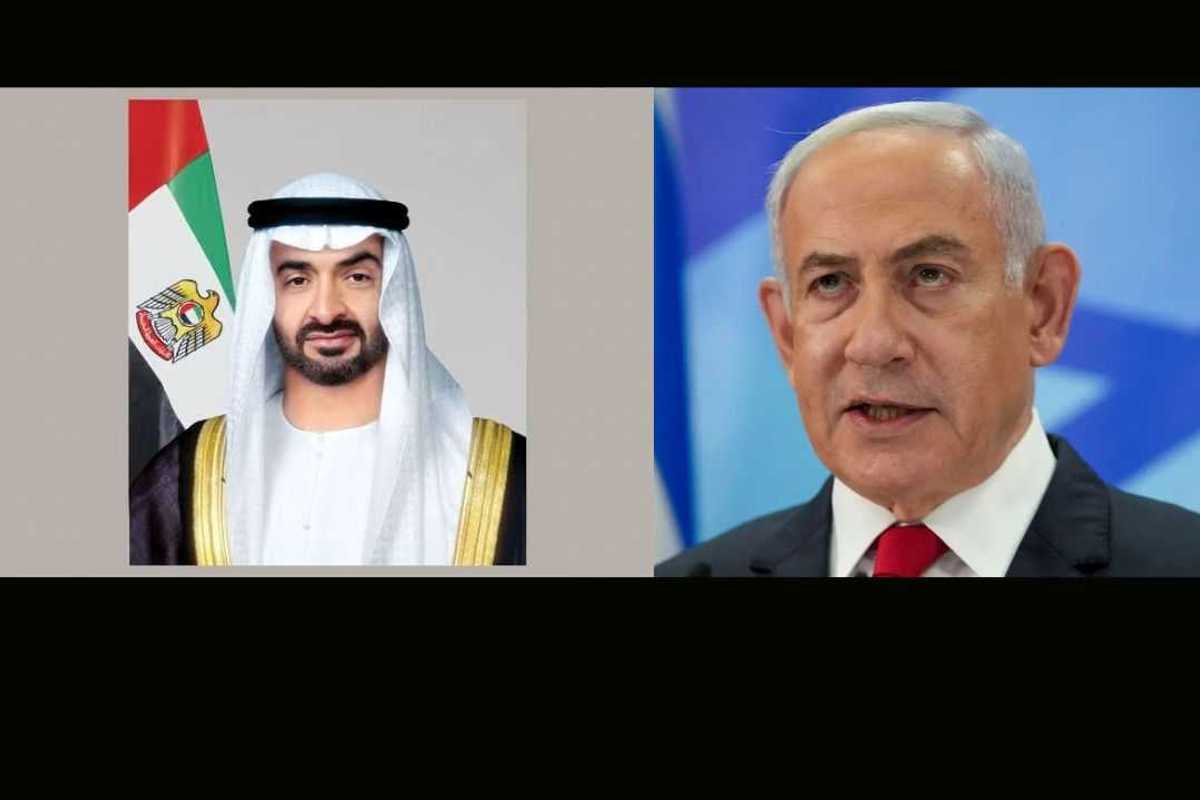
UAE President Sheikh Mohamed bin Zayed Al Nahyan discussed bilateral ties with Israeli Prime Minister Benjamin Netanyahu during Netanyahu's visit to the UAE on Sunday.
UAE President Sheikh Mohamed bin Zayed Al Nahyan discussed bilateral ties with Israeli Prime Minister Benjamin Netanyahu during Netanyahu's visit to the UAE on Sunday, the state news agency WAM reported on Monday. It was the first UAE confirmation of the visit.
The two leaders focused on relations between their countries. They also discussed ways to strengthen those ties.
Why did Netanyahu visit the UAE?
The Israeli prime minister's office said Netanyahu visited at the invitation of the UAE president, Reuters reported. It said the visit focused on strengthening relations and on "regional challenges".
Three senior Israeli officials said the meeting lasted six hours and focused on Iran.
Earlier this year, the UAE denied a meeting between Sheikh Mohamed and Netanyahu, whereas the Israeli prime minister's office said in May that Netanyahu had "secretly visited" the country and met the president.
A source familiar with the meeting said at the time that the two men met in Al-Ain on March 26. Al-Ain is an oasis city in Abu Dhabi along the country's border with Oman.
How have UAE ties with Israel and the US changed?
The UAE has strengthened its relationships with the United States and Israel since coming under attack during the Iran war. It opened ties with Israel as a result of the 2020 Abraham Accords.
The relationship with Israel gives the UAE a lever for regional influence and a unique channel to Washington.
How have UAE-Iran relations changed since the war began?
The UAE and Iran have deep historical ties as neighboring countries, built around trade, business and long-standing social links, with Dubai serving as an important commercial hub for Iranian trade. But relations have also been strained by territorial disputes and wider regional tensions.
That balance came under major pressure during the 2026 US-Israel war with Iran, as Iranian attacks targeted the UAE and its commercial interests, while Abu Dhabi maintained that it was not a party to the war. The UAE subsequently suspended all trade, commercial exchanges and financial transactions with Iran until further notice, marking a significant rupture in an otherwise economically important relationship.




Comments
See what people are discussing