


News Desk
The News Desk provides timely and factual coverage of national and international events, with an emphasis on accuracy and clarity.
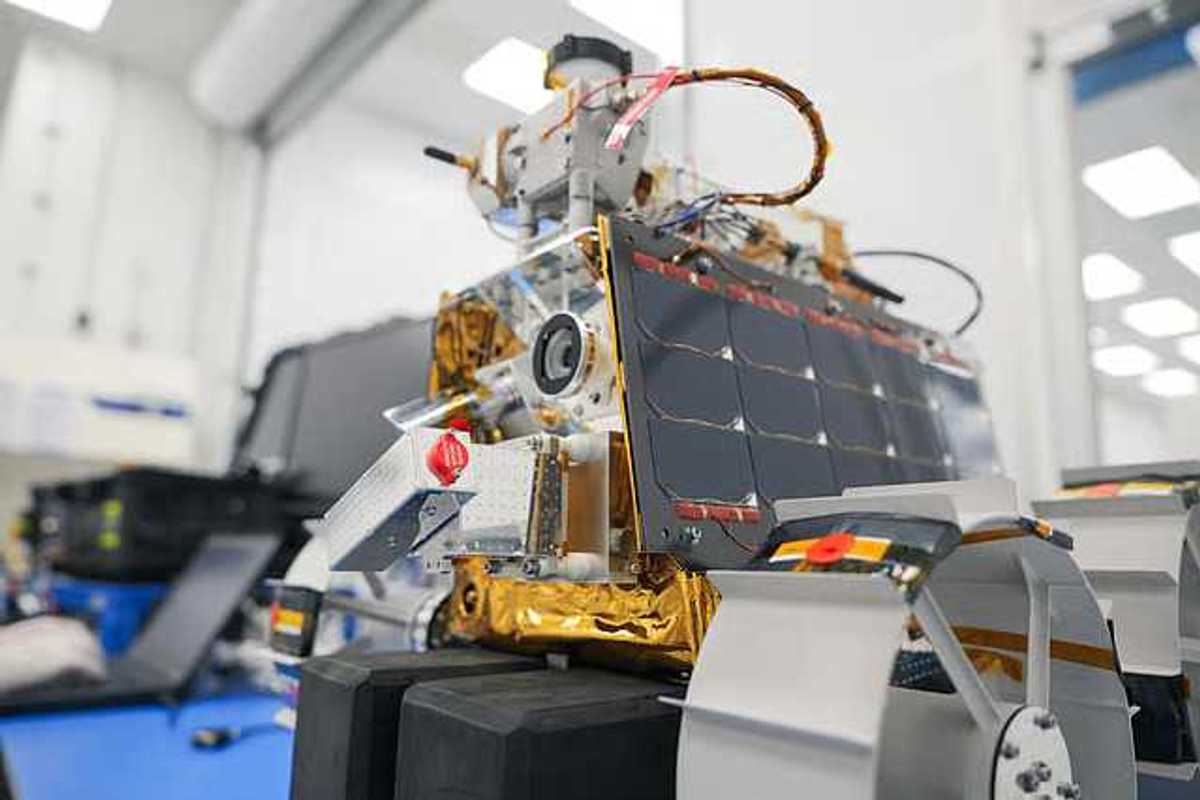
RTx will let Rashid Rover 2 send radio signals that can probe up to 100 meters below the lunar surface.
Gulf News
The Mohammed Bin Rashid Space Centre (MBRSC) said on Tuesday it has integrated the RTx ground-penetrating radar transmitter onto Rashid Rover 2, Gulf News reported. The radar can probe up to 100 meters below the lunar surface. The step moves the Emirates Lunar Mission closer to its far side journey.
What does the RTx radar do on Rashid Rover 2?
RTx lets the rover send radio signals beneath the Moon's surface. The lander's LuSEE-Night radioastronomy spectrometer receives them. Scientists get a rare look at what lies up to 100 meters underground, including the Moon's meteorite-bombardment history and iron-titanium minerals.
RTx is a collaboration between NASA, Brookhaven National Laboratory, Heliospace Corp. and Southwest Research Institute. MBRSC and NASA are also discussing using RTx as part of a future Moon Base collaboration.
Why is the UAE making a second attempt to land on the Moon?
Rashid Rover 2 follows Rashid Rover 1, the first Arab mission to the lunar surface. That rover crash-landed in April 2023 when its landing vehicle failed to make a soft landing.
Earlier in 2025, Sheikh Hamdan bin Mohammed bin Rashid Al Maktoum, Crown Prince of Dubai, witnessed the signing of an agreement between MBRSC and Firefly Aerospace. Under the deal, Firefly's lunar lander will carry the rover to the Moon.
What tests has Rashid Rover 2 completed?
MBRSC finished the rover's development after tests in the UAE and abroad. It underwent thermal vacuum testing at the French space agency CNES in Toulouse.
Engineers in the UAE tested its solar panels. They also tested the deployment of its antenna and robotic arm under simulated lunar gravity.
Vibration tests at EARTH, a subsidiary of EDGE Group, simulated the stresses of launch, lunar landing and touchdown. The rover was then sent to the United States for the next phase of preparations with Firefly.
When will Rashid Rover 2 launch and what will it study?
The rover is now undergoing payload integration and mission-readiness activities. It is expected to launch onboard Firefly Aerospace's Blue Ghost Mission 2.
On the surface, the rover will study the Moon's terrain, surface composition and thermal properties. It will also examine how different materials interact with the lunar environment and study plasma activity near the surface. The data will support the design of future lunar missions.
What did MBRSC say about the new payload?
Dr. Hamad Al Marzooqi, project manager of the Emirates Lunar Mission at MBRSC, said the new payload expands the mission's scientific value. He said it will offer new insights into the Moon's formation, history and mineral composition.
"Our focus remains on ensuring that Rashid Rover 2 is equipped to deliver unique data that will support future lunar exploration," he said.
The Emirates Lunar Mission is funded by the ICT Fund of the Telecommunications and Digital Government Regulatory Authority (TDRA). The fund aims to support research and development in the UAE's ICT sector.




Comments
See what people are discussing