

UN Security Council adopts Pakistan-initiated statement urging diplomacy during active hostilities
United Nations Security Council unanimously adopts a Pakistan-initiated Presidential Statement calling for sustained mediation, good offices, and open communication channels to facilitate ceasefires and political settlements during armed conflict

News Desk
The News Desk provides timely and factual coverage of national and international events, with an emphasis on accuracy and clarity.
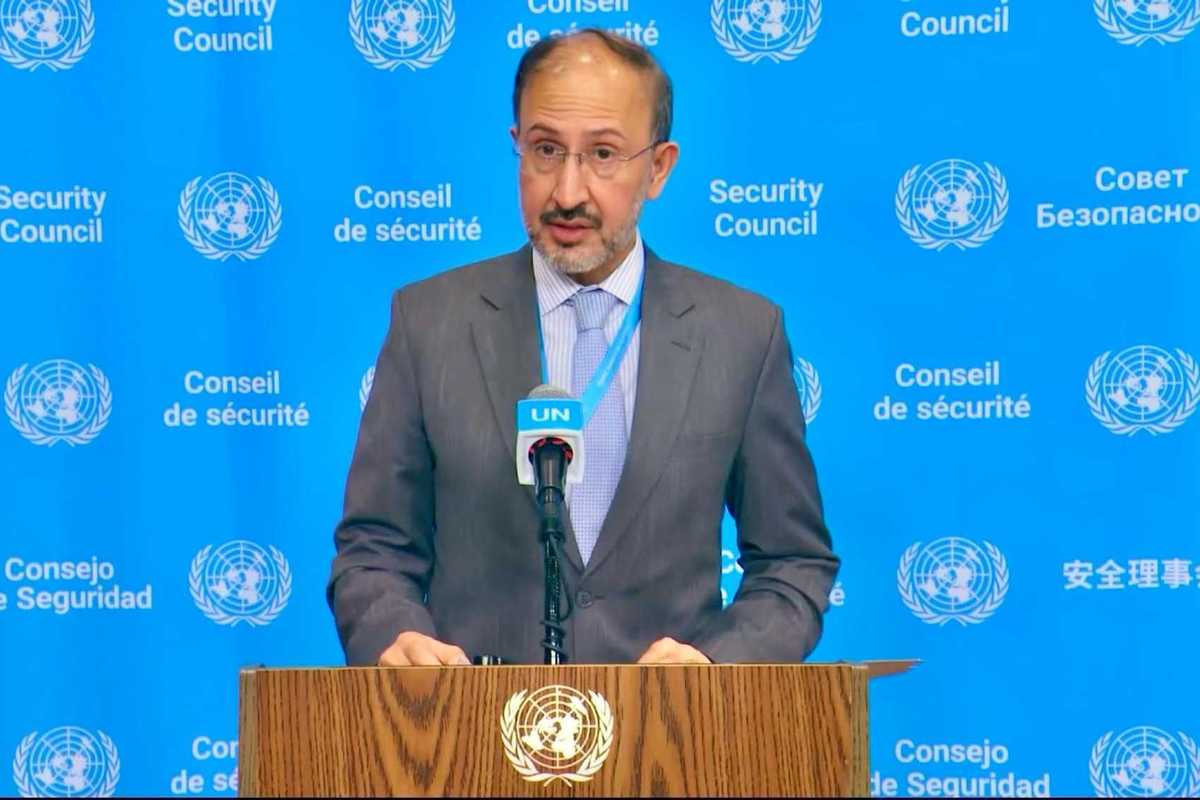
Press Stakeout by Ambassador Syed Haider Shah, Permanent Representative of Pakistan to the UN, After the Adoption of the Security Council Presidential Statement on “The Role of Diplomacy during Active Hostilities.”
Picture Courtesy: Pakistan Foreign Office/ X
The United Nations Security Council has unanimously adopted a Pakistan-initiated Presidential Statement (PRST) on “The Role of Diplomacy during Active Hostilities,” establishing a thematic framework to ensure diplomatic channels, mediation, and dialogue remain active even after armed conflict erupts.
The consensus adoption marks a notable contribution to the Security Council's thematic agenda on international peace and security, reaffirming that political negotiations and de-escalation mechanisms must function continuously across all stages of the conflict cycle.
What core principles are emphasized in the Security Council Presidential Statement?
The Presidential Statement underscores the critical imperative of sustained diplomatic engagement once armed confrontations are underway.
It calls on conflict parties, regional organizations, and international partners to actively utilize third-party mediation, the UN Secretary-General’s good offices, and direct or backchannel communication lines to halt escalating violence, facilitate humanitarian ceasefires, and lay the groundwork for durable, long-term political settlements.
According to Pakistan's Ministry of Foreign Affairs (MOFA), the statement represents a substantive thematic addition to the Council’s body of work by consolidating established international principles and operational precedents from disparate conflict arenas into a cohesive political reference point for crisis diplomacy.
How does text build upon Resolution 2788 and Pakistan’s Council tenure?
The Foreign Office highlighted that the new Presidential Statement builds directly upon Security Council Resolution 2788 (2025), titled “Strengthening Mechanisms for the Peaceful Settlement of Disputes,” which was adopted unanimously during Pakistan’s presidency of the Council in July 2025.
While Resolution 2788 concentrated broadly on dispute prevention and conflict resolution architectures under Chapter VI of the UN Charter, the newly adopted PRST directs specific attention to the operational conduct of diplomacy during active warfare.
Pakistan, currently serving a two-year elected term on the Security Council for 2025–2026, framed the initiative as a practical tool for the Council to prevent wars from deteriorating into unchecked regional conflagrations.
Welcoming the adoption, Deputy Prime Minister and Foreign Minister Senator Mohammad Ishaq Dar stressed that wartime diplomacy is indispensable.
"When hostilities intensify, diplomacy must not retreat," Dar said, reiterating that negotiation mechanisms must serve as robust instruments to arrest armed escalation and safeguard civilian lives.
What is significance of the Council's consensus amid wider geopolitical fractures?
The unanimous backing of the text by all 15 members of the Security Council provides a unified normative mandate at a time when major international conflicts—spanning the Middle East, Eastern Europe, and maritime friction points—face protracted diplomatic deadlocks.
The Foreign Office stated that the consensus outcome reflects Pakistan’s continued commitment to multilateralism, peaceful dispute resolution, and international law, reinforcing Islamabad’s constructive engagement on global security policy.



Comments
See what people are discussing